


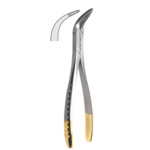
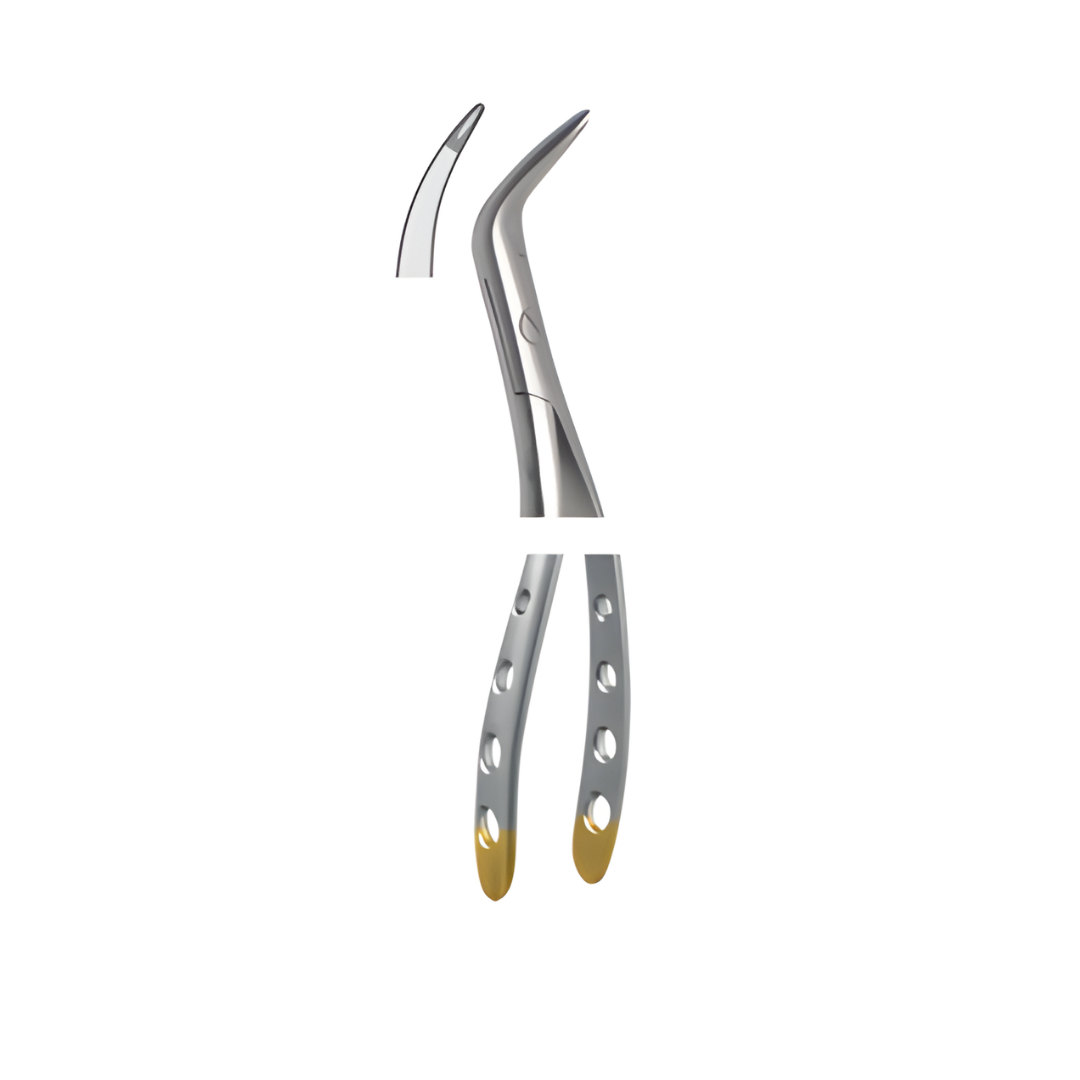
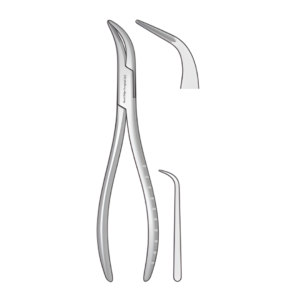
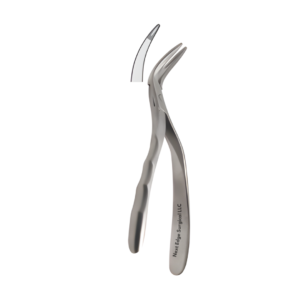
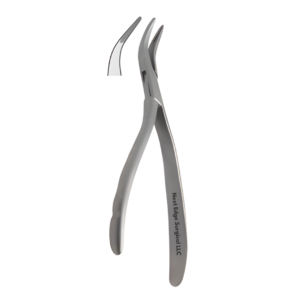
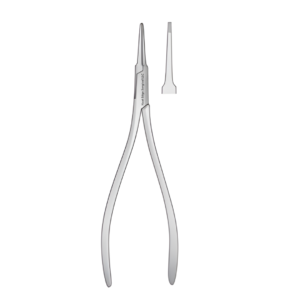
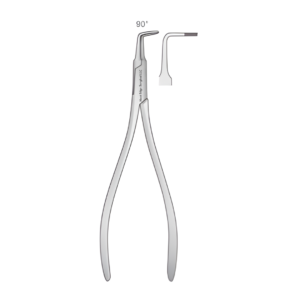
Dental Root Fragment Forceps – Lower roots, Universal – NES-280
The condition of a remaining dental root often determines the next step in an extraction. A root that is visible and mobile may be approached differently from one surrounded by resistant bone or positioned beneath the gingival margin.
Our Lower Roots Universal Forceps – NES-280 belongs to the mandibular root-extraction instrument range. It is intended for dental professionals performing suitable procedures where remaining lower-tooth structures require direct engagement and controlled removal.
Clinical Selection for Remaining Lower Roots
Root extraction is not a single technique applied identically to every tooth. The practitioner must consider the amount of remaining structure, root curvature, socket condition, and whether the fragment has already been loosened.
NES-280 carries a universal lower-root designation, identifying its intended use within the mandibular arch. These specialized dental extraction forceps provide an option for grasping accessible roots after the clinician has evaluated the extraction site.
The instrument’s role is distinct from that of a root elevator. Elevators assist with mobilization, while forceps engage suitable tooth structures for controlled removal. Both categories may contribute to a planned extraction sequence.
Features and Benefits
| Feature | Benefit |
| Lower-root application | Intended for procedures involving remaining mandibular roots. |
| Universal instrument designation | Supports selection across suitable lower-root cases. |
| Root-removal focus | Addresses situations where conventional crown engagement is unavailable. |
| Direct grasping function | Provides an option for accessible root structures. |
| Mandibular extraction relevance | Fits lower-jaw instrument preparation and clinical workflows. |
| Complementary surgical role | Works within procedures involving elevators and other extraction tools. |
Instrument Care and Handling
The condition of the gripping surfaces influences how an instrument engages a remaining root. Examine the working ends before treatment, looking for irregular contact, deposits, or visible mechanical damage.
Check the operating movement during preparation. Instruments displaying abnormal resistance, distortion, or damaged contact surfaces should be removed from the clinical tray.
After use, clean the forceps thoroughly, paying attention to accessible joints and areas exposed to biological material. Prompt cleaning helps prevent debris from drying onto the instrument.
Follow established cleaning and sterilization procedures before the next clinical application. Avoid unnecessary impacts against the working ends during transportation or storage.
During extraction, the operator should maintain awareness of the direction of applied force. Sudden movement can affect adjacent teeth or soft tissues, especially when a remaining root has limited mobility.
For fractured posterior roots, additional mobilization or root separation may be appropriate before forceps engagement. Clinical judgment determines the extraction sequence.
Organized storage and periodic inspection help maintain the instrument’s working condition during repeated dental procedures.
Product Specifications
| Specification | Details |
| Product Name | Lower Roots, Universal |
| SKU | NES-280 |
| Brand | Next Edge Surgical LLC |
| Product Category | Dental Root Fragment Forceps |
| Instrument Type | Universal Mandibular Root Forceps |
| Anatomical Application | Lower Dental Arch |
| Intended Use | Accessible Lower-Root Extraction |
Frequently Asked Questions
Which anatomical region is NES-280 intended for?
The lower dental arch, also called the mandibular arch.
Does universal mean one specific tooth?
No, it refers to a broader category of suitable lower-root applications.
How does a root elevator differ from these forceps?
An elevator mobilizes tooth structures; forceps provide direct engagement.
Why inspect the instrument before treatment?
Inspection helps identify damage that could interfere with controlled gripping.
Can the instrument be used during complex extractions?
It may form part of an appropriate root-removal procedure selected by the clinician.
Reviews
There are no reviews yet.