


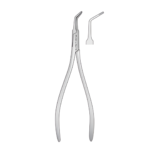
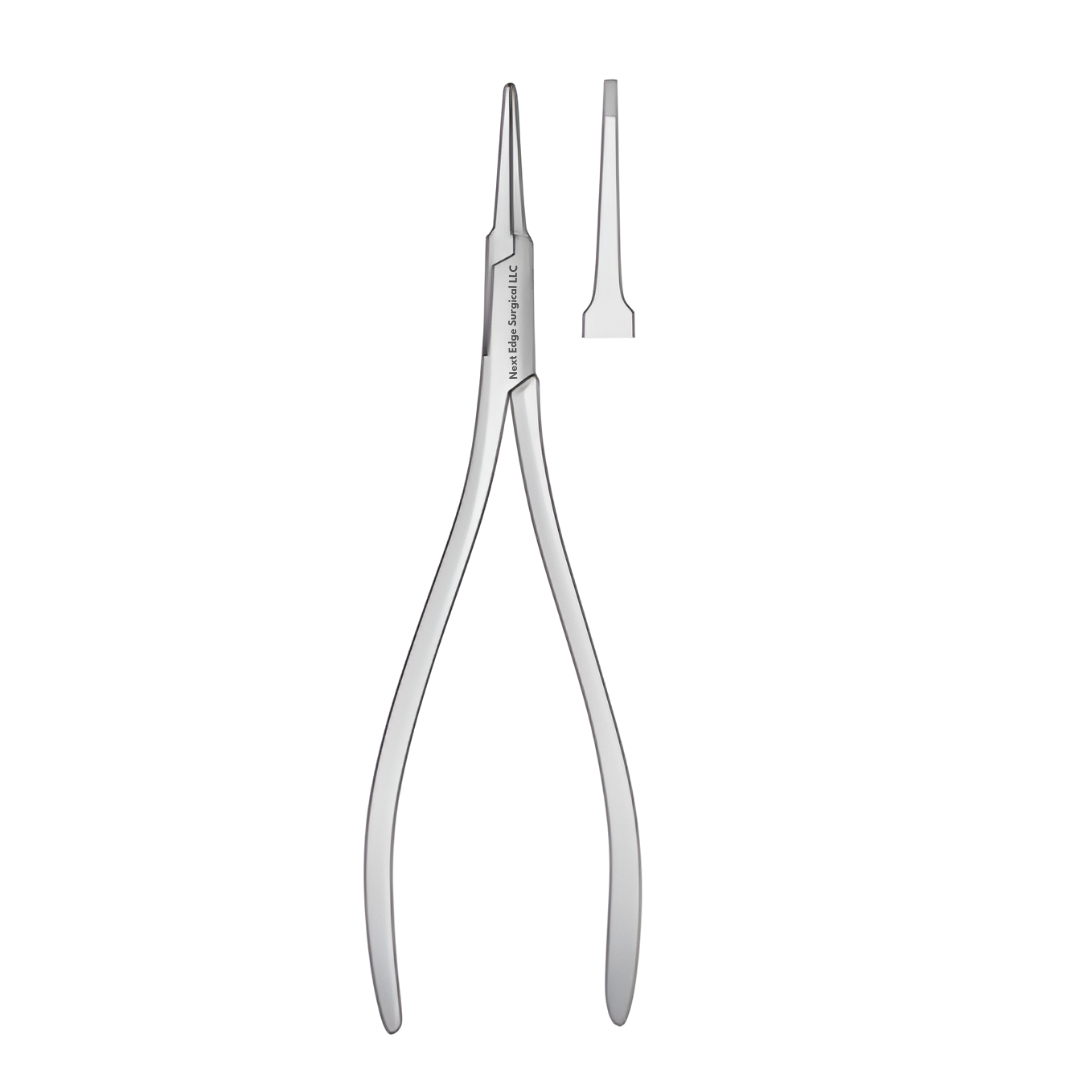
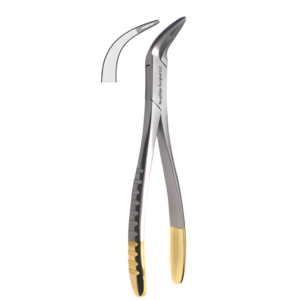
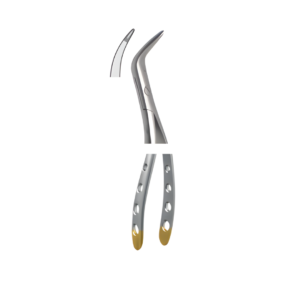
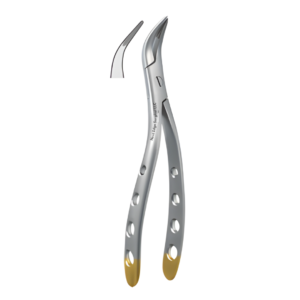
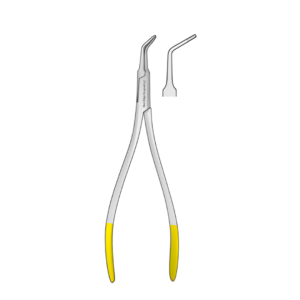
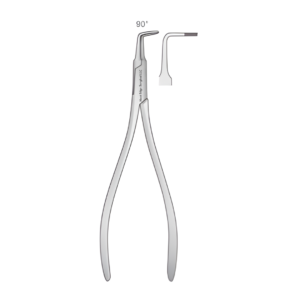
Dental Root Fragment Forceps – Without Diamond – NES-290
Removing a fractured dental root requires careful assessment of the remaining tooth structure. Once the crown is lost, the clinician must consider whether the root can be grasped directly or needs additional mobilization before extraction.
Our Dental Root Fragment Forceps Without Diamond – NES-290 is intended for professional root-removal procedures. Its Without Diamond designation identifies this instrument within our specialized dental root fragment forceps collection.
Managing Accessible Roots After Crown Fracture
A fractured crown may leave a root partially exposed above the gingival margin or positioned within the extraction socket. The amount of accessible structure influences instrument selection and the direction of controlled movement.
NES-290 belongs to our dental extraction forceps range, specifically the category intended for remaining dental roots. Its clinical role involves engaging accessible root material during appropriate extraction procedures.
Before applying forceps, the practitioner should evaluate root mobility, surrounding alveolar bone, and nearby teeth. Additional luxation or surgical exposure may be necessary when the root remains firmly seated.
Features and Benefits
| Feature | Benefit |
| Without Diamond designation | Identifies this specific root-fragment forceps model. |
| Root extraction application | Supports removal of suitable remaining dental roots. |
| Direct engagement purpose | Provides a grasping option for accessible root structures. |
| Fragment-focused classification | Addresses procedures following crown fracture or separation. |
| Dental surgical relevance | Complements instruments used during extraction procedures. |
| Dedicated root-removal role | Distinguishes the instrument from conventional crown forceps. |
Instrument Care and Handling
Before clinical preparation, inspect the working ends for visible wear, deposits, or damage. The gripping surfaces should remain clean and free from irregularities that could interfere with controlled root engagement.
Check the instrument’s opening and closing movement. Any abnormal resistance, misalignment, or visible mechanical damage should be addressed before clinical use.
After treatment, remove biological debris through the established instrument-cleaning process. Give particular attention to accessible joints and surfaces exposed to tooth structure, blood, and surrounding tissues.
Complete the appropriate sterilization procedure following cleaning. Protect the working ends during transportation between the treatment room and instrument-processing area.
During extraction, avoid applying excessive pressure to an immobile fragment. Root position and surrounding bone resistance should guide the selected removal technique.
When direct grasping is unsuitable, additional mobilization or another surgical approach may provide better access. Store NES-290 in an organized instrument tray, preventing unnecessary contact with heavier tools.
Product Specifications
| Specification | Details |
| Product Name | Dental Root Fragment Forceps – Without Diamond |
| SKU | NES-290 |
| Brand | Next Edge Surgical LLC |
| Product Category | Dental Root Fragment Forceps |
| Pattern Designation | Without Diamond |
| Intended Application | Dental Root Fragment Extraction |
| Clinical Use | Professional Dental and Oral Surgery |
Frequently Asked Questions
What is NES-290 designed to remove?
Accessible remaining dental roots during appropriate extraction procedures.
What does Without Diamond indicate?
It identifies this model’s designated pattern within the product range.
Can it assist after a crown fractures?
Yes, when sufficient remaining root structure is available for engagement.
Why should the instrument be inspected before use?
Inspection helps identify damage affecting gripping or operating movement.
How should NES-290 be stored?
Keep the working ends protected within an organized instrument tray.
Reviews
There are no reviews yet.