


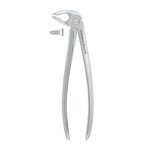
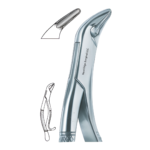
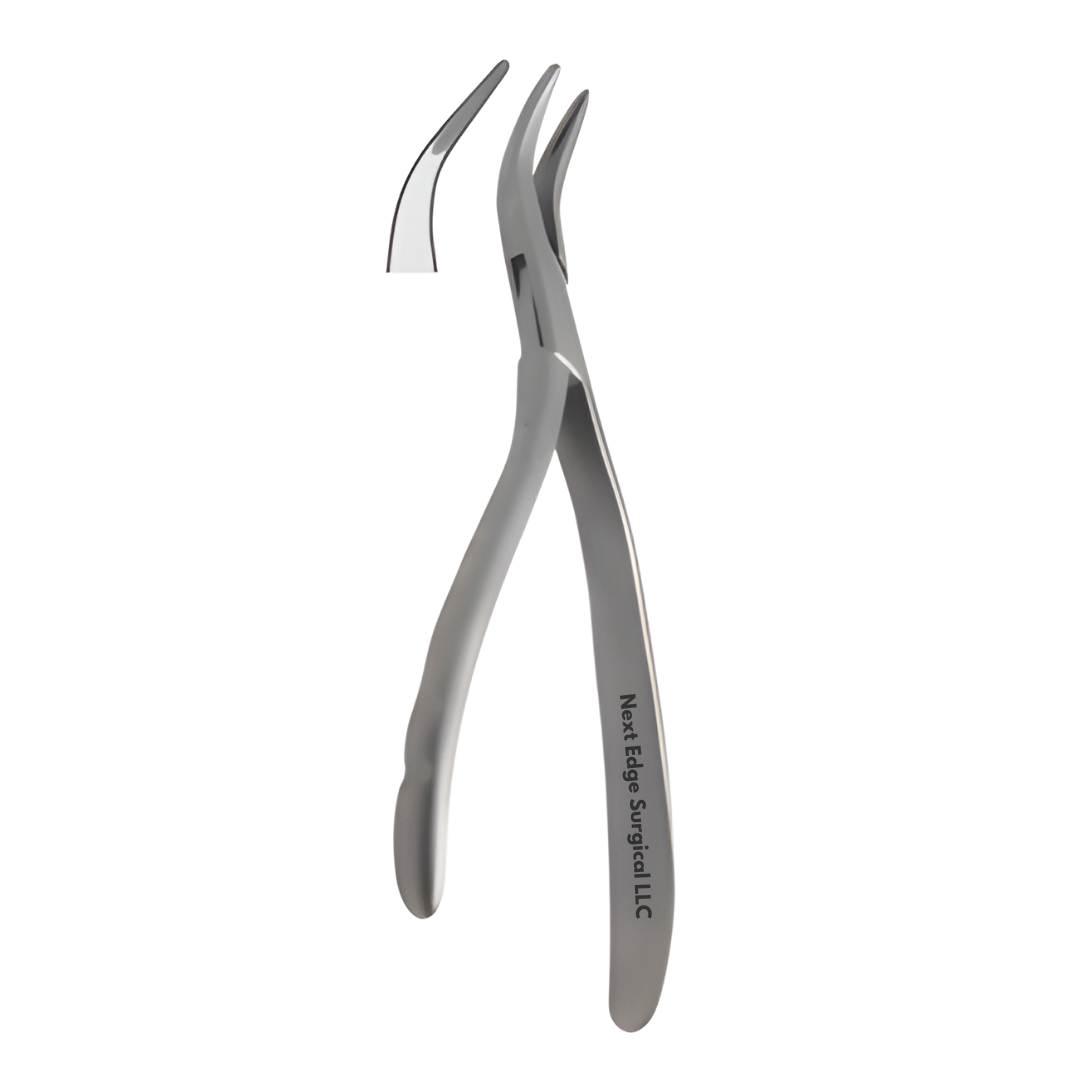
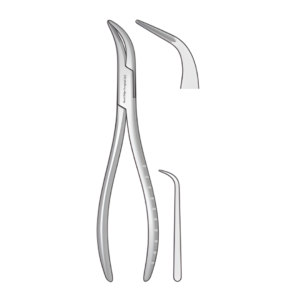
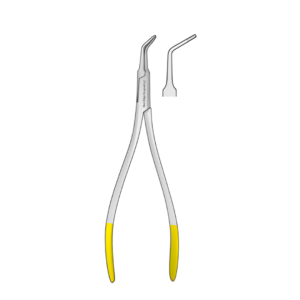
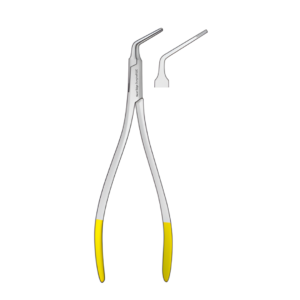
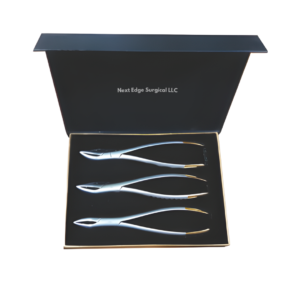
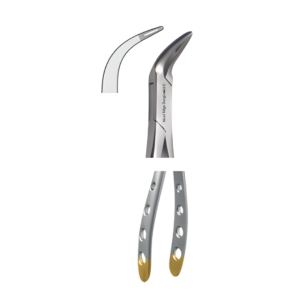
Dental Root Fragment Forceps – Upper roots, Universal – NES-284
Root fragments in the upper jaw can be small, difficult to see, and located close to delicate surrounding structures. Retrieving them calls for careful evaluation rather than simply repeating the movements used for an intact tooth.
Our Upper Roots, Universal Root Fragment Forceps – NES-284 is designated for suitable maxillary root-fragment retrieval. Its universal upper-root description places the instrument within procedures involving accessible remnants from different regions of the upper dental arch.
Fragment Retrieval Across the Maxillary Arch
Upper incisors and canines typically have single roots, whereas posterior teeth can present multiple roots and greater anatomical variation. A fragment’s depth, orientation, and mobility influence whether it can be grasped directly. Posterior roots may also lie near the maxillary sinus.
NES-284 complements our dental extraction forceps range through its specific root-fragment designation. The term universal identifies the stated upper-root scope; it does not remove the need to assess each fragment individually.
Features and Benefits
| Feature | Benefit |
| Root fragment designation | Focuses the instrument on remaining root pieces. |
| Upper-root application | Identifies the maxillary arch as the intended region. |
| Universal classification | Covers suitable upper-root fragment procedures. |
| Fragment grasping role | Supports controlled retrieval of accessible root remnants. |
| Maxillary anatomical relevance | Fits planning around varied root forms and nearby structures. |
| Extraction workflow integration | Complements examination, exposure, and preliminary mobilization. |
Instrument Care and Handling
Inspect the contact surfaces closely before a procedure. Look for residue, visible wear, or damage that could interfere with grasping a small fragment. Check normal movement, and position the instrument securely during tray preparation to prevent accidental impacts.
After use, remove biological material and tiny tooth particles before they dry. Examine accessible joint spaces and areas that contacted the fragment. Small particles deserve attention because they can remain between contact areas. Thorough cleaning and the established sterilization process are essential.
A deeply seated fragment may not be suitable for immediate grasping. Assess its relationship to adjacent roots, bone, and the sinus when relevant. Maintain visibility and avoid uncontrolled probing or leverage that could displace the fragment or injure surrounding tissues.
Keep the forceps protected during transport to processing. Store it with other root-retrieval instruments after reprocessing, away from heavy tools that could damage contact surfaces. Routine inspection supports careful preparation for future maxillary fragment procedures and helps identify changes requiring attention.
Product Specifications
| Specification | Details |
| Product Name | Upper Roots, Universal |
| SKU | NES-284 |
| Brand | Next Edge Surgical LLC |
| Product Category | Dental Root Fragment Forceps |
| Instrument Type | Root Fragment Forceps |
| Anatomical Region | Maxillary Roots |
| Intended Application | Upper Root Fragment Retrieval |
Frequently Asked Questions
What does NES-284 retrieve?
Suitable accessible root fragments from the upper arch.
Does universal mean every fragment can be grasped?
No, accessibility and clinical conditions determine suitability.
Why is imaging useful for root fragments?
It helps assess position and nearby anatomical structures.
Are posterior fragments different from anterior fragments?
Their root anatomy and surrounding relationships can differ.
What needs attention during cleaning?
Contact surfaces and accessible joints where particles collect.
Reviews
There are no reviews yet.