


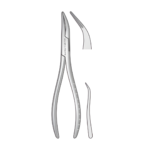
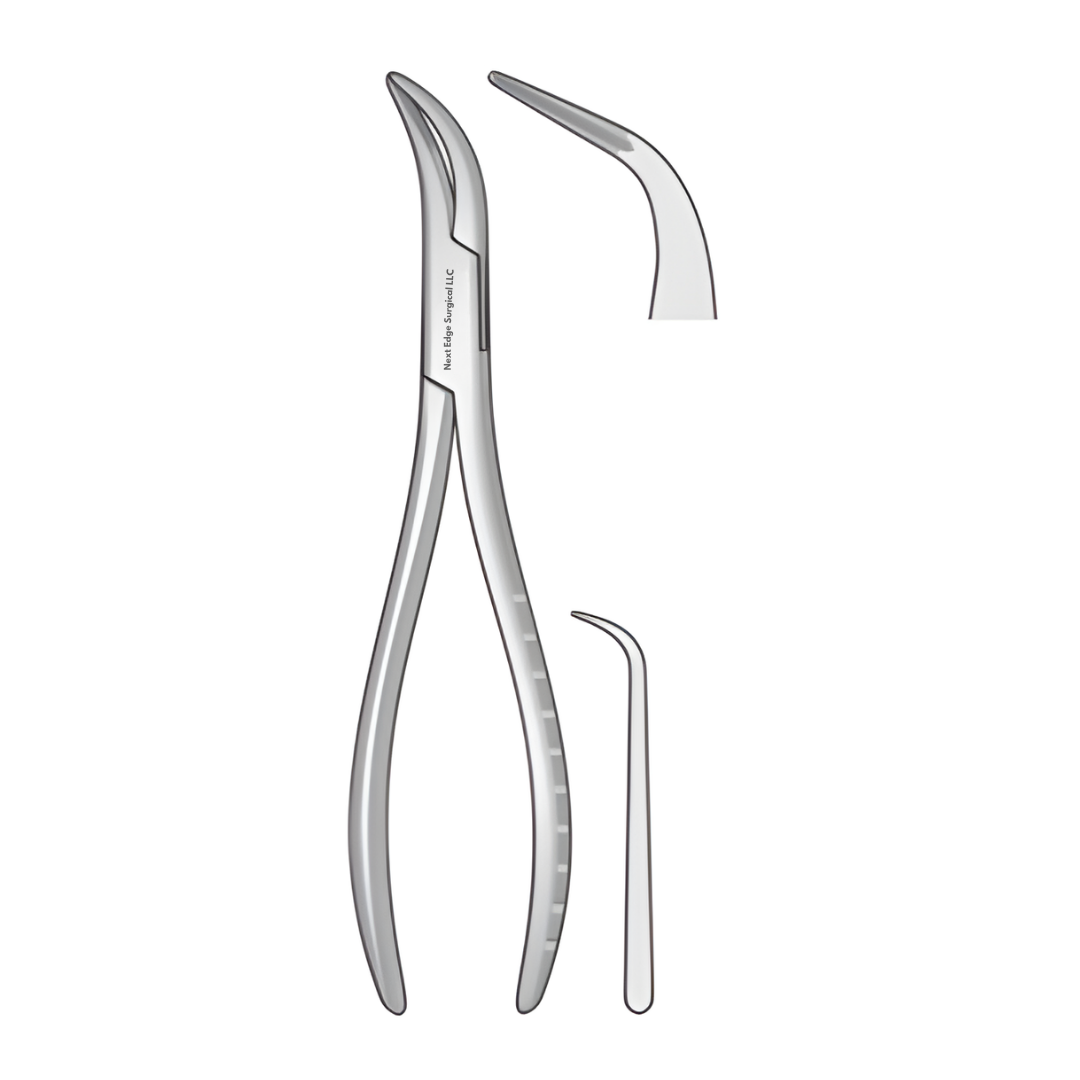
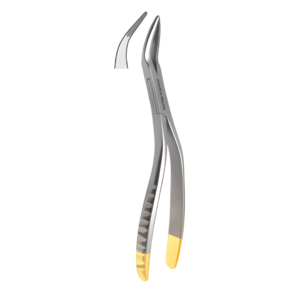
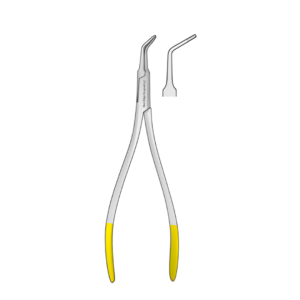
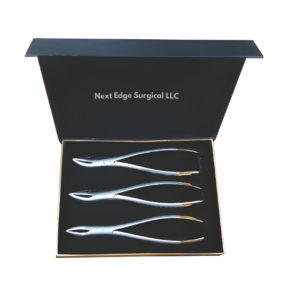
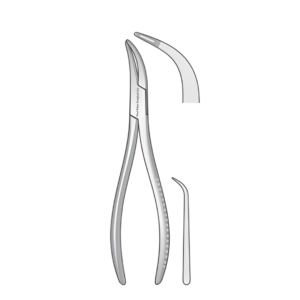
Dental Root Fragment Forceps – Lower roots, Universal – NES-273
When a mandibular tooth fractures during extraction, the remaining root can present a very different challenge from the original tooth. Limited exposed structure, surrounding bone, and restricted access may complicate the next stage of removal.
Our Lower Roots Universal Forceps – NES-273 is intended for suitable mandibular root extraction procedures. This instrument belongs to the dental root fragment forceps category, providing clinicians with a dedicated option for engaging remaining lower-tooth structures.
Root Engagement Across the Mandibular Arch
Lower incisors, premolars, and molars have different root characteristics. Anterior roots are generally narrower, while posterior teeth may have multiple roots with varying curvature and separation. These anatomical differences influence extraction planning and instrument selection.
The universal designation identifies a broader lower-root application rather than a single tooth position. NES-273 belongs to the specialized dental extraction forceps category used when remaining root structure can be approached and grasped appropriately.
Successful removal depends on adequate access, suitable root mobility, and controlled manipulation. Deeply positioned fragments may require additional surgical exposure or alternative instruments.
Features and Benefits
| Feature | Benefit |
| Universal lower-root application | Covers suitable mandibular root extraction procedures. |
| Root-focused instrument category | Addresses remaining structures following crown loss. |
| Mandibular anatomical designation | Supports selection for lower-jaw extraction cases. |
| Direct root engagement | Provides a grasping option when sufficient structure remains accessible. |
| Fragment-management application | Complements the clinical removal of fractured tooth remnants. |
| Dedicated extraction function | Distinguishes root forceps from instruments primarily intended for intact crowns. |
Instrument Care and Handling
Root extraction places mechanical demands on gripping surfaces and the instrument joint. Before treatment, inspect the working ends for visible damage, irregular contact, or accumulated deposits. Check the opening and closing movement to ensure normal operation.
After use, remove biological debris through the established cleaning process. Give particular attention to areas that contact dental tissue and to accessible moving components.
Complete cleaning and sterilization according to the appropriate instrument-reprocessing procedure. Keep the working ends protected during transportation between the treatment area and processing department.
During storage, avoid placing heavy instruments directly against the forceps. Organized trays help prevent accidental damage and make instrument preparation more efficient.
Clinical handling should reflect the condition of the remaining root. Excessive force against an immobile fragment can increase the risk of fracture or injury to adjacent tissues. Appropriate luxation, root separation, or surgical access may be necessary before forceps engagement.
Regular inspection helps maintain dependable operation throughout repeated clinical use.
Product Specifications
| Specification | Details |
| Product Name | Lower Roots, Universal |
| SKU | NES-273 |
| Brand | Next Edge Surgical LLC |
| Product Category | Dental Root Fragment Forceps |
| Instrument Classification | Universal Lower-Root Forceps |
| Anatomical Region | Mandibular Dentition |
| Intended Application | Lower Dental Root Extraction |
| Clinical Setting | Dental and Oral Surgery |
Frequently Asked Questions
What does universal mean for NES-273?
It indicates an intended application across suitable lower-root extraction cases.
Can these forceps be used for mandibular premolar roots?
They belong to the lower-root category; selection depends on the individual root anatomy.
Are root fragment forceps different from elevators?
Yes. Forceps grasp accessible structures, while elevators help mobilize teeth or roots.
Why is root mobility important?
Adequate mobility helps support controlled removal without unnecessary force.
How should the instrument be stored?
Keep its working ends protected within an organized instrument tray.
Reviews
There are no reviews yet.