


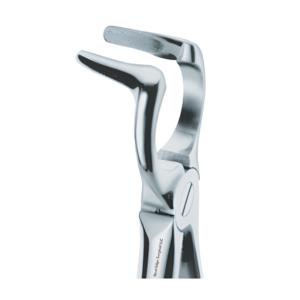
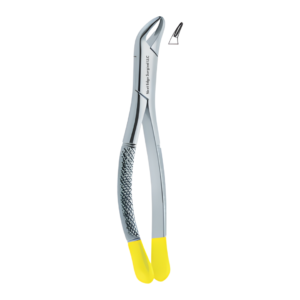
Dental Extraction Forceps – Lower Anterior and Roots – NES-322
A fractured lower anterior tooth presents an important clinical decision: whether the remaining structure permits forceps engagement or requires another removal technique. The answer depends on accessibility, mobility, and the condition of the root.
Our Lower Anterior and Roots Forceps – NES-322 is intended for appropriate mandibular anterior tooth and root extractions. It belongs to the lower anterior instrument category used when clinicians need to engage suitable remaining tooth structure during removal.
Evaluating Remaining Structure Before Extraction
Anterior teeth can lose substantial crown structure through decay, trauma, or previous dental treatment. When a root remains, the practitioner evaluates its position within the socket, relationship to surrounding bone, and proximity to adjacent teeth.
NES-322 is included in our dental extraction forceps range. Its designation covers lower anterior teeth and roots. Selection depends on whether the target structure can be engaged appropriately and whether preliminary mobilization is necessary before the final extraction stage.
Features and Benefits
| Feature | Benefit |
| Lower anterior designation | Identifies the intended mandibular front-tooth region. |
| Root removal application | Supports appropriate extraction of accessible remaining roots. |
| Mandibular tooth focus | Relates to lower incisor and canine extraction planning. |
| Remaining-structure engagement | Supports grasping where sufficient tooth material is accessible. |
| Anterior extraction role | Complements procedures involving narrow dental arch access. |
| Clinical workflow relevance | Fits treatment sequences involving examination and mobilization. |
Instrument Care and Handling
Prepare NES-322 by checking the gripping surfaces for deposits, damage, and irregular contact areas. Confirm that the instrument opens and closes normally. Keep the working ends protected during preparation and positioning on the tray.
After a retained-root procedure, inspect the instrument for small tooth fragments and tissue residue. Remove contamination promptly, particularly from areas where debris can accumulate. Clean accessible joint surfaces and complete the established reprocessing and sterilization workflow.
During extraction, evaluate the remaining root before attempting forceps delivery. A fragment positioned deep within the socket may require additional access or mobilization. Avoid using excessive gripping pressure on weakened tooth structure, which can increase the risk of further fragmentation.
Maintain awareness of neighboring incisors, gingival tissues, and the surrounding alveolar bone. Choose extraction movements according to the tooth’s anatomy and mobility rather than relying on force alone.
Transport the instrument in a protected position after treatment. Store it in an organized extraction tray following processing. Routine inspection helps the clinical team recognize changes in working condition and prepare effectively for future anterior root procedures.
Product Specifications
| Specification | Details |
| Product Name | Lower Anterior and Roots |
| SKU | NES-322 |
| Brand | Next Edge Surgical LLC |
| Product Category | Dental Extracting Forceps |
| Instrument Type | Lower Anterior and Root Extraction Forceps |
| Anatomical Region | Mandibular Anterior Teeth and Roots |
| Intended Application | Lower Anterior and Root Removal |
Frequently Asked Questions
What is the primary application of NES-322?
Extraction of suitable lower anterior teeth and roots.
Can it be used for remaining root fragments?
Yes, when sufficient structure is accessible for engagement.
Why evaluate root depth before removal?
Deep positioning can change the required extraction technique.
What can cause further root fragmentation?
Excessive pressure on weakened remaining tooth structure.
What maintenance is recommended?
Regular inspection, thorough cleaning, reprocessing, and protected storage.
Reviews
There are no reviews yet.