


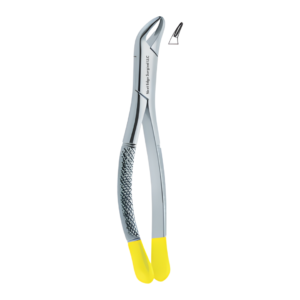
Dental Extraction Forceps – Lower Anterior and Roots – NES-321
Crowding in the lower front of the mouth can make a seemingly straightforward extraction more demanding. Narrow crowns, closely positioned neighboring teeth, and limited access influence how an instrument can engage the intended tooth.
Our Lower Anterior and Roots Forceps – NES-321 is designated for mandibular anterior teeth and suitable remaining roots. It supports extraction planning where controlled crown or root engagement must account for the confined anterior dental arch.
Managing Access Around Mandibular Anterior Teeth
Lower incisors generally have single roots, often flattened along their mesial and distal surfaces. Mandibular canines usually possess longer roots. These anatomical differences affect the movement required for removal and the amount of resistance encountered during extraction.
NES-321 is part of our dental extraction forceps collection. Its lower anterior and root designation identifies the intended clinical region. Before using the instrument, practitioners evaluate tooth mobility, periodontal support, remaining crown structure, and the position of adjacent teeth.
Features and Benefits
| Feature | Benefit |
| Lower anterior application | Supports extraction procedures involving mandibular front teeth. |
| Root extraction designation | Addresses suitable remaining roots in the lower anterior region. |
| Mandibular focus | Distinguishes the intended application from maxillary instruments. |
| Crown engagement role | Supports grasping when sufficient tooth structure remains. |
| Anterior access relevance | Fits treatment planning around closely positioned neighboring teeth. |
| Extraction workflow compatibility | Complements appropriate preliminary mobilization techniques. |
Instrument Care and Handling
Before the procedure, examine the tooth-contact surfaces for visible wear, contamination, and changes in condition. Test the opening and closing action while preparing the extraction tray. Arrange the instrument to prevent unnecessary contact with other working ends.
Following extraction, remove biological residue promptly. Pay particular attention to debris around the gripping surfaces and accessible joint areas. Complete the established cleaning and sterilization process before returning NES-321 to clinical use.
When engaging a lower incisor, account for its narrow crown and the proximity of neighboring teeth. Avoid pressure that could compromise adjacent restorations or soft tissues. For remaining roots, assess accessibility and mobility before attempting direct removal.
If resistance persists, reassess the extraction technique rather than applying uncontrolled force. Root curvature, periodontal attachment, and surrounding bone can affect the procedure. Appropriate elevators or another removal approach may be incorporated into the treatment plan.
Transport the instrument securely after use. Once reprocessed, place it in protected storage with the lower anterior extraction instruments. Periodic inspection supports consistent clinical preparation and timely identification of wear.
Product Specifications
| Specification | Details |
| Product Name | Lower Anterior and Roots |
| SKU | NES-321 |
| Brand | Next Edge Surgical LLC |
| Product Category | Dental Extracting Forceps |
| Instrument Type | Lower Anterior and Root Forceps |
| Anatomical Region | Mandibular Anterior Dentition |
| Intended Application | Lower Anterior Tooth and Root Extraction |
Frequently Asked Questions
Which teeth are associated with NES-321?
Suitable mandibular anterior teeth and remaining roots.
Why is anterior crowding important?
It can restrict access around the target tooth.
Are mandibular incisors usually single-rooted?
Yes, most lower incisors have one root.
Can elevators assist with resistant teeth?
Yes, when additional mobilization is clinically appropriate.
How should the instrument be stored?
In protected storage following cleaning and reprocessing.
Reviews
There are no reviews yet.