


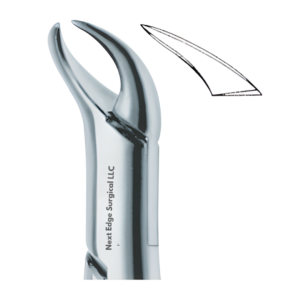
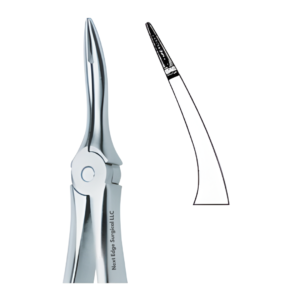
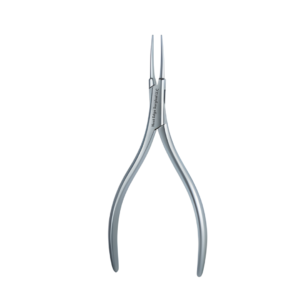


Dental Extraction Forceps – Winter Upper Centrals and Canines – NES-292
Upper central incisors and canines occupy prominent positions in the dental arch. Their extraction requires attention to root anatomy, adjacent teeth, and the surrounding alveolar bone, particularly when preserving neighboring structures is an important treatment consideration.
Our Winter Upper Centrals and Canines Forceps – NES-292 is intended for extraction procedures involving these maxillary anterior teeth. The Winter pattern identifies an established forceps design associated with upper central incisors and canines.
Winter Pattern for Maxillary Anterior Extractions
Maxillary central incisors generally have a single root, while upper canines typically possess long roots that can present greater resistance during extraction. Their anatomical differences influence the direction and degree of controlled movement.
NES-292 belongs to our dental extraction forceps collection and is specifically designated for upper central incisors and canines. Its Winter pattern provides a tooth-specific instrument selection for these anterior extraction procedures.
Before extraction, the clinician should evaluate crown condition, root morphology, and surrounding periodontal support. Appropriate positioning and controlled movement help minimize unnecessary pressure on adjacent teeth and soft tissues.
Features and Benefits
| Feature | Benefit |
| Winter instrument pattern | Identifies an established upper-anterior extraction forceps design. |
| Upper central incisor application | Supports extraction procedures involving maxillary central incisors. |
| Upper canine application | Provides an instrument option for maxillary canine extraction. |
| Anterior anatomical focus | Supports selection for the front region of the upper arch. |
| Tooth-specific classification | Distinguishes this pattern from molar and root-fragment forceps. |
| Direct tooth-engagement purpose | Supports controlled grasping during suitable extraction procedures. |
Instrument Care and Handling
Before treatment, inspect the forceps’ working ends for visible damage, deposits, or irregularities. Examine the contact surfaces and check the opening and closing movement during tray preparation.
Following extraction, remove blood, tissue residue, and other biological contamination through the established cleaning process. Pay attention to accessible joint areas and surfaces that contact the tooth.
Complete the appropriate sterilization procedure before subsequent clinical use. Protect the working ends during transportation and avoid storing the instrument beneath heavier surgical equipment.
During maxillary anterior extraction, maintain awareness of the labial bone plate and adjacent tooth surfaces. Excessive or poorly directed force can contribute to unwanted tissue or bone injury.
Upper canines often have relatively long roots, making adequate mobilization and careful assessment particularly important. Central incisors require similarly controlled handling appropriate to their anatomy.
After processing, store NES-292 in an organized extraction tray. Regular inspection supports consistent handling throughout repeated clinical procedures.
Product Specifications
| Specification | Details |
| Product Name | Winter Upper Centrals and Canines |
| SKU | NES-292 |
| Brand | Next Edge Surgical LLC |
| Product Category | Dental Extraction Forceps |
| Instrument Pattern | Winter |
| Anatomical Region | Maxillary Anterior Dentition |
| Intended Teeth | Upper Central Incisors and Canines |
| Primary Application | Dental Tooth Extraction |
Frequently Asked Questions
Which teeth is NES-292 intended for?
Upper central incisors and canines.
What does the Winter designation identify?
An established forceps pattern for maxillary anterior extraction.
Is this instrument intended for upper molars?
Its designated application is upper central incisors and canines.
Why do upper canines require careful extraction planning?
Their relatively long roots can influence resistance and movement.
What should be inspected before clinical use?
The working ends, contact surfaces, and operating movement.
Reviews
There are no reviews yet.