


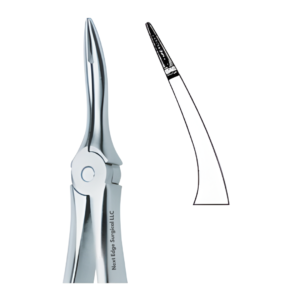


Dental Extraction Forceps – Upper Anterior and Roots – NES-323
An upper front tooth may need removal because of fracture, advanced damage, or an unsuccessful restorative outlook. Remaining crown structure influences the approach, particularly when a root remains firmly seated.
Our Upper Anterior and Roots Forceps – NES-323 is designated for maxillary anterior teeth and accessible remaining roots. It supports tooth engagement during a planned extraction, with instrument selection guided by the clinical condition of the target area.
Assessing Incisor, Canine, and Root Access
Maxillary incisors generally have a single root, while upper canines often possess a comparatively long root. Their position requires attention to access, bone, and removal direction. Fractured crowns introduce additional considerations when only a limited portion remains available for grasping.
NES-323 forms part of our dental extraction forceps range for upper anterior and root procedures. Clinical assessment establishes whether the tooth can be engaged directly or whether initial elevation, further access, or another approach is preferable.
Features and Benefits
| Feature | Benefit |
| Upper anterior designation | Identifies the intended maxillary front-tooth region. |
| Root extraction application | Supports removal of accessible retained anterior roots. |
| Incisor procedure relevance | Fits planning for upper central and lateral incisors. |
| Canine procedure relevance | Addresses extraction planning around longer canine roots. |
| Tooth engagement role | Provides a grasping option when suitable structure remains. |
| Combined clinical application | Accommodates anterior tooth and root-removal workflows. |
Instrument Care and Handling
Before preparing the operative field, inspect the contact surfaces for adherent deposits, irregularities, or visible damage. Move the handles through their normal range and check the accessible joint. Set the forceps where its working ends remain protected from contact with other instruments.
After treatment, remove blood, tissue residue, and small fragments without delay. Clean areas that contacted the tooth and any accessible joint spaces where debris can collect. Complete the established instrument cleaning and sterilization process before subsequent clinical use.
For anterior root procedures, assess the remaining structure before applying a firm grasp. A deeply seated fragment or a weakened crown may call for further mobilization rather than greater pressure. Protect the lip and neighboring teeth during instrument placement, and maintain awareness of the surrounding alveolar bone.
Transport NES-323 securely to the processing area. Once reprocessed, place it in a protected extraction tray. Regular inspection helps identify wear before the instrument is selected for another upper anterior procedure.
Product Specifications
| Specification | Details |
| Product Name | Upper Anterior and Roots |
| SKU | NES-323 |
| Brand | Next Edge Surgical LLC |
| Product Category | Extracting Forceps |
| Instrument Type | Upper Anterior and Root Forceps |
| Anatomical Region | Maxillary Anterior Dentition |
| Intended Application | Upper Anterior Tooth and Root Extraction |
Frequently Asked Questions
Which area is NES-323 intended for?
Upper front teeth and accessible remaining roots.
Why is canine root length relevant?
Long roots can influence resistance and extraction planning.
Can a fractured crown affect engagement?
Yes, reduced structure may change the removal technique.
What should be protected during placement?
The lip, adjacent teeth, and surrounding tissues.
Which areas need cleaning after use?
Tooth-contact surfaces and accessible joint spaces.
Reviews
There are no reviews yet.