




Dejerine Neurological Reflex Testing Hammer – 01-125-20
Neurological assessment frequently combines several examination techniques to evaluate reflex activity and sensory responses. Having an instrument suited to different forms of stimulation helps clinicians perform a more organized physical examination.
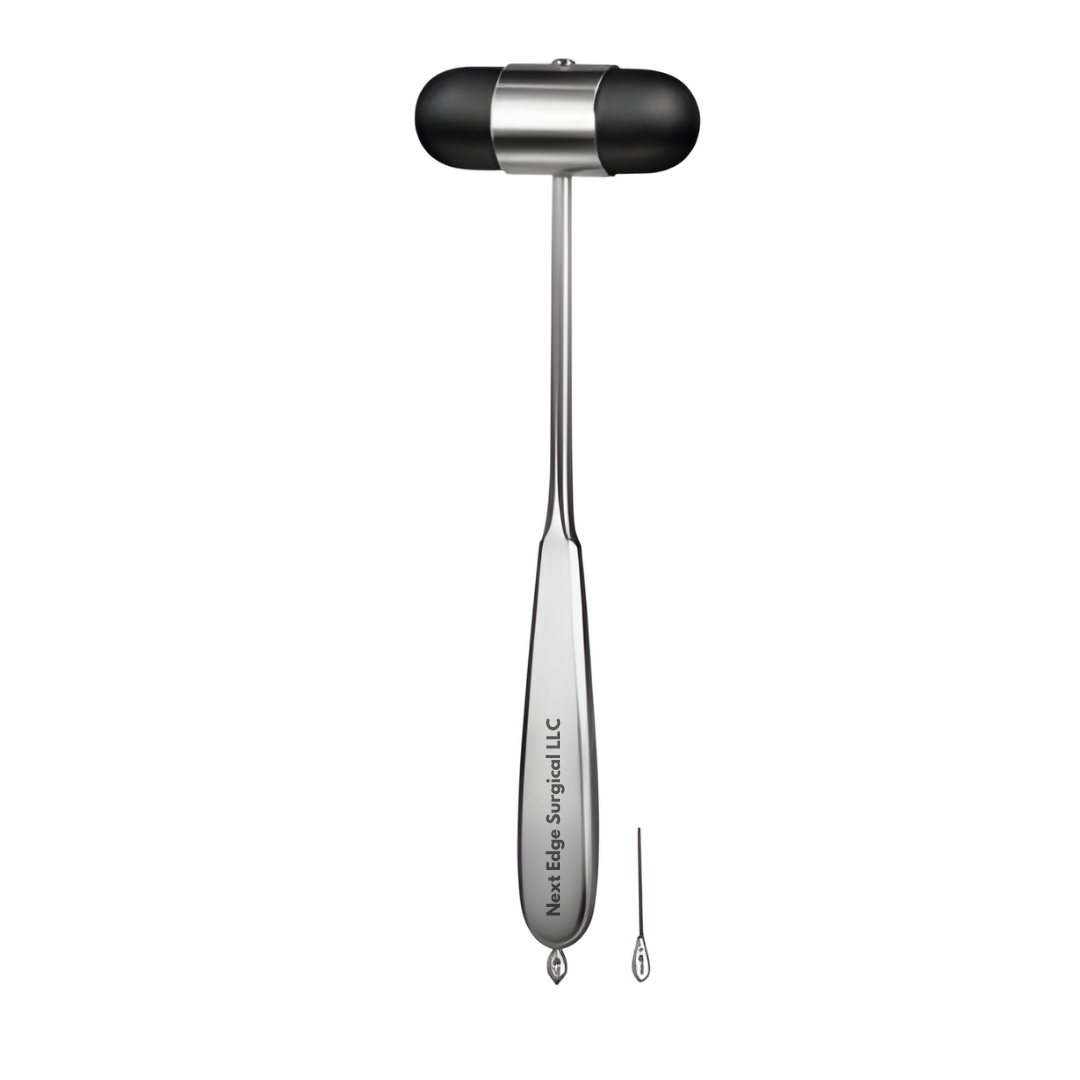
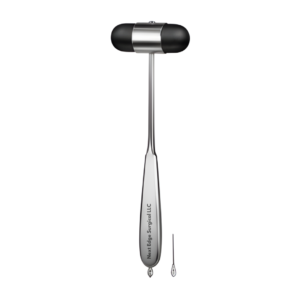
Our Dejerine Neurological Reflex Testing Hammer – 01-125-20 features a 20 cm configuration with a tomahawk-shaped rubber head and pointed tip. These distinct contact surfaces support tendon percussion and localized neurological testing within one examination instrument.
Dual-Surface Design for Reflex and Cutaneous Testing
The broad striking portion is intended for eliciting deep tendon reflexes, including responses at the patellar, Achilles, biceps, and triceps tendons. Controlled percussion helps the examiner observe the resulting involuntary muscle movement.
The pointed end provides a more localized contact surface for appropriate cutaneous assessment. As a surgical diagnostic instrument, this Dejerine pattern supports a wider neurological examination without requiring separate tools for every stimulus.
Features and Benefits
| Feature | Benefit |
| Dejerine neurological pattern | Supports established reflex examination techniques. |
| 20 cm overall length | Provides a defined size for controlled handling. |
| Tomahawk-shaped rubber head | Offers a broad surface for tendon percussion. |
| Pointed testing tip | Supports localized cutaneous stimulation. |
| Multiple examination applications | Accommodates tendon and selected superficial reflex assessments. |
| Clinical neurological use | Complements motor, sensory, and reflex evaluation. |
Instrument Care and Handling
Inspect the rubber striking head and pointed tip before each examination. Look for visible damage, contamination, or irregularities that could affect safe contact with the patient.
Explain the testing procedure and position the patient appropriately. Clear instructions help the patient remain relaxed during tendon percussion and understand the sensory examination.
For deep tendon reflexes, identify the relevant tendon and apply a controlled strike with the broad head. Observe the muscle response rather than relying solely on the patient’s description.
When assessing the patellar reflex, compare knee extension on both sides. Achilles testing involves observing the response associated with plantar flexion.
The pointed tip may be used for appropriate superficial reflex testing, including selected plantar responses. Apply the stimulus gently and follow established neurological examination technique.
Avoid using excessive pressure or producing unnecessary discomfort. The purpose of localized stimulation is to assess the neurological response safely.
Document the location, method, and observed response. Consider asymmetry, reduced activity, or exaggerated reflexes alongside the patient’s other neurological findings.
After each examination, clean and disinfect the patient-contact surfaces using methods compatible with the instrument’s components.
Protect the rubber head from sharp edges and unnecessary compression. Keep the pointed tip secure during transportation and storage.
Store the hammer in a clean diagnostic tray. Regular inspection helps maintain suitable working condition for repeated neurological assessments.
Product Specifications
| Specification | Details |
| Product Name | Dejerine Neurological Reflex Testing Hammer |
| SKU | 01-125-20 |
| Brand | Next Edge Surgical LLC |
| Category | Diagnostic Instruments |
| Instrument Pattern | Dejerine |
| Overall Length | 20 cm |
| Head Configuration | Tomahawk-Shaped Rubber Head |
| Additional Working End | Pointed Tip |
| Intended Application | Tendon and Cutaneous Reflex Assessment |
Frequently Asked Questions
What distinguishes this Dejerine hammer?
Its broad rubber head and pointed testing tip.
What is the overall instrument length?
20 cm.
Can it be used for tendon reflex testing?
Yes, including patellar, Achilles, biceps, and triceps assessments.
What is the pointed tip used for?
Appropriate localized cutaneous reflex stimulation.
How should its rubber head be protected?
Avoid sharp objects, excessive compression, and damaging cleaning agents.
Reviews
There are no reviews yet.