


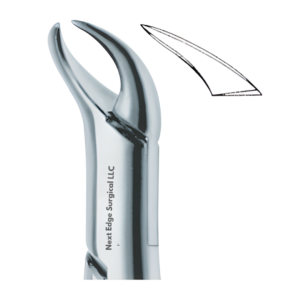


Dental Extraction Forceps – Upper Molars Right – NES-324
The right upper molar region demands careful instrument positioning because the working area narrows toward the back of the mouth. A molar’s crown may be accessible even when its roots resist movement in different directions.
Our Upper Molars Right Forceps – NES-324 is designated for suitable maxillary molar extraction on the patient’s right side. It provides a quadrant-specific choice for clinicians preparing to remove an upper posterior tooth.
Right-Sided Selection for Maxillary Molars
Upper first and second molars commonly have two buccal roots and one palatal root. These roots may diverge, curve, or lie near the maxillary sinus. Their configuration, together with crown condition and periodontal support, shapes the extraction plan before forceps engagement begins.
NES-324 belongs to our dental extraction forceps collection. Right-sided upper molar instruments are selected to correspond with the patient’s right maxillary quadrant. The clinician evaluates the tooth’s accessibility and mobility, then chooses an appropriate sequence of engagement and movement.
Features and Benefits
| Feature | Benefit |
| Upper-right designation | Identifies the patient’s right maxillary molar region. |
| Molar extraction application | Supports suitable upper posterior tooth removal. |
| Quadrant-specific selection | Distinguishes right-sided use from left molar instruments. |
| Multi-root clinical relevance | Fits planning around buccal and palatal roots. |
| Crown engagement purpose | Supports grasping when remaining structure is adequate. |
| Posterior procedure role | Complements mobilization and controlled tooth delivery. |
Instrument Care and Handling
During setup, examine the working surfaces for contamination, uneven wear, and damage. Check that the forceps opens and closes normally before it enters the treatment area. Position it securely on the tray to avoid impacts against other instruments.
After extraction, clear visible blood and tooth debris promptly, especially around the contact surfaces. Clean the accessible joint and complete the established reprocessing and sterilization workflow. Keep the instrument protected from handling contamination after processing.
Right upper molar removal requires attention to neighboring restorations and the cheek. Assess whether the crown can tolerate engagement before applying pressure. If mobility remains limited, consider additional elevation or another appropriate technique instead of forcing the tooth along an unsuitable path.
When planning removal, account for the relationship between posterior roots and the maxillary sinus. Tooth anatomy and surrounding bone can influence both movement and the risk of fracture. Transport NES-324 with its working ends protected, and store it in a dedicated tray after processing. Periodic inspection supports consistent preparation for future right-sided molar appointments.
Product Specifications
| Specification | Details |
| Product Name | Upper Molars Right |
| SKU | NES-324 |
| Brand | Next Edge Surgical LLC |
| Product Category | Extracting Forceps |
| Instrument Type | Right Upper Molar Forceps |
| Anatomical Region | Right Maxillary Posterior Dentition |
| Intended Application | Upper Right Molar Extraction |
Frequently Asked Questions
Which side does NES-324 serve?
The patient’s upper right molar region.
Why are upper molar roots important?
Their divergence can affect resistance during removal.
What may influence instrument engagement?
Crown condition, accessibility, and tooth mobility.
Can preliminary elevation be appropriate?
Yes, when additional tooth mobilization is indicated.
How should NES-324 be stored?
In a protected tray after reprocessing.
Reviews
There are no reviews yet.