


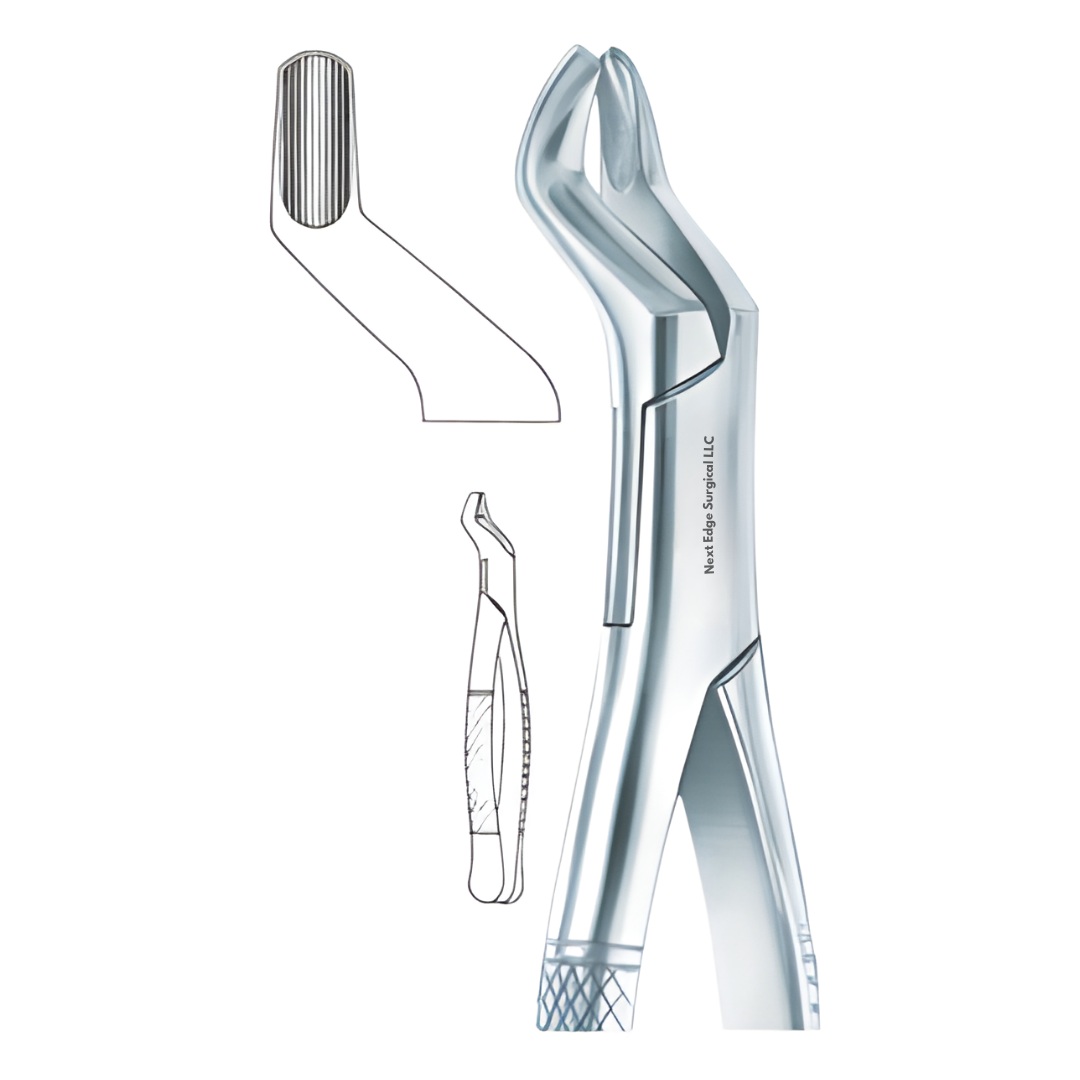
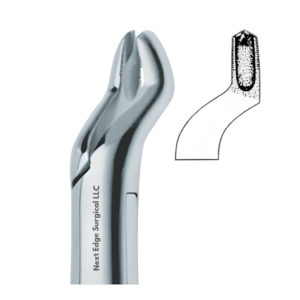
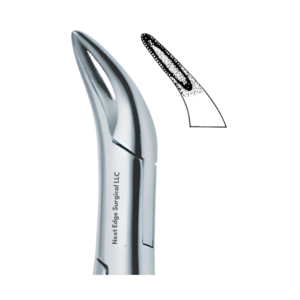
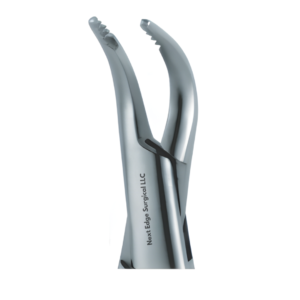
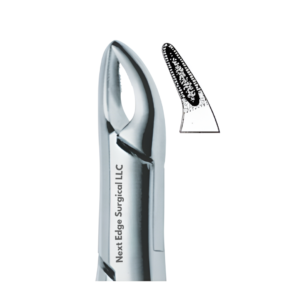
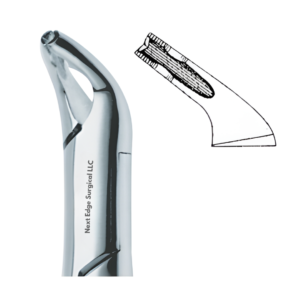
Dental Extraction Forceps – Upper Molars Left – NES-325
A left upper molar extraction starts with understanding how much of the tooth remains above the gumline and how its roots are supported beneath it. The relationship between those structures determines whether direct forceps removal is practical.
Our Upper Molars Left Forceps – NES-325 is designated for maxillary molars on the patient’s left side. It supports clinical extraction workflows where the tooth has been assessed for crown strength, root anatomy, and an appropriate path of delivery.
Planning Removal in the Left Posterior Maxilla
Upper molars generally have a palatal root and two buccal roots. Their shape and separation vary between patients, making radiographic findings valuable when evaluating extraction difficulty. The left posterior region also places the operator near adjacent molars, soft tissue, and the maxillary sinus.
NES-325 is included in our dental extraction forceps collection. Its left-sided designation identifies the intended quadrant. Clinicians consider how the tooth responds to initial mobilization and whether adequate crown structure remains before progressing to forceps delivery.
Features and Benefits
| Feature | Benefit |
| Upper-left designation | Directs selection to the patient’s left maxillary molars. |
| Posterior tooth application | Addresses suitable extraction of upper back teeth. |
| Left-quadrant specificity | Differentiates this application from right molar forceps. |
| Molar root relevance | Supports planning around multiple posterior roots. |
| Crown grasping role | Provides engagement during appropriate tooth removal. |
| Extraction sequence function | Complements assessment, elevation, and controlled delivery. |
Instrument Care and Handling
Check the gripping surfaces before treatment for debris, surface changes, or damage. Verify normal movement at the joint while preparing the tray. Keep the working ends away from heavier instruments and protect them during transfer to the operative field.
Once the procedure is complete, clear biological material before deposits dry. Pay attention to tooth-contact surfaces and accessible joint spaces during cleaning. Finish the established cleaning and sterilization process, then keep the processed forceps in protected storage.
For left upper molars, assess whether restorations or decay have compromised the crown. A weakened tooth may fracture under excessive pressure. Consider root configuration and surrounding bone when determining the direction of movement, and reassess the technique when resistance remains significant.
Avoid unnecessary contact with adjacent teeth and the cheek while positioning the instrument. After use, transport NES-325 securely rather than allowing its working ends to strike other tools. Routine inspection and organized storage support efficient preparation for subsequent upper-left extraction procedures.
Product Specifications
| Specification | Details |
| Product Name | Upper Molars Left |
| SKU | NES-325 |
| Brand | Next Edge Surgical LLC |
| Product Category | Extracting Forceps |
| Instrument Type | Left Upper Molar Forceps |
| Anatomical Region | Left Maxillary Posterior Dentition |
| Intended Application | Upper Left Molar Extraction |
Frequently Asked Questions
Which teeth are associated with NES-325?
Suitable molars in the patient’s upper left quadrant.
Why examine the remaining crown?
Damage can reduce its ability to withstand engagement.
What does radiographic assessment help identify?
Root shape and nearby anatomical relationships.
When should the technique be reassessed?
When mobility remains limited or resistance increases.
What supports ongoing instrument care?
Prompt cleaning, inspection, reprocessing, and protected storage.
Reviews
There are no reviews yet.