


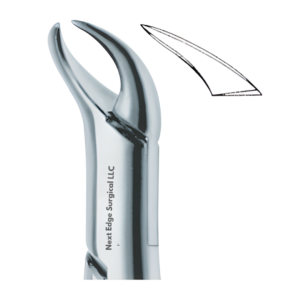


Dental Extraction Forceps – Upper Molars Left – NES-311
The upper left molar region presents a distinctive extraction challenge: access is posterior, neighboring teeth restrict movement, and roots may extend in several directions. Instrument selection begins with evaluating the tooth and identifying the quadrant.
Our Upper Molars Left Forceps – NES-311 is designated for extraction of suitable maxillary molars on the patient’s left side. It supports the forceps stage of treatment when crown structure and tooth mobility permit controlled removal.
Preparing the Left Maxillary Molar Site
Upper first and second molars commonly have three roots, including two buccal roots and a palatal root. Their curvature and separation influence resistance during extraction. Radiographic assessment also helps clinicians understand the relationship between posterior roots and the maxillary sinus.
NES-311 belongs to our dental extraction forceps collection. Its left-sided designation helps distinguish the intended quadrant from right upper molar instruments. Before applying force, the clinician evaluates restorations, remaining crown strength, adjacent teeth, and the direction in which the tooth can be mobilized.
Features and Benefits
| Feature | Benefit |
| Upper-left designation | Identifies the intended maxillary quadrant for instrument selection. |
| Molar-specific application | Addresses extraction of suitable upper posterior teeth. |
| Crown engagement role | Supports direct grasping when adequate tooth structure remains. |
| Posterior clinical focus | Fits treatment planning around restricted access behind premolars. |
| Side-specific selection | Helps differentiate left and right upper molar instruments. |
| Extraction sequence compatibility | Complements elevators and other mobilization instruments when indicated. |
Instrument Care and Handling
Inspect the gripping surfaces before treatment for debris, visible wear, or deformation. Open and close the instrument during tray preparation to identify irregular movement. Position the forceps where its working ends will not contact sharp or heavy equipment.
After the procedure, remove blood, tissue material, and tooth particles promptly. Clean the contact areas and accessible joint surfaces thoroughly, then complete the established clinical reprocessing and sterilization workflow. Handle the instrument carefully during transfer to the processing area.
For upper left molars, consider the neighboring restorations and cheek during instrument placement. Avoid increasing pressure when a tooth remains resistant. Root divergence, weakened crowns, or limited mobility can call for additional luxation or another appropriate extraction technique.
Store NES-311 in an organized tray after processing. Periodic inspection supports reliable preparation and helps identify changes in condition before subsequent clinical appointments. Separate left-sided instruments during setup for efficient selection.
Product Specifications
| Specification | Details |
| Product Name | Upper Molars Left |
| SKU | NES-311 |
| Brand | Next Edge Surgical LLC |
| Product Category | Dental Extracting Forceps |
| Instrument Type | Upper Left Molar Forceps |
| Anatomical Region | Left Maxillary Posterior Dentition |
| Intended Application | Upper Left Molar Extraction |
Frequently Asked Questions
Which quadrant is NES-311 intended for?
The patient’s upper left molar region.
Why do upper molar roots require assessment?
Their separation and curvature can influence extraction resistance.
Can crown restorations affect forceps engagement?
Yes, extensive restorations may weaken the remaining crown.
What instruments may assist initial mobilization?
Appropriate dental elevators can support the planned extraction sequence.
What should be checked before every use?
Working surfaces, visible condition, and opening movement.
Reviews
There are no reviews yet.