

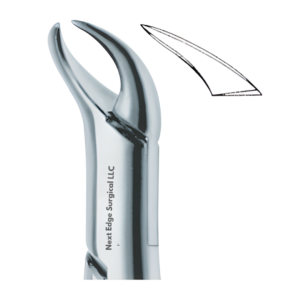


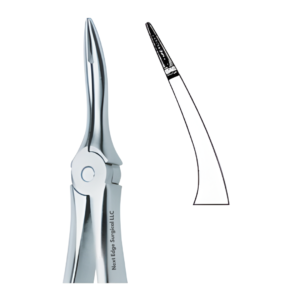
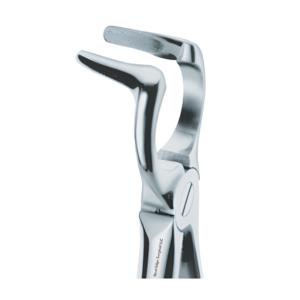
Dental Extraction Forceps – Upper Molars Right – NES-310
The position of an upper right molar determines which neighboring structures must be considered during extraction. Access becomes especially important near the back of the arch, where the cheek, adjacent teeth, and remaining crown can limit instrument placement.
Our Upper Molars Right Forceps – NES-310 is designated for appropriate maxillary molar removal on the patient’s right side. Its tooth-and-quadrant classification helps clinicians prepare the correct extraction instrument for the intended operative site.
Planning Extraction in the Upper Right Quadrant
Maxillary molars usually have multiple roots embedded in the surrounding alveolar bone. Their root configuration can influence the path of removal, while extensive decay or restorations may affect how securely the crown can be engaged.
NES-310 forms part of our dental extraction forceps range. The upper-right designation identifies its clinical application without assigning it a particular named pattern. Before proceeding, clinicians assess the tooth’s mobility, available crown structure, root morphology, and proximity to the maxillary sinus.
Features and Benefits
| Feature | Benefit |
| Upper-right designation | Focuses instrument selection on the correct maxillary quadrant. |
| Molar extraction purpose | Supports procedures involving upper posterior teeth. |
| Quadrant-specific application | Distinguishes the instrument from left-sided options. |
| Crown engagement function | Provides direct grasping when tooth structure permits. |
| Posterior procedure relevance | Fits treatment planning around limited back-tooth access. |
| Complementary extraction role | Works alongside elevators when tooth mobilization is needed. |
Instrument Care and Handling
Before use, inspect the gripping areas and visible joint surfaces for residue or damage. Confirm that opening and closing movement is smooth during preparation. Keep the forceps organized with other instruments intended for the upper right quadrant.
Once treatment is complete, remove biological material promptly. Clean the working ends and accessible joint areas thoroughly, then complete the established instrument reprocessing and sterilization process. Protect the forceps from contact with heavier instruments during transfer.
When extracting an upper right molar, avoid directing force toward neighboring restorations or soft tissues. Assess crown integrity before grasping and consider root divergence when choosing the direction of movement. If the tooth remains resistant, further mobilization or a different surgical technique may be appropriate.
After processing, place NES-310 in protected storage. Regular checks of its working surfaces and movement help maintain orderly preparation for future posterior extraction procedures and identify damage requiring attention.
Product Specifications
| Specification | Details |
| Product Name | Upper Molars Right |
| SKU | NES-310 |
| Brand | Next Edge Surgical LLC |
| Product Category | Extracting Forceps |
| Instrument Type | Right Upper Molar Forceps |
| Anatomical Region | Right Maxillary Posterior Dentition |
| Intended Application | Upper Right Molar Extraction |
Frequently Asked Questions
What area is NES-310 intended for?
Upper molars on the patient’s right side.
Does the designation specify a Harris pattern?
No, the designation identifies upper right molars.
Why assess the maxillary sinus?
Posterior upper roots may lie near its floor.
Can a fractured crown change instrument choice?
Yes, remaining tooth structure influences the extraction approach.
What supports safe storage?
A protected tray with separated working ends.
Reviews
There are no reviews yet.