


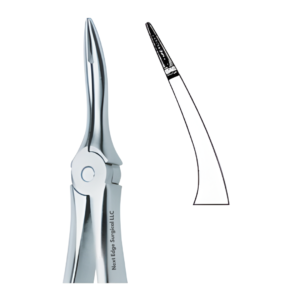


Dental Extraction Forceps – Harris Upper Molars Right – NES-309
A right maxillary molar can present a challenging combination of posterior access and multiple roots. Selecting a forceps for the correct quadrant is an important part of preparing the extraction sequence, especially when adjacent teeth restrict working space.
Our Harris Upper Molars Right Forceps – NES-309 is designated for removal of suitable upper right molars. It offers the right-sided counterpart within the Harris extraction pattern, supporting organized instrument selection for maxillary posterior procedures.
Right Maxillary Molar Access and Harris Pattern Selection
The upper right first and second molars typically have two buccal roots and one palatal root. Root curvature, restorations, and the relationship to surrounding bone can alter the degree of resistance encountered during extraction. The clinician considers these findings before engaging the crown.
NES-309 is part of our dental extraction forceps collection. Its Harris and right-side designations distinguish its intended location from the left-sided counterpart. Clinical planning also accounts for neighboring teeth, the maxillary sinus, and whether the crown remains sufficiently intact for forceps use.
Features and Benefits
| Feature | Benefit |
| Right-sided Harris designation | Identifies the upper right molar extraction application. |
| Established Harris family | Supports recognition among anatomical forceps patterns. |
| Posterior maxillary focus | Relates directly to upper back-tooth procedures. |
| Side-specific instrument choice | Separates right-quadrant selection from left-quadrant instruments. |
| Molar crown engagement | Provides a grasping option for accessible, suitable crowns. |
| Procedural integration | Fits extraction sequences involving assessment and mobilization. |
Instrument Care and Handling
Prepare NES-309 by examining its tooth-contact surfaces for visible wear, deposits, and irregularities. Check that the instrument opens and closes normally. Any change in operating movement deserves attention before the forceps enters the treatment field.
After extraction, remove contamination before residue dries on the working ends. Clean around the accessible joint and the surfaces that contacted the tooth. Follow the established cleaning and sterilization procedure, and keep processed instruments protected until clinical use.
The right posterior maxilla requires awareness of nearby soft tissues and adjacent restorations. Use movements appropriate to tooth mobility and root configuration. A weakened crown or markedly divergent roots can change the extraction plan; additional mobilization or sectioning may be preferable to excessive force.
During transport, position the forceps to avoid contact damage from larger instruments. Store it with the right-sided extraction instruments so the clinical team can select the intended pattern efficiently. Periodic inspection helps identify wear before subsequent appointments.
Product Specifications
| Specification | Details |
| Product Name | Harris Upper Molars Right |
| SKU | NES-309 |
| Brand | Next Edge Surgical LLC |
| Product Category | Extracting Forceps |
| Instrument Pattern | Harris |
| Anatomical Region | Upper Right Maxillary Molars |
| Intended Application | Right Upper Molar Extraction |
Frequently Asked Questions
Which quadrant does NES-309 serve?
The upper right quadrant of the patient’s mouth.
Is Harris a tooth number?
No, Harris identifies an extraction forceps pattern.
Why evaluate crown restorations first?
Large restorations can affect secure crown engagement.
What roots are common in upper molars?
Two buccal roots and one palatal root.
How should NES-309 be transported?
With its working ends protected from impacts.
Reviews
There are no reviews yet.