


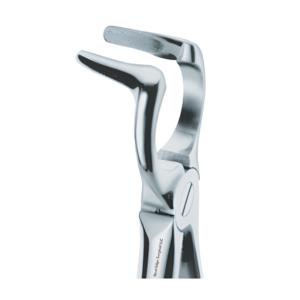
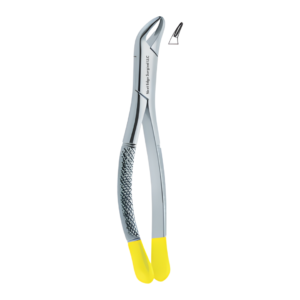
Dental Extraction Forceps – Upper Incisors and Roots – NES-327
Upper incisor extraction requires attention to structures beneath the crown. A root may remain firmly supported even when the visible portion of the tooth is badly damaged.
Our Upper Incisors and Roots Forceps – NES-327 is intended for suitable maxillary incisor and retained-root extraction. It supports assessment of remaining tooth structure, neighboring teeth, and removal direction.
Evaluating the Anterior Maxillary Socket
Maxillary central and lateral incisors generally have single roots, although their dimensions and curvature differ. A fractured incisor may leave limited structure above the gingival margin. Radiographic findings and clinical mobility help determine whether direct forceps engagement is appropriate or additional access is needed.
NES-327 belongs to our dental extraction forceps range. Its designation connects upper incisor extraction with appropriate root-removal procedures. Assessment of the labial bone plate and remaining crown guides tooth delivery.
Features and Benefits
| Feature | Benefit |
| Upper incisor designation | Focuses selection on maxillary front teeth. |
| Root extraction application | Addresses accessible retained roots in the same region. |
| Anterior tooth focus | Supports planning around neighboring incisors and restorations. |
| Crown engagement role | Allows grasping when adequate tooth structure remains. |
| Socket anatomy relevance | Fits evaluation of the surrounding anterior alveolar bone. |
| Extraction sequence function | Complements appropriate elevation and controlled delivery. |
Instrument Care and Handling
Before treatment, inspect the contact surfaces for deposits, uneven wear, or visible damage. Test the opening and closing movement during tray preparation. Position the forceps so its working ends are protected while other instruments are arranged.
Once extraction is complete, clear blood and biological debris without delay. Pay attention to tooth-contact areas and accessible joints where small fragments may lodge. Complete the established cleaning and sterilization workflow before returning the instrument to clinical service.
For an upper incisor with a compromised crown, avoid pressure that could fracture the remaining structure. Evaluate root mobility and the condition of the labial bone before attempting delivery. A deeply retained fragment may call for further mobilization or a different removal technique.
During positioning, protect the lip and neighboring teeth from unnecessary contact. Transfer NES-327 securely to the reprocessing area rather than placing it loose among heavy instruments. After processing, store it in an organized anterior extraction tray. Periodic inspection helps identify changes in condition before subsequent procedures.
Product Specifications
| Specification | Details |
| Product Name | Upper Incisors and Roots |
| SKU | NES-327 |
| Brand | Next Edge Surgical LLC |
| Product Category | Dental Extracting Forceps |
| Instrument Type | Upper Incisor and Root Forceps |
| Anatomical Region | Maxillary Anterior Dentition |
| Intended Application | Upper Incisor and Root Extraction |
Frequently Asked Questions
Which teeth are targeted by NES-327?
Suitable upper incisors and accessible remaining roots.
Do upper incisors usually have one root?
Yes, central and lateral incisors are generally single-rooted.
Why assess the labial bone plate?
Its condition influences planning for anterior tooth removal.
Can a fractured crown change the technique?
Yes, reduced structure can limit secure engagement.
How should the instrument be stored?
Protected in an organized tray after reprocessing.
Reviews
There are no reviews yet.