


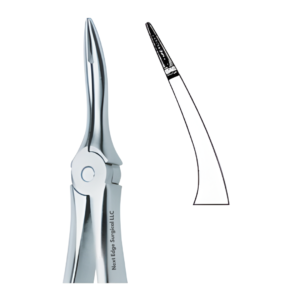

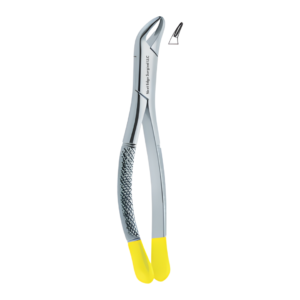
Dental Extraction Forceps – Tomas Upper and Lower Roots – NES-328
Retained roots are encountered in both dental arches, yet their accessibility can differ considerably. The surrounding bone, remaining tooth structure, and location of nearby anatomical structures determine how a clinician approaches each fragment.
Our Tomas Upper and Lower Roots Forceps – NES-328 is designated for appropriate root extraction in the maxilla and mandible. The Tomas name identifies its instrument pattern, while the upper-and-lower designation establishes the intended clinical scope across both arches.
Root Removal Across Two Dental Arches
Maxillary roots may lie near the sinus or adjacent posterior teeth. Mandibular roots require attention to surrounding cortical bone and, in posterior regions, the inferior alveolar canal. These relationships influence imaging, access, and the selection of a removal technique.
NES-328 is included in our dental extraction forceps collection. The instrument supports the forceps stage when a remaining root is sufficiently accessible for engagement. Root curvature, depth, mobility, and available tooth structure remain central to clinical decision-making.
Features and Benefits
| Feature | Benefit |
| Tomas pattern | Identifies the named root-extraction instrument family. |
| Upper-root designation | Addresses suitable retained-root procedures in the maxilla. |
| Lower-root designation | Extends the intended application to the mandible. |
| Cross-arch clinical scope | Supports selection across different root-removal appointments. |
| Remaining-root engagement | Provides grasping during appropriate fragment delivery. |
| Extraction workflow relevance | Complements imaging, assessment, and preliminary mobilization. |
Instrument Care and Handling
Inspect the working ends before each procedure for visible damage or residue that could interfere with root contact. Check the opening and closing movement and examine accessible joint surfaces. Arrange the instrument so the contact areas remain protected during setup.
Root removal can leave small tooth fragments and biological material around the gripping surfaces. Remove debris promptly after treatment. Clean the working ends and accessible joint thoroughly, then complete the established reprocessing and sterilization workflow.
For maxillary roots, consider the relationship to the sinus and nearby teeth. For mandibular roots, evaluate surrounding bone and relevant neurovascular anatomy. Avoid increasing gripping pressure when a fragment is inaccessible or inadequately mobilized. Additional elevation or surgical access may be more appropriate.
Transfer NES-328 securely after treatment, keeping it separate from heavier equipment. Once processed, store it in an organized root-extraction tray. Routine inspection supports reliable preparation and helps identify wear before the next clinical procedure.
Product Specifications
| Specification | Details |
| Product Name | Tomas Upper and Lower Roots |
| SKU | NES-328 |
| Brand | Next Edge Surgical LLC |
| Product Category | Dental Extracting Forceps |
| Instrument Pattern | Tomas |
| Anatomical Region | Maxillary and Mandibular Roots |
| Intended Application | Upper and Lower Root Extraction |
Frequently Asked Questions
What is the intended scope of NES-328?
Suitable retained-root procedures in both dental arches.
Does Tomas identify an instrument pattern?
Yes, it is the named pattern in this product designation.
Why does root depth matter?
It affects accessibility and the choice of removal technique.
What influences mandibular root planning?
Bone support and nearby anatomical structures.
What maintenance follows a root procedure?
Prompt debris removal, cleaning, reprocessing, and inspection.
Reviews
There are no reviews yet.