


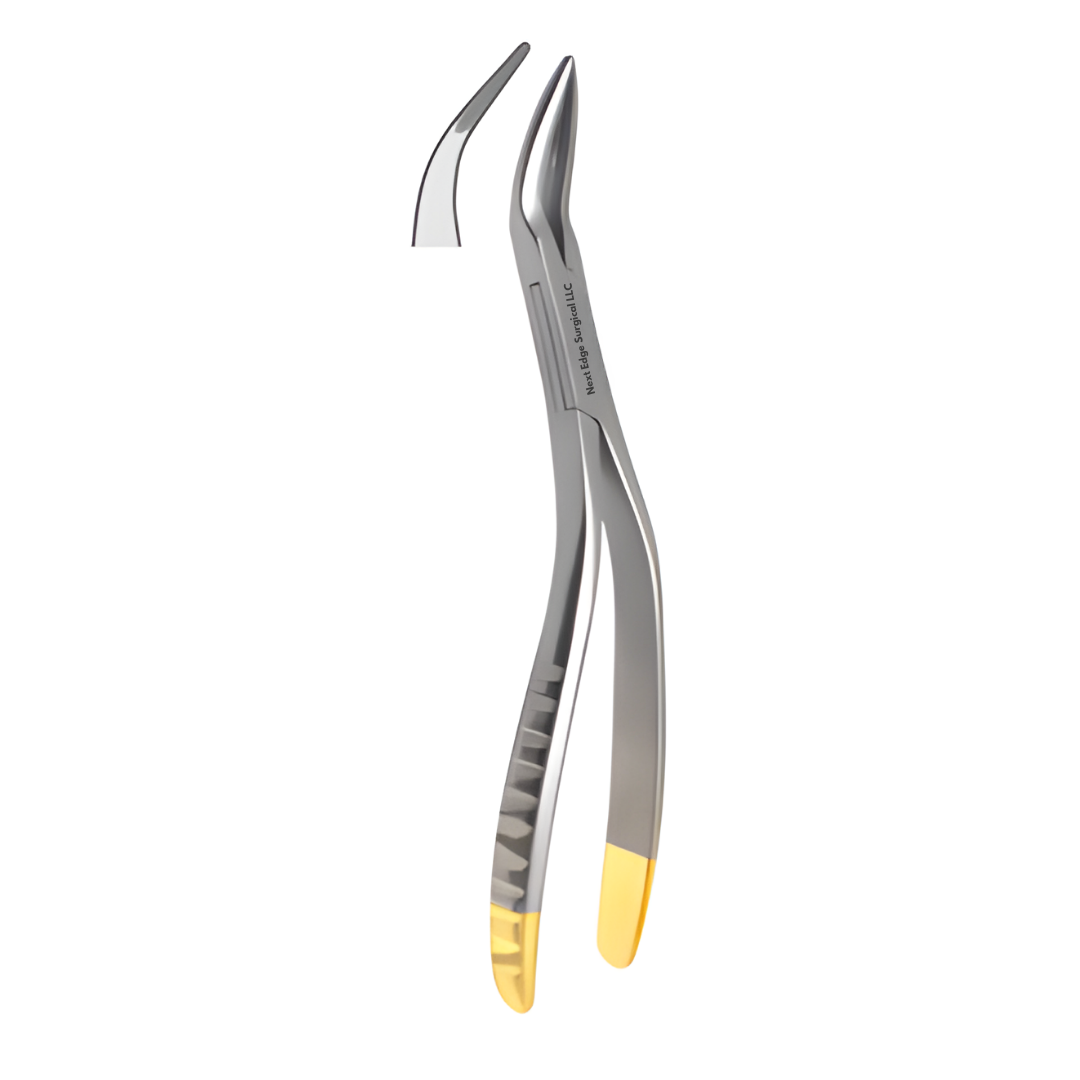
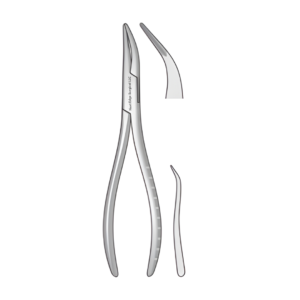
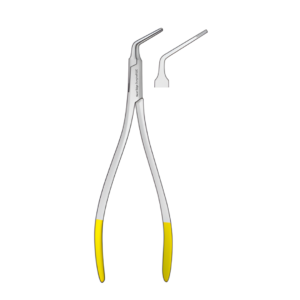
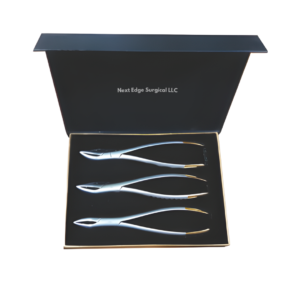
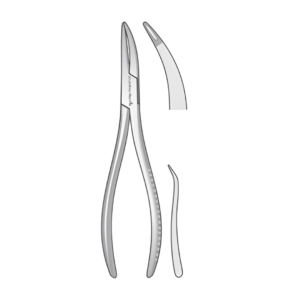
Dental Root Fragment Forceps – Upper roots, Universal – NES-278
Upper-root extraction requires more than simply locating the remaining tooth structure. The clinician must consider the direction of the root, the condition of surrounding bone, and the relationship between the extraction site and nearby anatomical features.
Our NES-278 Upper Roots Universal Forceps is intended for suitable maxillary root-removal procedures. It provides a dedicated instrument within the dental root fragment forceps range for handling accessible remaining roots in the upper dental arch.
Maxillary Root Anatomy and Instrument Selection
The upper dentition includes single-rooted incisors, premolars with variable root arrangements, and molars that commonly have multiple roots. Their different anatomical relationships affect how a clinician approaches root removal.
Posterior maxillary roots may lie close to the sinus floor, making careful assessment especially important. Anterior roots present different considerations, including curvature and the condition of the surrounding socket.
NES-278 belongs to the universal upper-root category of dental extraction forceps. Its intended application spans suitable maxillary root procedures, with clinical selection determined by accessibility, remaining tooth structure, and the planned extraction method.
Features and Benefits
| Feature | Benefit |
| Upper-root application | Identifies the instrument for maxillary root extraction. |
| Universal designation | Supports selection across suitable upper-root procedures. |
| Root-fragment classification | Addresses remaining roots following tooth damage or fracture. |
| Maxillary anatomical focus | Aligns the instrument category with upper-jaw procedures. |
| Direct root-grasping role | Provides an option when adequate root structure remains accessible. |
| Specialized dental application | Complements instruments used for mobilization and surgical access. |
Instrument Care and Handling
Before using NES-278, examine its working ends for visible damage, residue, or changes in alignment. The gripping surfaces should be clean, and the operating mechanism should move normally during preparation.
Following an extraction, remove biological contamination promptly. Pay attention to the areas that contact tooth structure, as well as accessible joint surfaces where material may accumulate.
Clean the instrument through the established dental reprocessing workflow before sterilization. During transportation, protect the working ends from collisions with elevators, retractors, or other heavier surgical equipment.
When organizing the extraction tray, place the forceps where they can be selected without unnecessary handling of adjacent instruments.
Upper-root procedures require controlled movements appropriate to the tooth’s anatomy. Particular care is necessary when working around thin socket walls or roots located near the maxillary sinus.
If the remaining structure cannot be engaged appropriately, further mobilization or a different surgical approach may be preferable to increasing force.
Regular inspection and protected storage support consistent instrument handling between clinical procedures.
Product Specifications
| Specification | Details |
| Product Name | Upper Roots, Universal |
| SKU | NES-278 |
| Brand | Next Edge Surgical LLC |
| Product Category | Dental Root Fragment Forceps |
| Instrument Type | Universal Upper-Root Forceps |
| Anatomical Region | Maxillary Arch |
| Intended Application | Upper Dental Root Extraction |
| Clinical Use | Dental Extraction and Oral Surgery |
Frequently Asked Questions
What is the primary application of NES-278?
Removal of suitable accessible roots in the upper dental arch.
Does universal refer to one specific tooth?
No, it identifies a broader upper-root instrument category.
Why is maxillary sinus anatomy relevant?
Some posterior upper roots lie close to the sinus floor.
Can the forceps assist with fractured roots?
Yes, when the remaining structure permits appropriate direct engagement.
What is important during storage?
Protect the working ends and maintain an organized instrument arrangement.
Reviews
There are no reviews yet.