


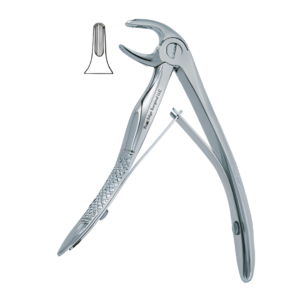
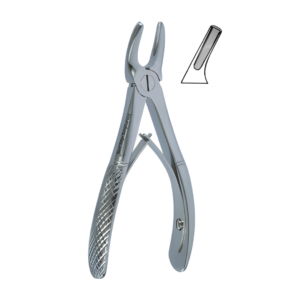
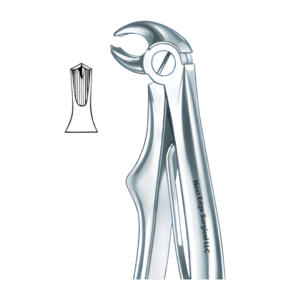
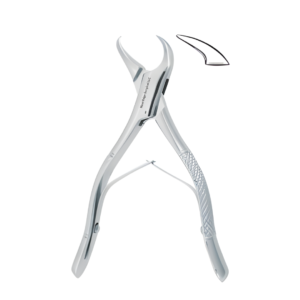
Dental Extraction Forceps – Upper Incisors Premolars Roots – NES-213
A planned upper tooth extraction may involve an intact crown, a weakened tooth, or a remaining root. These situations demand different levels of engagement, making the available tooth structure an important part of instrument selection.
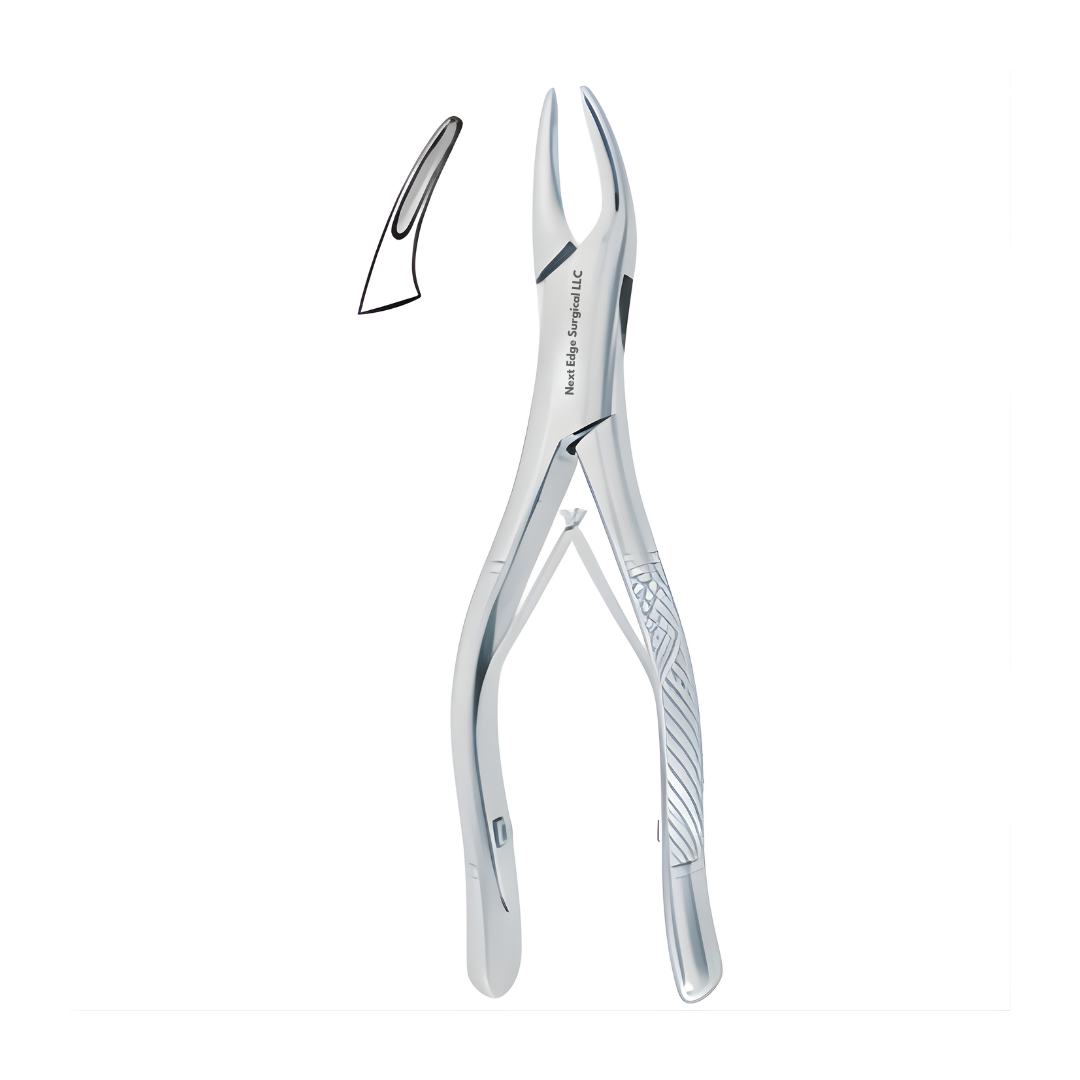
Our Upper Incisors Premolars Roots Forceps – NES-213 is designated for maxillary incisors, premolars, and appropriate root extraction procedures. It provides a combined application for clinical workflows involving anterior teeth, premolars, and retained root structure.
Adapting Extraction Planning to Remaining Tooth Structure
Maxillary incisors generally have single roots, while premolars show greater variation in root number and configuration. Crown fractures, extensive decay, and previous restorations can reduce the amount of structure available for forceps engagement. The clinician evaluates these factors before choosing a removal technique.
NES-213 belongs to our dental extraction forceps collection. Its designation includes both tooth extraction and root-removal applications in the upper arch. Assessment of accessibility, periodontal support, and root mobility determines how the instrument fits into the planned procedure.
Features and Benefits
| Feature | Benefit |
| Upper incisor designation | Supports suitable maxillary anterior extraction procedures. |
| Upper premolar designation | Addresses appropriate extraction of maxillary premolars. |
| Root extraction application | Includes accessible retained-root removal procedures. |
| Combined clinical scope | Relates to intact teeth and remaining root structures. |
| Maxillary anatomical focus | Keeps selection directed toward the upper dental arch. |
| Tooth engagement role | Supports controlled grasping during appropriate extraction. |
Instrument Care and Handling
Before treatment, examine the gripping surfaces for contamination, visible damage, and irregularities. Check normal movement during instrument preparation. Position NES-213 securely so its working ends remain protected while other extraction tools are arranged.
After clinical use, remove biological material and small tooth fragments promptly. Pay attention to areas that contacted the tooth or root, including accessible joint spaces where residue can accumulate. Complete the established cleaning and sterilization process before subsequent patient use.
For an intact incisor or premolar, assess crown strength before applying pressure. When only a root remains, evaluate its exposure, mobility, and position within the socket. A fragment seated below the gingival margin may require additional access or mobilization before grasping.
Maintain awareness of neighboring teeth, restorations, and surrounding soft tissues throughout removal. Avoid forcing an instrument against resistant structures. Transfer NES-213 securely to the processing area after treatment, and store it in a protected extraction tray once reprocessed. Routine inspection helps identify wear and supports careful preparation for future maxillary tooth and root procedures.
Product Specifications
| Specification | Details |
| Product Name | Upper Incisors Premolars Roots |
| SKU | NES-213 |
| Brand | Next Edge Surgical LLC |
| Product Category | Dental Extracting Forceps |
| Instrument Type | Upper Tooth and Root Extraction Forceps |
| Anatomical Region | Maxillary Incisors, Premolars and Roots |
| Intended Application | Upper Tooth and Root Extraction |
Frequently Asked Questions
Which applications are listed for NES-213?
Upper incisor, premolar, and root extraction.
Why does remaining crown structure matter?
It determines whether suitable forceps engagement is possible.
Do maxillary premolars have identical root anatomy?
No, root number and shape vary.
When might additional root access be needed?
When the fragment is deeply seated or difficult to engage.
What care is needed after treatment?
Debris removal, cleaning, sterilization, inspection, and protected storage.
Reviews
There are no reviews yet.