

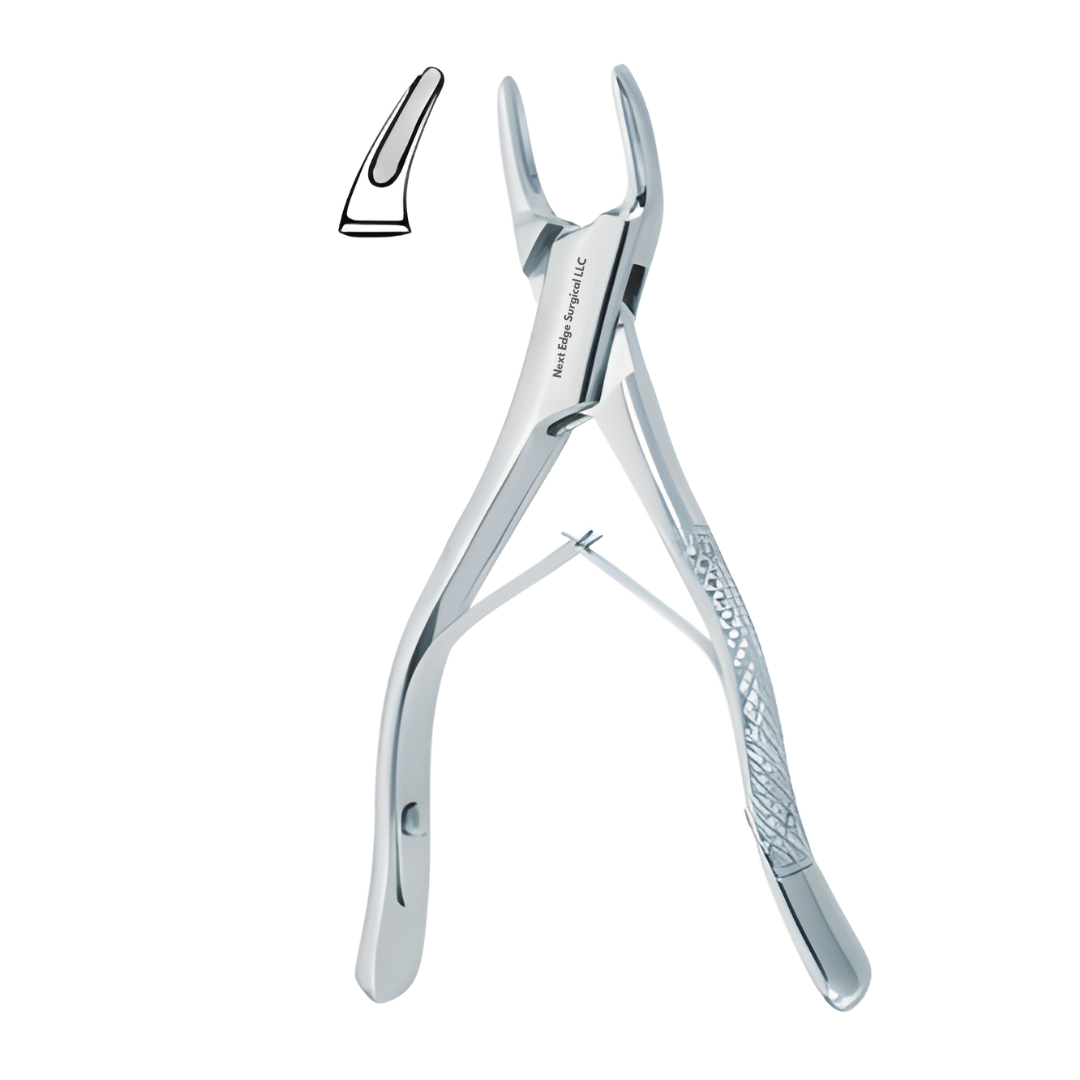
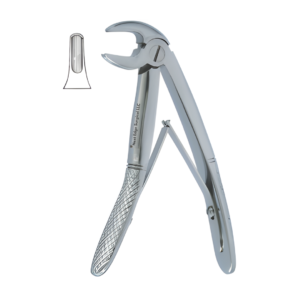
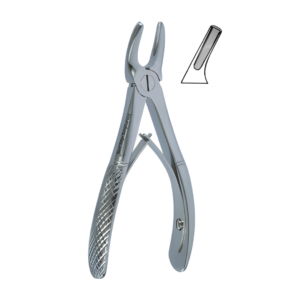
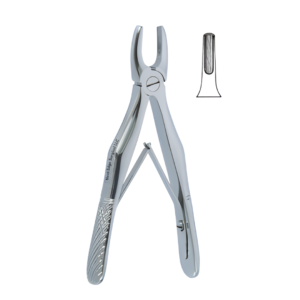
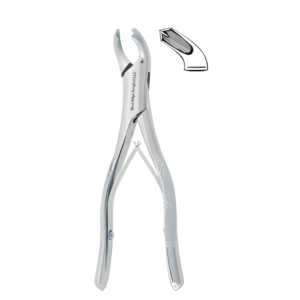
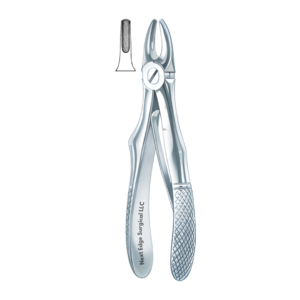
Dental Extraction Forceps – Tomas Upper and Lower Roots – NES-211
Retained roots can turn an otherwise straightforward extraction into a more demanding procedure. Once the crown has fractured or been removed, the clinician must work with a smaller area of exposed tooth structure.
Our Tomas Upper and Lower Roots Forceps – NES-211 is designated for root extraction in both dental arches. The Tomas pattern provides an instrument option for appropriately accessible root remnants in maxillary and mandibular procedures.
Managing Root Engagement Across Both Arches
Upper and lower roots present different anatomical considerations. Maxillary posterior roots can lie near the sinus, while mandibular posterior roots require attention to the inferior alveolar canal. Root curvature, depth, and surrounding bone influence the chosen removal technique.
NES-211 belongs to our dental extraction forceps collection. Its upper-and-lower designation identifies a cross-arch root extraction application. Clinicians assess remaining root structure, visibility, and mobility before selecting an appropriate engagement and delivery approach.
Features and Benefits
| Feature | Benefit |
| Tomas pattern | Identifies the named root extraction instrument family. |
| Upper root application | Supports appropriate maxillary retained-root procedures. |
| Lower root application | Extends the intended use to mandibular root removal. |
| Cross-arch designation | Addresses root extraction needs in both dental arches. |
| Root engagement function | Supports grasping when sufficient root structure is accessible. |
| Extraction workflow role | Complements assessment, elevation, and controlled fragment delivery. |
Instrument Care and Handling
Before treatment, examine the working surfaces for deposits, visible damage, and irregularities that could interfere with contact. Check normal instrument movement and arrange the forceps where its working ends remain protected.
Root procedures can leave small fragments lodged around contact surfaces. Remove blood, tissue residue, and tooth particles promptly after treatment. Pay attention to accessible joint spaces during cleaning, then complete the established instrument cleaning and sterilization process.
When a root lies deeply within the socket, avoid applying excessive pressure through limited exposed structure. Evaluate its location and relationship to surrounding anatomy before attempting engagement. Additional elevation or surgical access may be appropriate when direct grasping is impractical.
Protect adjacent teeth and soft tissues throughout the procedure. Transport NES-211 securely to the processing area rather than placing it loosely among heavier instruments. After reprocessing, store it in a protected root extraction tray. Regular inspection helps identify changes in condition before the next clinical appointment.
Product Specifications
| Specification | Details |
| Product Name | Tomas Upper and Lower Roots |
| SKU | NES-211 |
| Brand | Next Edge Surgical LLC |
| Product Category | Dental Extracting Forceps |
| Instrument Pattern | Tomas |
| Anatomical Region | Maxillary and Mandibular Roots |
| Intended Application | Upper and Lower Root Extraction |
Frequently Asked Questions
What is NES-211 intended to remove?
Suitable accessible roots in the upper and lower arches.
What does Tomas identify?
The named pattern of this root extraction instrument.
Why does root depth affect selection?
Deeper fragments can require additional access or mobilization.
Can root anatomy change the extraction technique?
Yes, curvature and surrounding structures influence removal planning.
How should the forceps be maintained?
Through prompt cleaning, reprocessing, inspection, and protected storage.
Reviews
There are no reviews yet.