


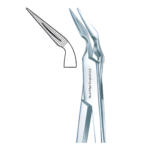
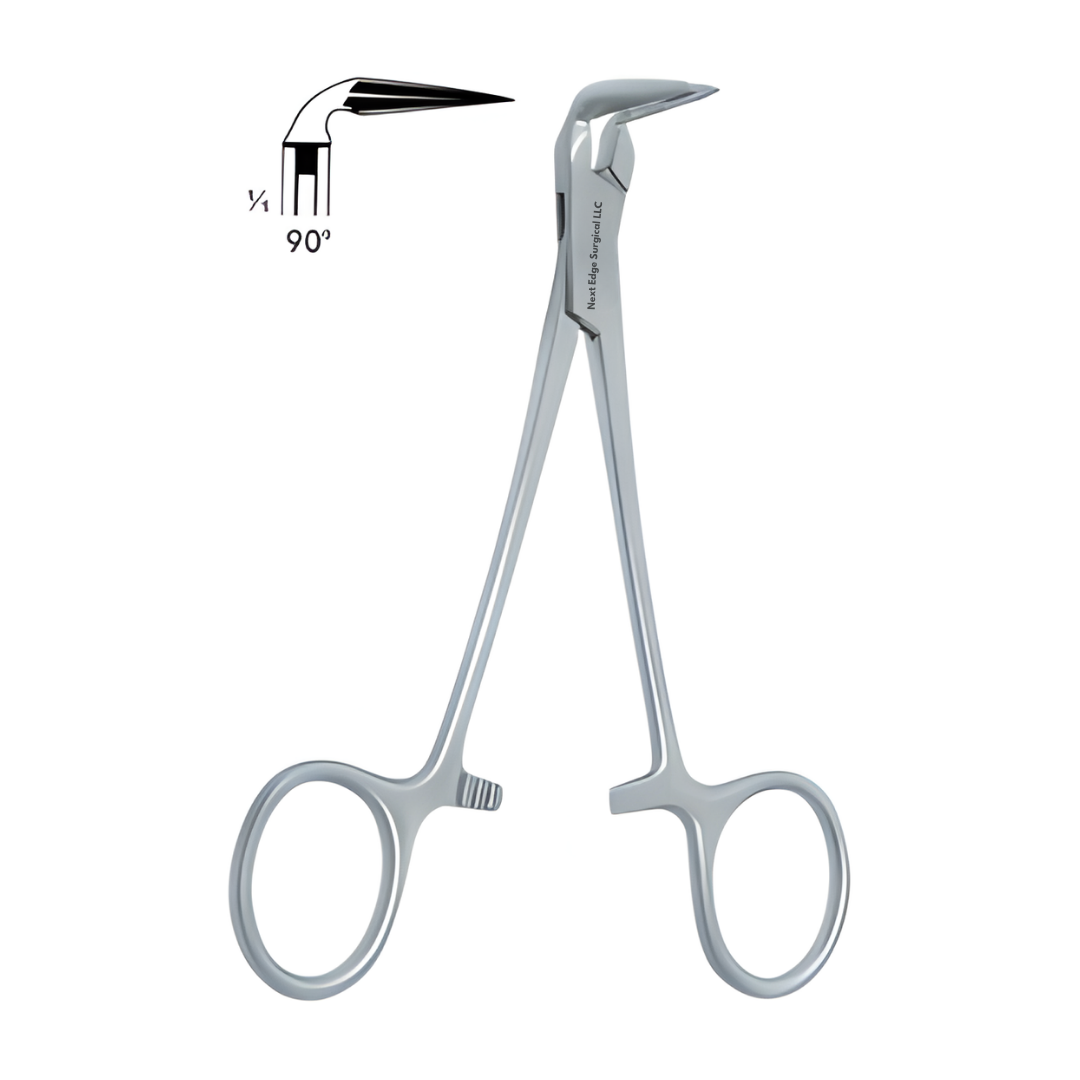
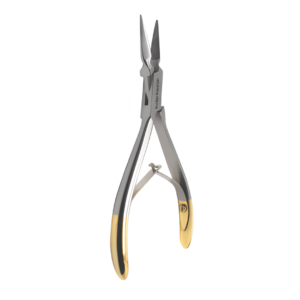
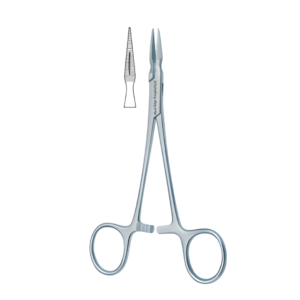
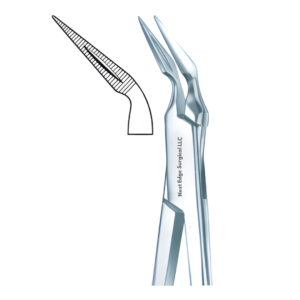
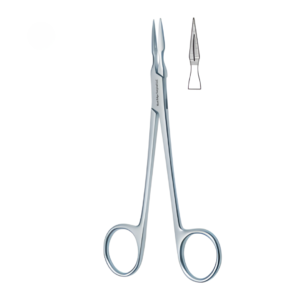
Dental Root Splinter Forceps – Stieglitz Splinter Forceps – NES-200
A fractured tooth can leave behind a fragment too small for conventional extraction instruments to engage effectively. Retrieving that piece requires careful access, a clear view of the socket, and an instrument suited to handling limited tooth structure.
Our Stieglitz Splinter Forceps – NES-200 serves this specialized purpose in dental extraction and oral surgery procedures. It belongs to the Stieglitz family of root-fragment instruments, commonly associated with grasping small remnants after a crown or root has separated.
Focused Handling of Fractured Root Material
The challenge with root splinters is not simply their size. A fragment may sit against the socket wall, beneath the gingival margin, or close to an adjacent tooth. Its orientation determines whether direct grasping is practical.
Stieglitz forceps are used for localized fragment engagement rather than routine whole-tooth removal. Unlike broader dental extraction forceps, they belong to an instrument category intended for smaller remaining structures. NES-200 provides a dedicated option when a clinician determines that the fragment can be approached and retrieved directly.
Features and Benefits
| Feature | Benefit |
| Stieglitz instrument pattern | Provides a recognized option for root-fragment procedures. |
| Splinter retrieval application | Addresses small pieces remaining after tooth fracture. |
| Localized grasping purpose | Supports handling of accessible remnants within the extraction site. |
| Oral surgery relevance | Complements instruments used during complex extraction workflows. |
| Fragment-specific function | Distinguishes the instrument from forceps intended for intact crowns. |
| Individual instrument selection | Allows inclusion in a customized root-removal setup. |
Instrument Care and Handling
The working ends deserve particular attention because small fragments offer limited contact area. Before use, examine the gripping surfaces for deposits, irregular edges, or visible damage. Check that the instrument operates smoothly and that its opposing surfaces meet correctly.
After a procedure, begin cleaning promptly to prevent biological residue from drying around the working areas. Follow the practice’s established instrument-reprocessing process, paying attention to accessible joints and narrow spaces.
Handle the forceps carefully during transport. Contact with heavier extraction instruments can damage delicate gripping surfaces, so protected positioning within a tray is preferable.
During clinical use, avoid repeated attempts to grasp a fragment without adequate visibility. Root location, surrounding bone, and neighboring structures should guide the retrieval approach. If direct engagement is unsuitable, the clinician should consider an alternative technique.
Routine inspection and organized storage help preserve consistent instrument function between procedures.
Product Specifications
| Specification | Details |
| Product Name | Stieglitz Splinter Forceps |
| SKU | NES-200 |
| Brand | Next Edge Surgical LLC |
| Product Category | Dental Root Splinter Forceps |
| Instrument Family | Stieglitz |
| Primary Application | Dental root splinter retrieval |
| Clinical Use | Dental extraction and oral surgery |
Frequently Asked Questions
What is the main purpose of Stieglitz splinter forceps?
They assist with grasping accessible dental root fragments during extraction procedures.
When are these forceps commonly selected?
When a fractured root leaves a small remnant suitable for direct retrieval.
Can they replace dental elevators?
No. Elevators and splinter forceps perform different functions during root removal.
Why does fragment visibility matter?
Adequate visibility helps the clinician assess safe engagement and retrieval.
How should the working ends be protected?
Keep them separated from heavier instruments during handling and storage.
Reviews
There are no reviews yet.