


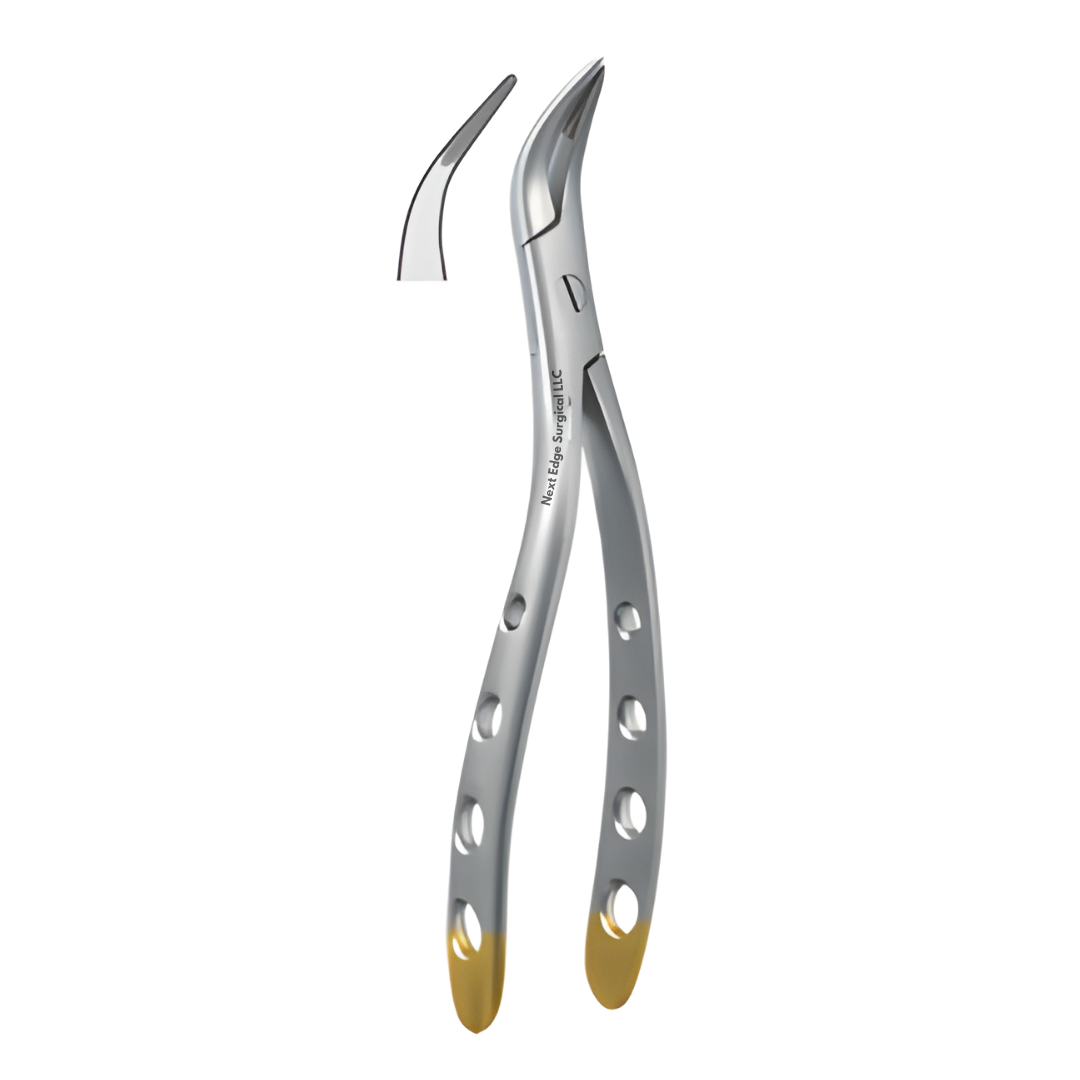
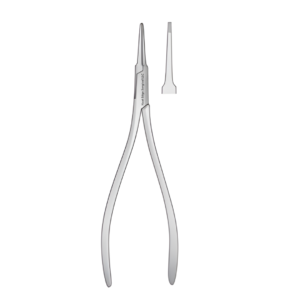
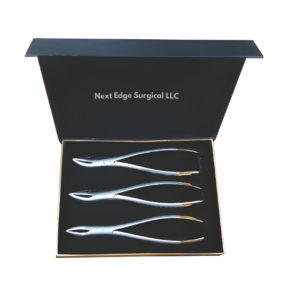
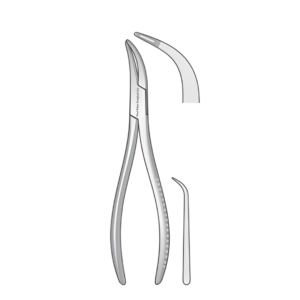
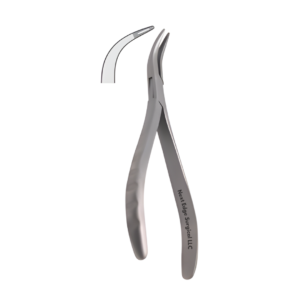
Dental Root Fragment Forceps – Upper roots, Universal Upper roots Universal – NES-281
The upper jaw contains some of the most varied root arrangements in the dentition. From the relatively straightforward anatomy of many anterior teeth to the multiple roots of posterior molars, extraction planning changes with each clinical situation.
Our Upper Roots Universal Forceps – NES-281 is intended for suitable maxillary root-extraction procedures. It belongs to the dental root fragment forceps category, providing a dedicated instrument option when remaining upper-tooth structures can be accessed and engaged.
Maxillary Root Anatomy and Extraction Planning
Upper incisors commonly have a single root, while premolars can present additional anatomical variation. Maxillary molars frequently have three roots, making their extraction considerations different from those of anterior teeth.
The universal designation identifies a broader upper-root application rather than limiting NES-281 to one tooth position. As part of our dental extraction forceps range, it supports appropriate root-engagement procedures within the maxillary arch.
Particular attention is required in posterior extraction sites, where roots may lie close to the maxillary sinus. Root curvature, surrounding bone, and available access influence the technique selected by the dental practitioner.
Features and Benefits
| Feature | Benefit |
| Universal upper-root designation | Identifies the instrument for suitable maxillary root procedures. |
| Maxillary anatomical application | Supports extraction planning within the upper dental arch. |
| Root-fragment instrument category | Addresses remaining tooth structures after crown loss or fracture. |
| Direct root-engagement purpose | Provides a grasping option for accessible upper roots. |
| Broad anatomical relevance | Covers appropriate root-removal applications across upper tooth positions. |
| Specialized extraction function | Complements instruments used for mobilization and surgical access. |
Instrument Care and Handling
Prepare NES-281 by examining the working ends under adequate lighting. Check for visible deposits, damaged gripping surfaces, or changes that could affect contact with remaining tooth structure.
Test the instrument’s movement before clinical use. Smooth operation and properly maintained contact surfaces are important for controlled handling during extraction.
Following treatment, remove biological contamination through the established instrument-cleaning process. Pay attention to working surfaces and accessible joint areas where material may collect.
Complete appropriate sterilization after cleaning. During transportation, position the forceps to prevent accidental impacts against the working ends.
Upper-root extraction requires careful control of movement, particularly around thin socket walls. The clinician should evaluate root curvature and neighboring anatomical structures before attempting direct engagement.
Posterior maxillary roots deserve additional consideration because of their relationship to the sinus floor. Where a remaining root cannot be safely grasped, another removal technique may be appropriate.
Keep the instrument in an organized surgical tray after processing. Regular inspection supports reliable handling throughout routine clinical use.
Product Specifications
| Specification | Details |
| Product Name | Upper Roots, Universal Upper roots Universal |
| SKU | NES-281 |
| Brand | Next Edge Surgical LLC |
| Product Category | Dental Root Fragment Forceps |
| Instrument Classification | Universal Upper-Root Forceps |
| Anatomical Region | Maxillary Dentition |
| Primary Application | Upper Dental Root Extraction |
Frequently Asked Questions
What is the intended application of NES-281?
It is used for suitable upper dental root-extraction procedures.
What does maxillary refer to?
The upper jaw and its associated dentition.
Does universal indicate one tooth position?
No, it describes a broader intended upper-root application.
Why is the maxillary sinus relevant?
Posterior upper roots can lie close to the sinus floor.
How should the instrument be handled after use?
Clean, reprocess, and store it with its working ends protected.
Reviews
There are no reviews yet.