


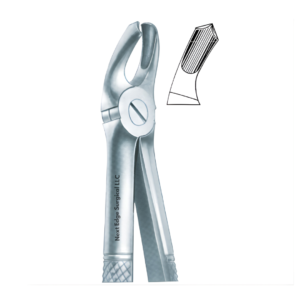
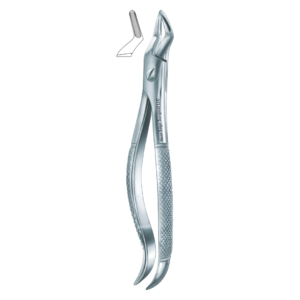
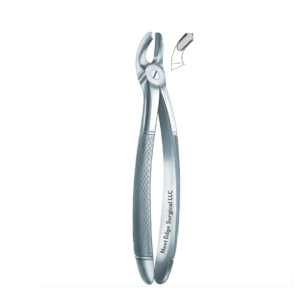
Dental Extraction Forceps – Upper Premolar Deep Gripping Root Forceps – NES-217
A fractured upper premolar can leave a root portion that is harder to engage than the original crown. The remaining structure, its position in the socket, and the nearby bone all influence the next step.
Our Upper Premolar Deep Gripping Root Forceps – NES-217 is designated for maxillary premolar root extraction. Its deep-gripping classification identifies a root-focused instrument for situations where appropriate access and controlled grasping are essential.
Addressing Premolar Root Anatomy After Crown Loss
Upper first premolars often have two roots, while second premolars more commonly have one. Root curvature and separation can complicate retrieval, especially when a fracture leaves little exposed structure. Examination and appropriate imaging help establish the safest route for removal.
NES-217 is part of our dental extraction forceps range. Its designation connects the upper premolar region with deep root engagement. The clinician evaluates visibility, remaining tooth structure, and mobility before deciding whether direct forceps retrieval fits the procedure.
Features and Benefits
| Feature | Benefit |
| Upper premolar designation | Directs selection toward maxillary premolar root procedures. |
| Deep-gripping classification | Identifies the intended root-engagement application. |
| Root extraction focus | Addresses suitable retained root portions after crown loss. |
| Maxillary anatomical context | Supports planning around upper premolar root variation. |
| Targeted grasping role | Complements preliminary mobilization and controlled retrieval. |
| Extraction tray application | Provides a named option for root-removal preparation. |
Instrument Care and Handling
Before treatment, inspect the contact surfaces closely for deposits, wear, or damage. Check normal instrument movement and arrange the working ends away from heavier extraction tools. Fine debris can interfere with engagement, so cleanliness matters during preparation.
After retrieval, remove blood and small root particles promptly. Examine accessible joint areas and tooth-contact surfaces for material that may remain lodged after the procedure. Complete the established cleaning and sterilization workflow before returning the forceps to clinical service.
When a premolar root is fractured near the gingival margin, determine whether sufficient structure can be approached safely. Avoid pressing blindly into the socket or using the forceps as a lever against surrounding bone. Additional exposure or mobilization may be appropriate when resistance persists.
Protect adjacent teeth and soft tissue during placement. Transport NES-217 securely for processing and store it in a protected root-instrument tray afterward. Routine inspection helps identify changes in working condition before subsequent appointments.
Product Specifications
| Specification | Details |
| Product Name | Upper Premolar Deep Gripping Root Forceps |
| SKU | NES-217 |
| Brand | Next Edge Surgical LLC |
| Product Category | Dental Extracting Forceps |
| Instrument Type | Deep Gripping Root Forceps |
| Anatomical Region | Maxillary Premolar Roots |
| Intended Application | Upper Premolar Root Extraction |
Frequently Asked Questions
Which roots are targeted by NES-217?
Accessible roots of upper premolar teeth.
Why does root number matter?
Separate roots can require different retrieval approaches.
What does deep gripping indicate?
A designated application for engaging remaining root structure.
Can fractured crowns affect instrument selection?
Yes, reduced exposure changes the available grasping area.
What follows clinical use?
Debris removal, cleaning, sterilization, inspection, and protected storage.
Reviews
There are no reviews yet.