


Rydel-Seiffer Tuning Fork for Neurological Examination – 12-209-128
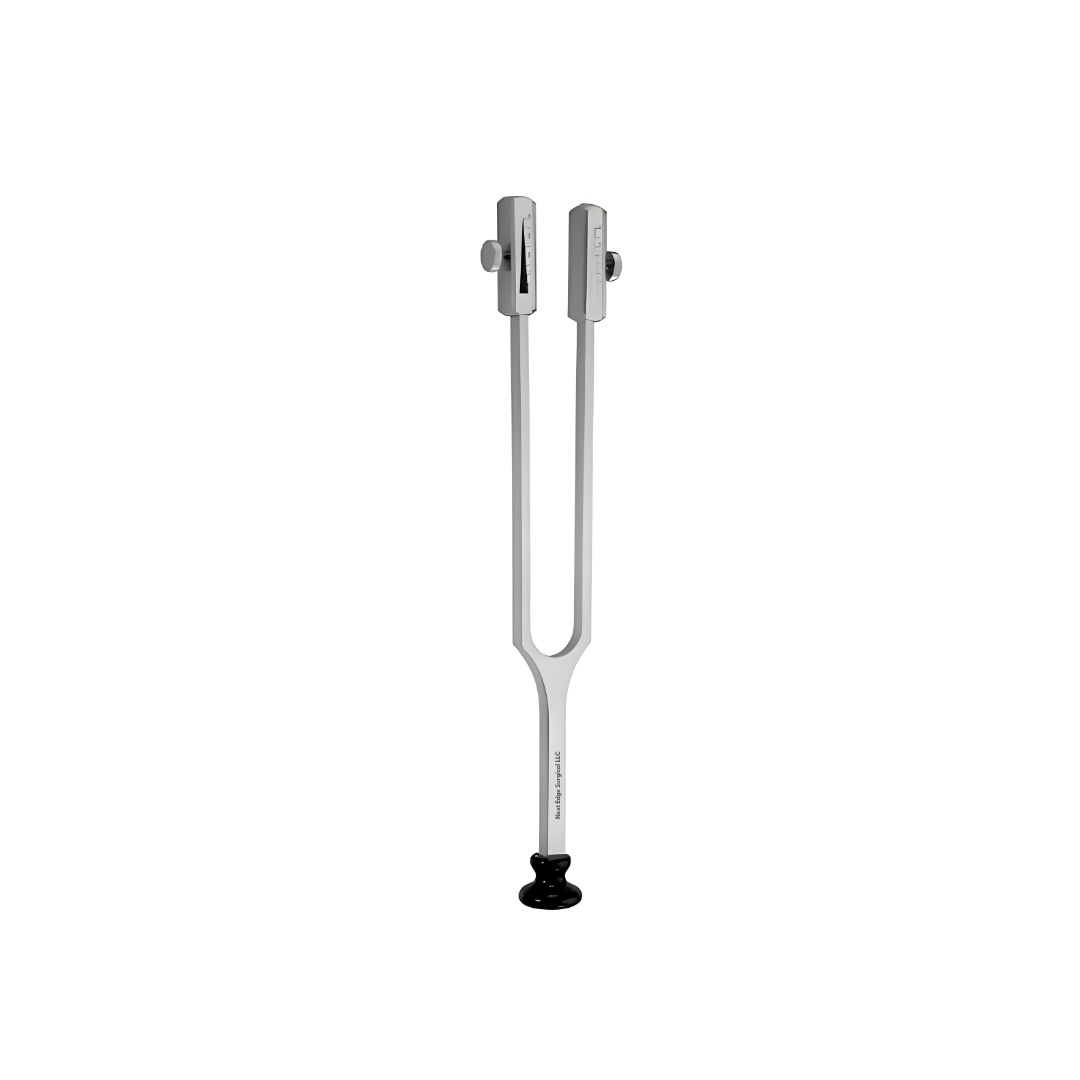
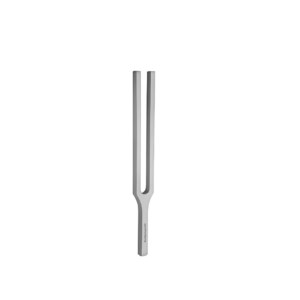
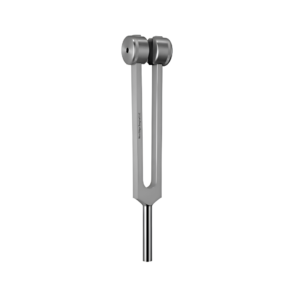
The Rydel-Seiffer Tuning Fork from Next Edge Surgical LLC is a diagnostic instrument designed to support the assessment of vibration sensation during neurological examinations. This specialized tuning fork helps healthcare professionals evaluate a patient’s ability to perceive vibration at selected anatomical locations.
Unlike a conventional tuning fork used primarily for sound testing, the Rydel-Seiffer design is associated with graduated vibration assessment. It provides a structured approach to sensory examination and is relevant to neurology departments, hospitals, and diagnostic clinics.
Designed for Neurological Assessment
A neurological tuning fork is used to assess vibratory sensation, also called pallesthesia. During examination, the clinician activates the fork and places its base against an appropriate bony landmark.
The patient indicates when the vibration is no longer perceived. The clinician records the observation and interprets it alongside other sensory findings.
This assessment may contribute to the evaluation of peripheral nerve function and changes in vibration perception.
Rydel-Seiffer Graduated Scale
The traditional Rydel-Seiffer tuning fork incorporates a graduated visual scale for semi-quantitative vibration testing.
The standard design uses an eight-point scale, allowing clinicians to record the perceived vibration threshold rather than relying exclusively on a present-or-absent response.
Standard weighted Rydel-Seiffer instruments operate at approximately 64 Hz, while certain configurations can produce 128 Hz without weights.
These characteristics distinguish the Rydel-Seiffer pattern from ordinary diagnostic tuning forks and support consistent neurological examination techniques.
Clinical Applications and Vibration Sense Testing
A vibration sense tuning fork is useful during neurological assessments involving suspected sensory impairment or peripheral nerve dysfunction.
Clinicians may assess vibration perception at anatomical locations such as the great toe, ankle, or other appropriate bony landmarks.
Comparing observations across examination sites can help identify differences in vibration sensitivity. Findings are interpreted alongside the patient’s medical history, reflexes, and other neurological examination results.
Explore our ENT Surgery Instruments collection for additional diagnostic instruments used in professional examinations.
Features and Benefits
| Feature | Benefit |
|---|---|
| Rydel-Seiffer Pattern | Supports structured vibration-sensation assessment |
| Graduated Diagnostic Design | Associated with semi-quantitative sensory testing |
| Neurological Application | Assists with examination of vibration perception |
| Manual Activation | Allows controlled clinical examination |
| Repeatable Assessment Method | Supports comparison of findings across examination sites |
| Product Identification | Code 12-209-128 supports ordering and inventory management |
Product Specifications
| Specification | Details |
|---|---|
| Product Name | Rydel-Seiffer Surgical Tuning Fork |
| Brand | Next Edge Surgical LLC |
| Product Code | 12-209-128 |
| Instrument Type | Neurological Diagnostic Tuning Fork |
| Instrument Pattern | Rydel-Seiffer |
| Primary Application | Vibration Sensation Assessment |
| Standard Pattern Scale | 0–8 Graduated Scale |
| Standard Pattern Frequencies | 64 Hz Weighted / 128 Hz Unweighted |
| Listed Weight | 100 g |
| Product Category | ENT Surgery Instruments |
| Intended Users | Healthcare Professionals |
Care and Handling
Inspect the tuning fork before use for visible damage, loose components, or deformation that could affect vibration.
Activate the instrument using an appropriate technique, avoiding excessive force or impact against unsuitable surfaces.
Keep the contact base clean between examinations and follow applicable healthcare equipment-cleaning procedures.
Protect the vibrating prongs and any graduated components during storage. Store the instrument securely to reduce accidental impact and preserve its condition.
Frequently Asked Questions
1. What is a Rydel-Seiffer tuning fork used for?
It is used to assess vibration sensation during neurological examinations.
2. What does the graduated scale measure?
It provides a semi-quantitative reading of vibration perception as the oscillation decreases.
3. What frequency does a Rydel-Seiffer tuning fork produce?
Standard designs commonly operate at 64 Hz with weights and 128 Hz without weights.
4. Can it be used to assess peripheral nerve function?
Yes, vibration testing can contribute to a broader neurological sensory examination.
5. What is the product code?
The Next Edge Surgical product code is 12-209-128.
Reviews
There are no reviews yet.