

Dry Socket Paste for Tooth Extraction: Uses and Effectiveness

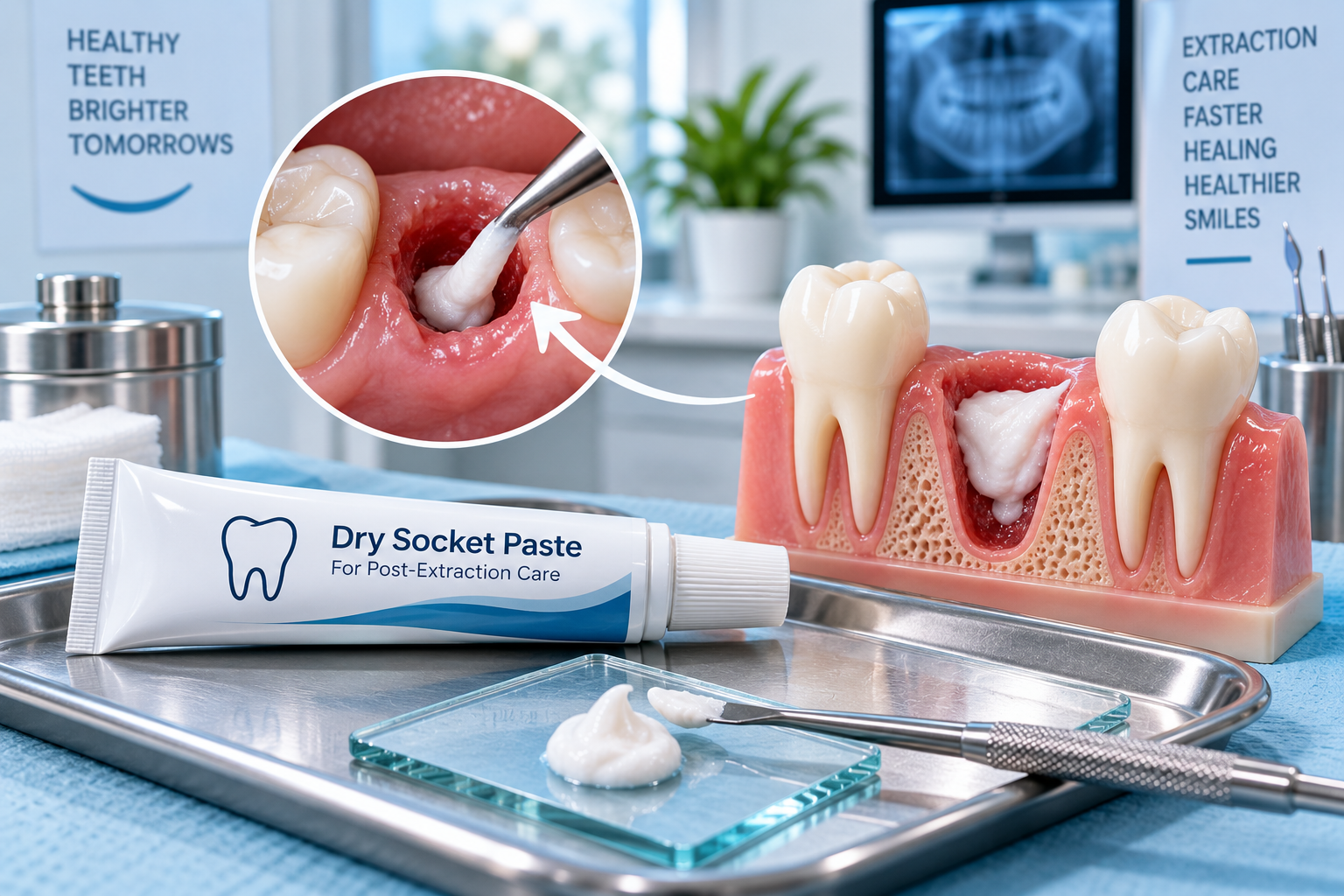
Anyone who’s had a tooth pulled and then felt pain get worse a few days later knows how alarming that can feel. Dry socket paste is one of the tools dentists reach for when that happens.
It’s a medicated dressing placed directly into the extraction site to ease the pain of alveolar osteitis, the clinical name for dry socket. Formulations differ by manufacturer, so what’s inside one product isn’t automatically what’s inside another.
This guide covers what the dressing does, what it’s typically made of, how to apply it, and what to look for when sourcing it for clinical use.
Dry Socket Paste Explained
Dry socket, or alveolar osteitis, happens when the blood clot that normally protects a healed extraction site breaks down or gets dislodged too early. Without that clot, the bone and nerve endings underneath are exposed, which usually causes the sharp, radiating pain patients describe a couple of days after an extraction.
The paste is placed into that exposed socket to manage the discomfort while the site heals on its own. It’s a symptomatic treatment, not a cure; it doesn’t regrow the clot or speed up bone repair; it just makes the healing window more tolerable.
Dentists typically reach for it once dry socket has been confirmed through an exam, since not every case of post-extraction pain is actually dry socket. Persistent or worsening pain after an extraction should always be evaluated professionally rather than assumed.
How Does This Medicated Dressing Help Relieve Pain
Depending on the formulation, it can work a few ways at once: some ingredients soothe exposed tissue, others act as a mild local anesthetic, and the paste itself physically covers the socket, keeping food and debris out while the patient eats and talks normally again. Not every product works the same way. That depends on what’s actually in the formulation, which brings us to ingredients.
Common Ingredients in Dry Socket Treatment Paste
Eugenol and Zinc Oxide–Eugenol
Eugenol, the active compound found naturally in clove oil, has a long history in dentistry for its soothing, mildly antiseptic properties. Combined with zinc oxide, it forms a zinc oxide–eugenol (ZOE) dressing, one of the older, more established approaches to a painful extraction site.
What About Iodoform and Butamben?
Alvogyl, one of the best-known brand names here, has historically combined eugenol with iodoform (an antiseptic) and butamben (a topical anesthetic). That combination shows up repeatedly in older clinical literature.
Formulations and labeling can vary by manufacturer, region, and product generation, though, so don’t assume every current product on the shelf contains all three ingredients.
Why Product Formulation Matters
Before stocking or using any dressing, check a few things directly rather than relying on what a similar-sounding product used to contain:
- Current ingredient list: Printed formulations change over time, sometimes without an obvious name change.
- Intended use: Confirm the product is labeled for alveolar osteitis, not a general periodontal dressing.
- Manufacturer labeling: Check the actual packaging or safety data sheet, not a secondhand description.
- Instructions for use: Application steps and contraindications differ by brand.
How Do Dental Professionals Apply This Dressing?
Application isn’t identical across every product or case, but the general sequence follows a similar pattern:
- Evaluate the extraction site and confirm the cause of pain.
- Irrigate or clean the socket when appropriate.
- Prepare the site per the product’s directions.
- Place the dressing following manufacturer instructions.
- Monitor symptoms and decide whether a follow-up is needed.
Exact quantities, replacement intervals, and irrigation methods vary by product and by the clinical picture in front of the provider; there’s no single universal protocol. This dressing is meant for placement by trained dental professionals, not as a home remedy.
Does This Dressing Actually Relieve Pain?
It helps with pain for many patients, but head-to-head research on specific dressing materials is thinner than you’d expect. A 2022 Cochrane review of local interventions for alveolar osteitis found moderate-certainty evidence that chlorhexidine rinses and gel reduce the risk of dry socket developing in the first place.
For treating dry socket once it’s present, the same review described only limited, very low-certainty evidence that an older Alvogyl formulation might reduce pain by day seven versus a zinc oxide–eugenol dressing.
That’s a meaningful distinction; evidence from an older formulation shouldn’t be assumed to apply to whatever version is on the market today. Dry socket itself isn’t rare, either: Cochrane’s review protocol notes it occurs in roughly 5% of routine extractions and more often after wisdom tooth removal, which is part of why clinics keep a dressing on hand even as the evidence base keeps developing.
Dry Socket Dressing vs. Other Management Options
This kind of dressing is one option among several, and the right choice depends on the patient in the chair.
| Option | Main Role |
| Saline irrigation | Flushes debris from the socket |
| Dry socket paste/dressing | Symptomatic pain management |
| ZOE dressing | Traditional soothing option |
| Systemic analgesics | General pain management |
| Chlorhexidine | Studied mainly for prevention, not treatment |
None of these is universally “better.” They address different parts of the problem, and clinicians often combine more than one depending on the case.
How to Choose a Dry Socket Paste for Clinical Use
For clinics and buyers comparing products, a few practical factors matter more than brand recognition:
- Formulation: Check the active ingredients and how they’re combined.
- Intended use: Confirm the labeled purpose matches alveolar osteitis management.
- Format: Consider how easy the paste is to handle chairside.
- Packaging: Match pack size to how often the product actually gets used.
- Storage: Review temperature requirements before ordering in bulk.
- Shelf life: Check expiration dates against realistic inventory turnover.
- Instructions: Make sure the application and follow-up steps are clear and current.
- Supplier: Buy from a reputable dental or medical supplier with accurate documentation.
Dental professionals evaluating these products can compare formulation and packaging details directly on supplier pages, including those listed through Next Edge Surgical LLC, before deciding what to stock.
Can Dry Socket Be Prevented?
Following post-extraction instructions, avoiding smoking, keeping the mouth reasonably clean without disturbing the clot, and skipping vigorous rinsing or sucking motions in the first few days all lower the risk.
Chlorhexidine rinses have moderate-certainty evidence behind them here, as noted above. Beyond that, a dentist is the right source for a patient-specific plan.
Choosing the Right Approach to Dry Socket Management
Managing dry socket well comes down to three things: understanding what’s actually in the dressing, applying it appropriately for the clinical situation, and sourcing it from a supplier that stands behind accurate product information.
Dental professionals comparing extraction-care supplies can weigh formulation, intended use, packaging, and storage requirements side by side before choosing a product and exploring relevant dental and surgical supplies available through Next Edge Surgical LLC.
Frequently Asked Questions
It's a medicated dressing placed in an extraction socket to manage the pain of alveolar osteitis while the site heals naturally.
Response varies by patient and formulation. Some people notice relief soon after placement, but no fixed timeline applies to every case.
Formulations vary. Common examples include eugenol, zinc oxide, iodoform, and butamben, but not every product contains all of these.
Same general product line, but formulations have changed over time and by region; check current labeling rather than assuming.
No. Dry socket needs a proper clinical assessment first, and intra-alveolar dressings are meant to be placed according to labeling and professional guidance, not self-applied at home.