


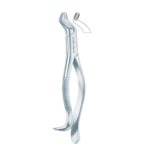
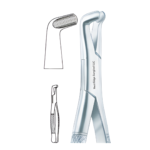
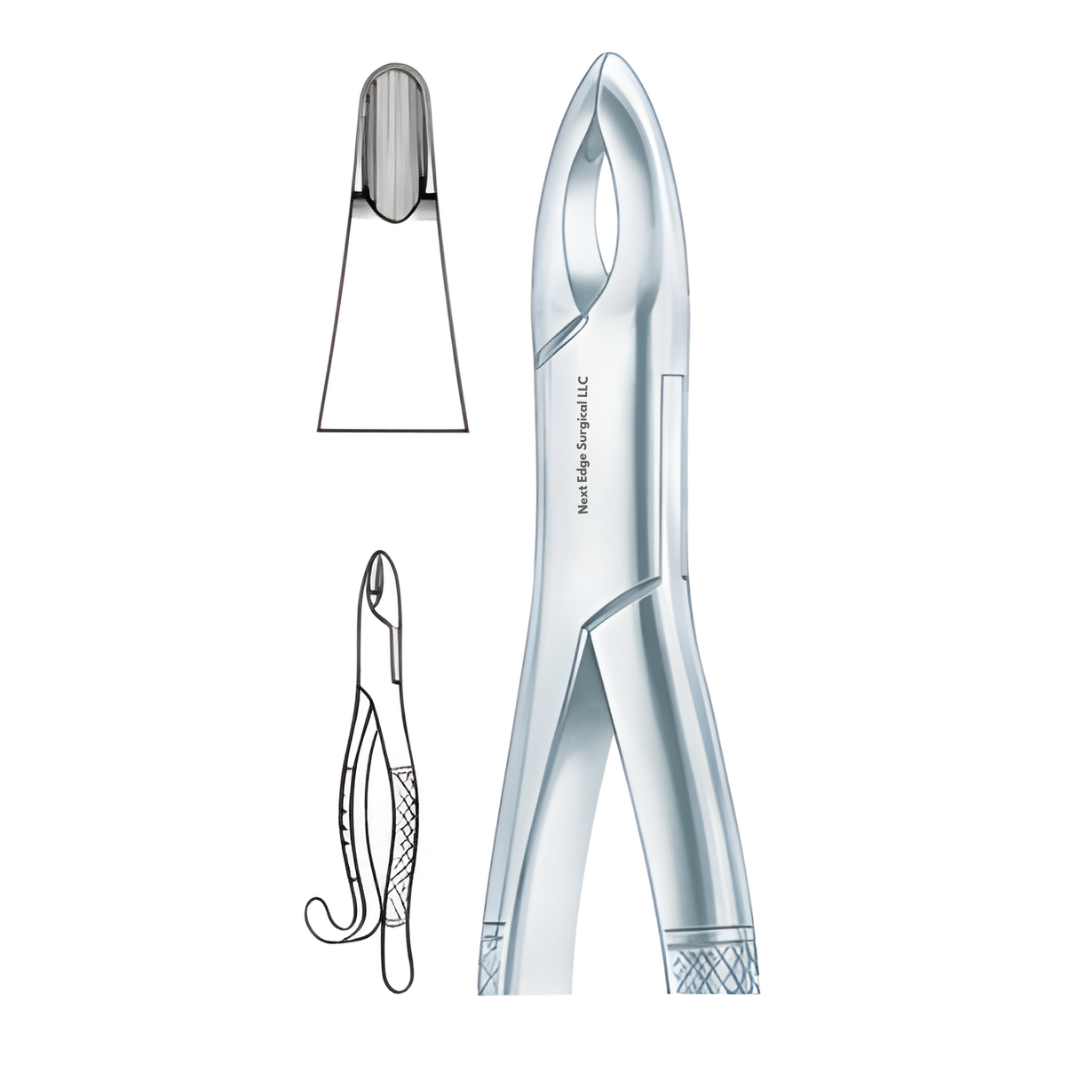
Dental Extraction Forceps – Upper Centrals and Canines – NES-350
Upper central incisors and canines occupy prominent positions in the dental arch, making careful extraction planning especially important. Their root length, surrounding bone, and proximity to neighboring teeth influence how clinicians approach removal.
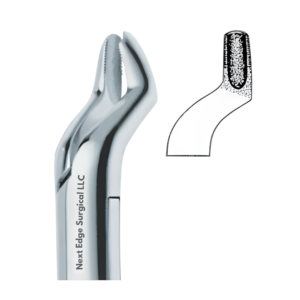
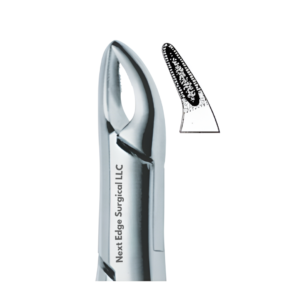
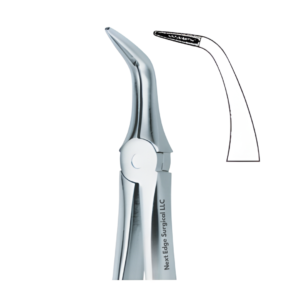
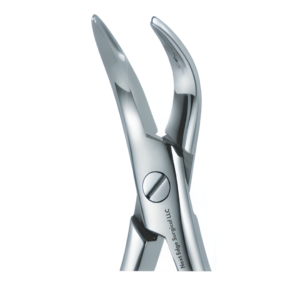
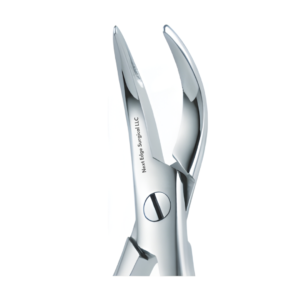
Our Upper Centrals and Canines Forceps – NES-350 is designated for suitable maxillary central incisor and canine extractions. It provides a tooth-group-specific option for dental professionals preparing instruments for anterior upper-arch procedures.
Supporting Controlled Anterior Maxillary Extraction
Maxillary central incisors generally have single, conical roots, while upper canines typically possess longer roots with substantial periodontal support. These anatomical differences affect tooth mobility, resistance, and the planned direction of removal.
NES-350 belongs to our dental extraction forceps collection. Its designation focuses on upper central incisors and canines rather than posterior teeth. Clinical examination, crown integrity, and root anatomy guide appropriate instrument selection.
Features and Benefits
| Feature | Benefit |
| Upper central incisor designation | Relates to suitable maxillary central incisor extractions. |
| Upper canine application | Includes procedures involving long-rooted maxillary canines. |
| Anterior maxillary focus | Supports instrument preparation for upper front-tooth procedures. |
| Tooth engagement function | Complements controlled mobilization and tooth delivery. |
| Two-group clinical scope | Provides a designated option for central incisors and canines. |
| Extraction workflow relevance | Supports organized preparation based on tooth anatomy. |
Instrument Care and Handling
Before treatment, inspect NES-350 for visible deposits, wear, and damage around the gripping surfaces. Confirm normal opening and closing movement. Arrange the instrument securely within the extraction tray, keeping its working ends protected from heavier equipment.
After extraction, promptly remove blood, tissue residue, and tooth particles. Clean the contact surfaces and accessible joint areas thoroughly. Complete the established cleaning and sterilization workflow before preparing the forceps for another patient.
During central incisor extraction, consider the condition of the facial bone and the position of neighboring teeth. Upper canine removal requires particular attention to root length, curvature, and resistance within the socket.
Evaluate the remaining crown before engagement, especially when extensive restorations or decay are present. A weakened crown may fracture during removal, requiring reassessment of the extraction technique.
Maintain clear visibility and protect adjacent restorations and gingival tissues throughout instrument placement. If mobility remains insufficient, reassess the approach rather than increasing force unnecessarily.
Transfer the used forceps securely for processing. Once reprocessed, store NES-350 in a protected anterior extraction tray. Periodic inspection helps identify changes in working condition and supports consistent preparation for future procedures.
Product Specifications
| Specification | Details |
| Product Name | Upper Centrals and Canines |
| SKU | NES-350 |
| Brand | Next Edge Surgical LLC |
| Product Category | Dental Extracting Forceps |
| Instrument Type | Upper Central Incisor and Canine Extraction Forceps |
| Anatomical Region | Maxillary Central Incisors and Canines |
| Intended Application | Upper Central Incisor and Canine Extraction |
Frequently Asked Questions
Which teeth are targeted by NES-350?
Upper central incisors and canines.
Why do upper canines require careful extraction planning?
Their relatively long roots can increase removal resistance.
Are central incisor and canine roots identical?
No, their root lengths and shapes differ.
Why should crown integrity be evaluated?
A weakened crown may fracture during engagement.
How should NES-350 be maintained?
Clean, sterilize, inspect, and store it securely.
Reviews
There are no reviews yet.