


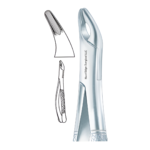
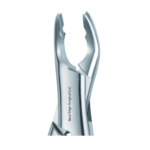
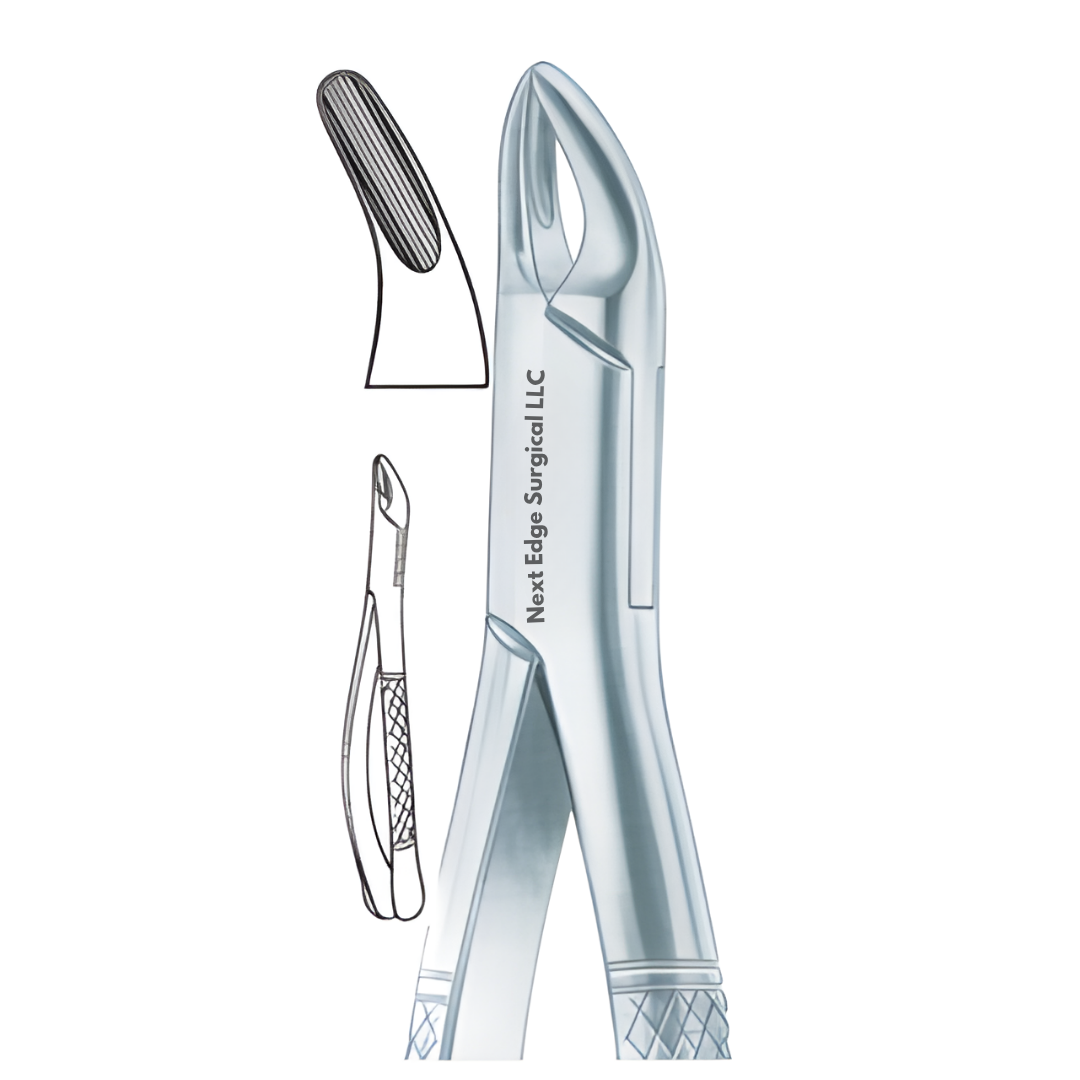
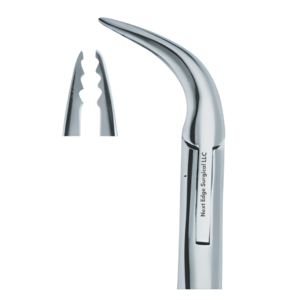
Dental Extraction Forceps – Cryer Upper Teeth for Children – NES-340
Extracting a child’s upper tooth requires consideration of more than its size. Primary teeth undergo natural root resorption, while permanent successors develop nearby. These changes influence the timing and technique of removal.
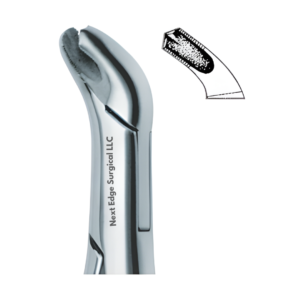
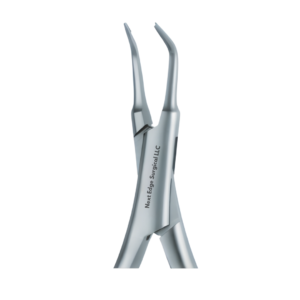
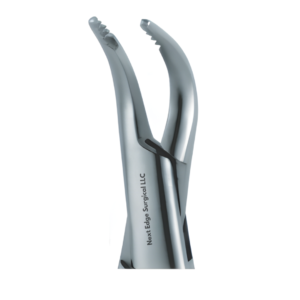
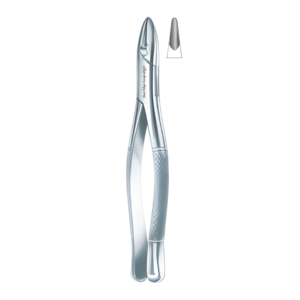
Our Cryer Upper Teeth for Children Forceps – NES-340 is designated for pediatric maxillary tooth extraction. Its Cryer pattern and child-specific application make it a relevant option for dental professionals preparing suitable upper-arch procedures involving younger patients.
Understanding the Developing Upper Dentition
Children’s upper arches contain primary teeth that eventually give way to permanent successors. Primary incisors, canines, and molars have different root forms, and their roots gradually resorb as the permanent dentition develops. The degree of resorption can influence tooth mobility and extraction planning.
NES-340 forms part of our dental extraction forceps collection. Its pediatric designation identifies the intended patient group and upper dental arch. Clinical assessment should consider the particular tooth, its developmental stage, and the surrounding structures before forceps engagement.
Features and Benefits
| Feature | Benefit |
| Cryer pattern | Identifies the named extraction forceps classification. |
| Pediatric designation | Focuses selection on suitable procedures involving children. |
| Upper tooth application | Relates to extraction within the maxillary arch. |
| Primary dentition context | Supports planning around developing dental anatomy. |
| Tooth engagement function | Complements controlled mobilization and removal. |
| Pediatric extraction preparation | Provides a designated option for children’s dental trays. |
Instrument Care and Handling
Before treatment, inspect the instrument for visible residue, wear, and damage. Check that it opens and closes normally. Position NES-340 securely on the tray and protect its working ends from impacts with heavier instruments.
After extraction, remove biological material and tooth debris promptly. Examine accessible joint spaces and tooth-contact surfaces for retained particles. Complete the established cleaning and sterilization workflow before preparing the forceps for another patient.
Primary tooth removal requires attention to natural root resorption and the developing permanent tooth beneath it. Assess the tooth’s mobility and surrounding tissues before engagement. When root structure is unusual or the permanent successor is close, appropriate imaging may help guide the procedure.
Protect the child’s lips, cheeks, and neighboring teeth throughout treatment. Maintain clear communication and use controlled movements suited to the available working space. If resistance is unexpected, reassess the extraction approach rather than applying excessive force.
Transfer the instrument securely for reprocessing. Once processed, store it in a protected pediatric extraction tray. Periodic inspection helps the dental team identify changes in condition and prepare consistently for future appointments.
Product Specifications
| Specification | Details |
| Product Name | Cryer Upper Teeth for Children |
| SKU | NES-340 |
| Brand | Next Edge Surgical LLC |
| Product Category | Dental Extracting Forceps |
| Instrument Pattern | Cryer |
| Anatomical Region | Upper Teeth in Children |
| Intended Application | Pediatric Maxillary Tooth Extraction |
Frequently Asked Questions
What is NES-340 intended for?
Suitable upper tooth extractions involving children.
What does Cryer refer to?
The named pattern of the extraction instrument.
Why is root resorption important?
It changes primary tooth support and remaining root structure.
Should developing permanent teeth be considered?
Yes, their location can influence extraction planning.
How should NES-340 be maintained?
Through cleaning, sterilization, inspection, and protected storage.
Reviews
There are no reviews yet.