


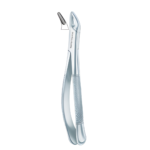
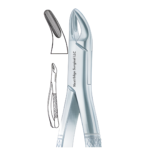
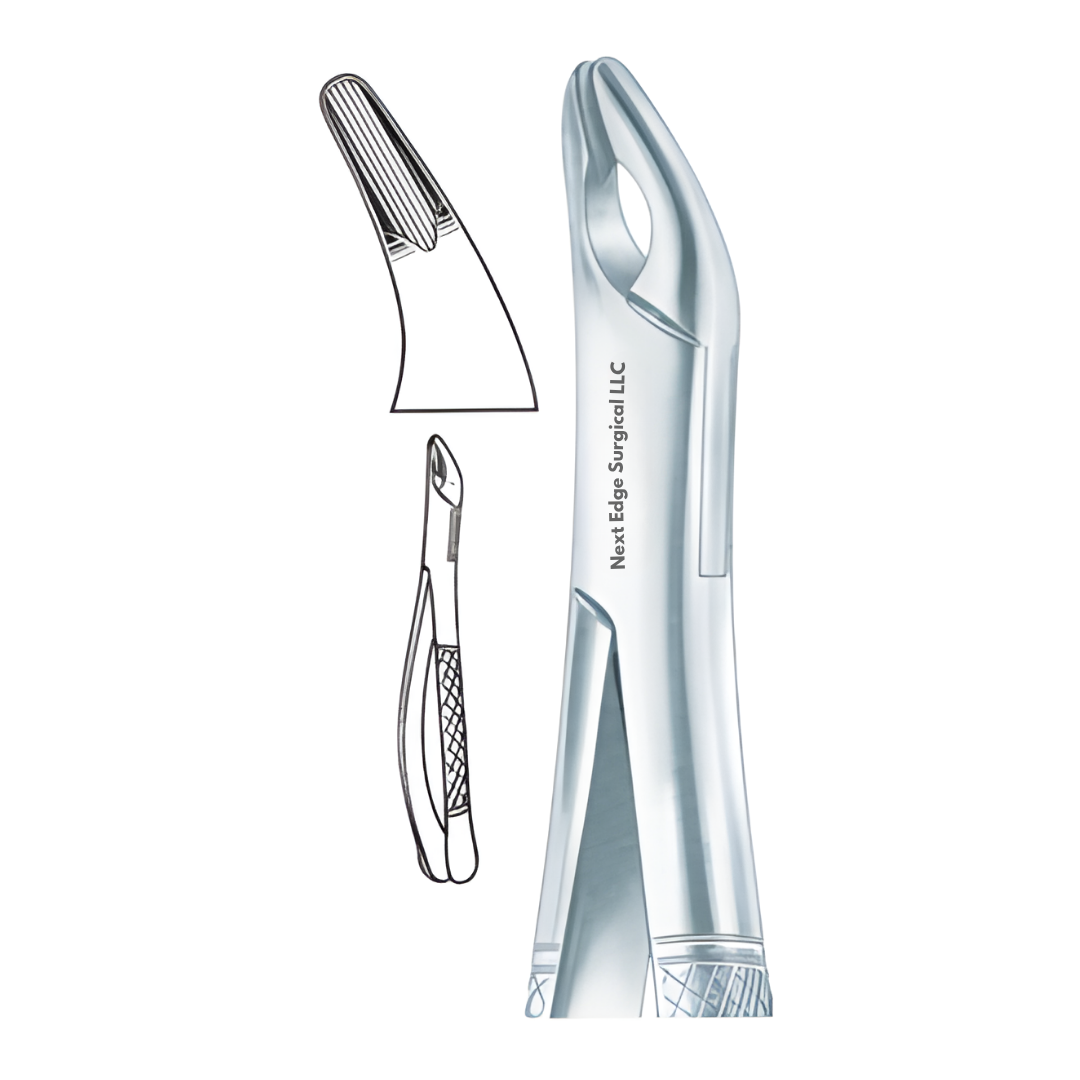
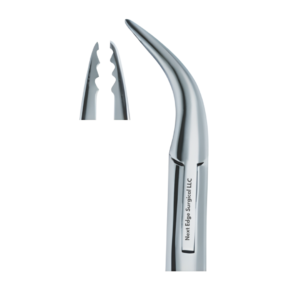
Dental Extraction Forceps – Cryer Upper Incisors Premolars Roots – NES-339
An extraction procedure may begin with an intact upper tooth but require a different approach if its crown breaks. Preparing for both tooth engagement and possible root retrieval helps clinicians organize instruments around the anticipated clinical situation.
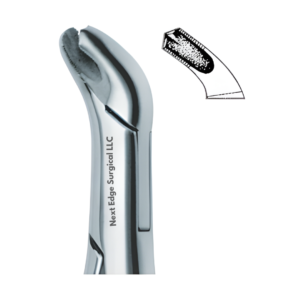
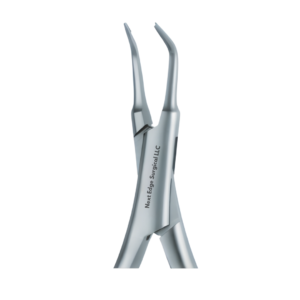
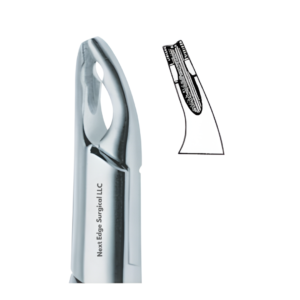
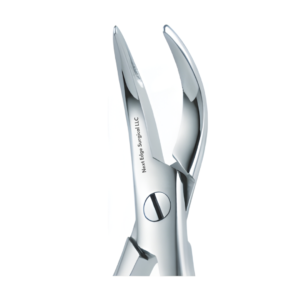
Our Cryer Upper Incisors Premolars Roots Forceps – NES-339 is designated for maxillary incisors, premolars, and roots. It provides another catalog option within the Cryer pattern family for suitable upper-arch extraction procedures.
Evaluating Tooth Structure Before Instrument Selection
Maxillary incisors usually have a single root, whereas premolars can show greater variation in root number and shape. The extent of decay, existing restorations, and periodontal support can influence how securely the remaining tooth structure can be engaged.
NES-339 belongs to our dental extraction forceps range. Its stated application matches NES-338, but the different SKU alone does not establish a specific difference in beak geometry, size, or handling. Selection should therefore be based on the actual instrument and the requirements of the procedure.
Features and Benefits
| Feature | Benefit |
| Cryer instrument designation | Identifies a named extraction forceps pattern. |
| Maxillary incisor focus | Relates to suitable upper anterior procedures. |
| Premolar application | Covers appropriate maxillary premolar extraction. |
| Root removal designation | Includes accessible retained root structures. |
| Tooth and root scope | Supports planning when crown integrity is uncertain. |
| Individual SKU identification | Helps distinguish the instrument during catalog selection. |
Instrument Care and Handling
Before treatment, examine the working ends for visible wear, damage, or retained deposits. Confirm normal movement and place NES-339 securely on the extraction tray. Protect the gripping surfaces from unnecessary impacts during preparation.
After use, remove blood, tissue residue, and tooth particles promptly. Inspect accessible joint areas and contact surfaces carefully, particularly after a procedure involving a fractured crown. Follow the established cleaning and sterilization process before returning the forceps to clinical service.
When an upper incisor has extensive restorations, consider whether the remaining crown provides sufficient support for engagement. Premolars may present additional challenges because of root curvature or division. Retained fragments require assessment of depth, mobility, and proximity to surrounding structures.
If direct grasping is unsuitable, reassess the approach instead of increasing force without control. Protect adjacent teeth and soft tissues throughout treatment. Transfer the instrument securely for processing, then store it in a protected extraction tray. Periodic inspection helps maintain organized preparation for future procedures.
Product Specifications
| Specification | Details |
| Product Name | Cryer Upper Incisors Premolars Roots |
| SKU | NES-339 |
| Brand | Next Edge Surgical LLC |
| Product Category | Dental Extracting Forceps |
| Instrument Pattern | Cryer |
| Anatomical Region | Maxillary Incisors, Premolars and Roots |
| Intended Application | Upper Tooth and Root Extraction |
Frequently Asked Questions
What is NES-339 intended for?
Suitable upper incisor, premolar, and root extractions.
Is NES-339 identical to NES-338?
Their stated applications match; physical differences require confirmation.
Why examine crown integrity?
A weakened crown can fracture during instrument engagement.
Can root curvature affect extraction?
Yes, it may change the required removal technique.
What care is required after use?
Prompt cleaning, sterilization, inspection, and protected storage.
Reviews
There are no reviews yet.