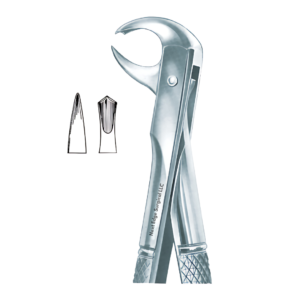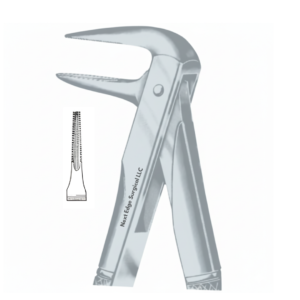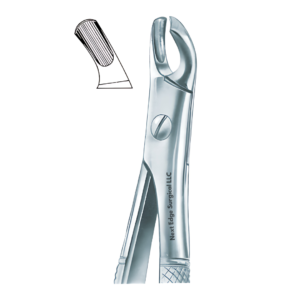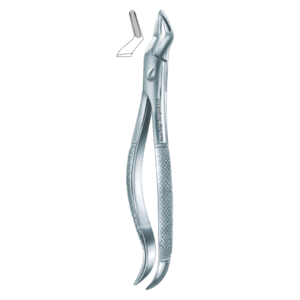


Navigating the posterior regions of the mouth, particularly the maxillary tuberosity area, often presents a significant clinical challenge due to limited mouth opening, restricted visibility, and awkward angulation.
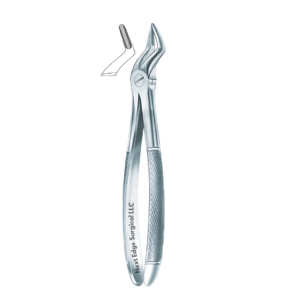
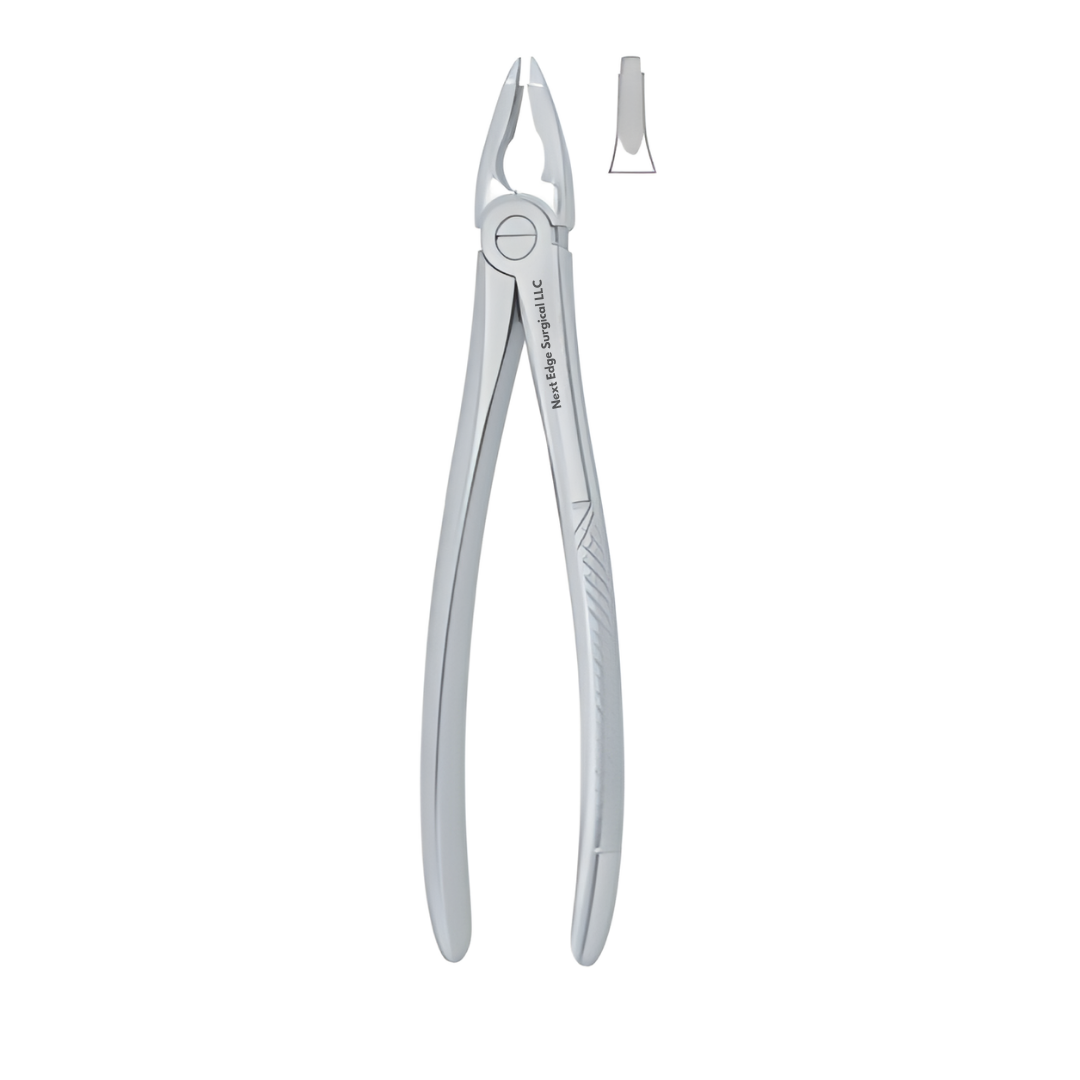
The Article-NES-216 elegantly and effectively solves this problem with its specialized bayonet-style bend. This distinctive, offset design moves the handle away from the axis of the beaks, allowing your hand to rest lower and away from the line of sight.
This creates a much clearer, unobstructed view of the surgical field, enabling you to see exactly what you are doing, which is absolutely critical for the safe and effective extraction of posterior molars.
Why this bayonet design is a game-changer:
- Offset handle improves visibility in posterior regions.
- Allows for safer, more precise apical force application.
- Reduces the risk of sinus or soft tissue complications.
- Maintains stability even when operating at extreme angles.
This offset design also helps in aligning the applied force vector more precisely, allowing for the direct application of apical force without inadvertently pushing the root toward the maxillary sinus.
The hinge is robust, providing the clamping strength necessary to handle large, multi-rooted teeth. By improving both visualization and force application, this instrument reduces the risk of complications and significantly enhances surgical efficiency.
This extracting forceps is crafted from high-grade, durable surgical steel, built to maintain its specific bend geometry.