


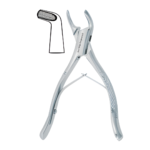
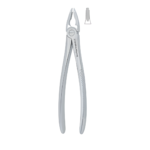
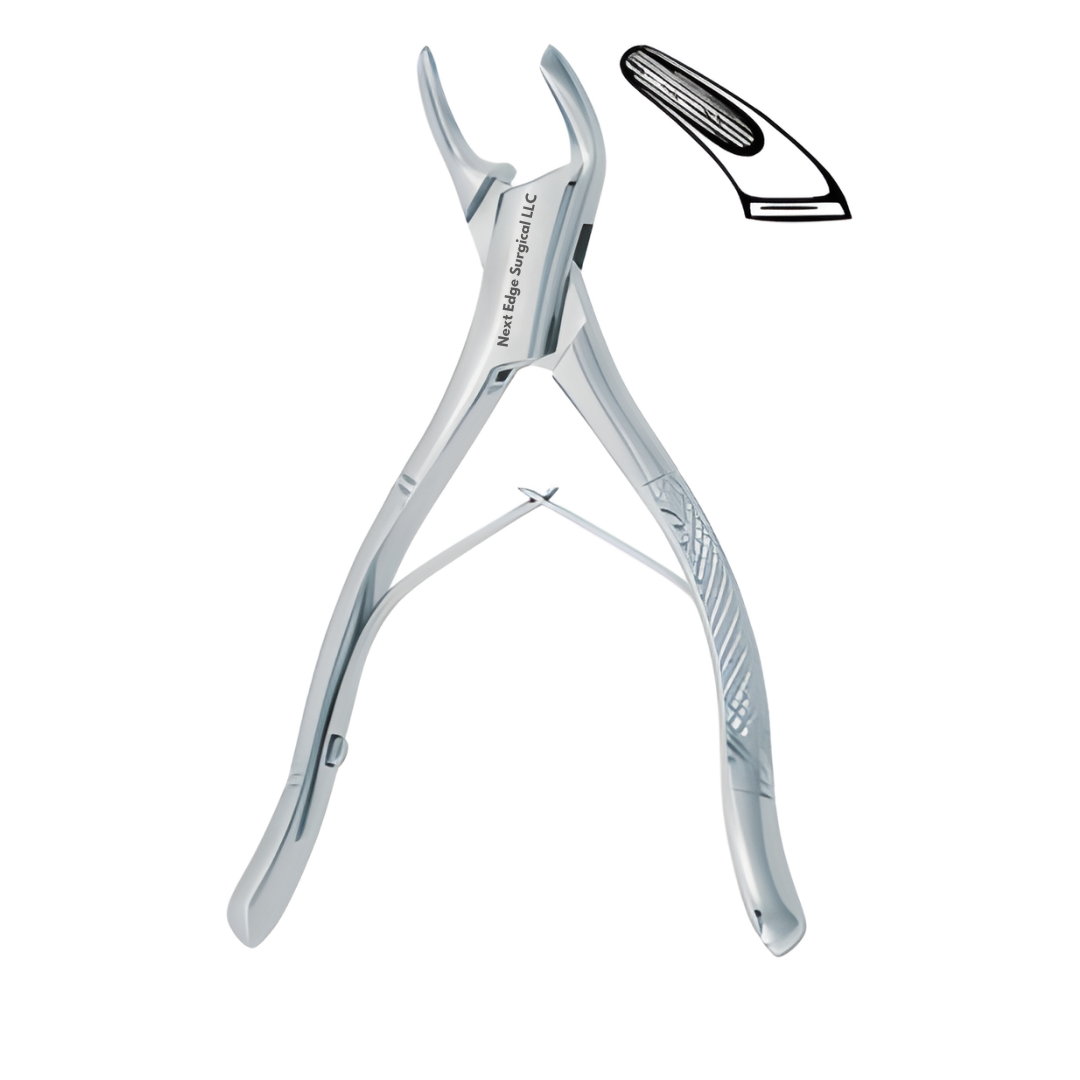
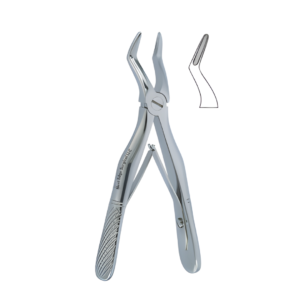
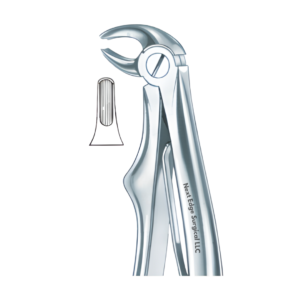
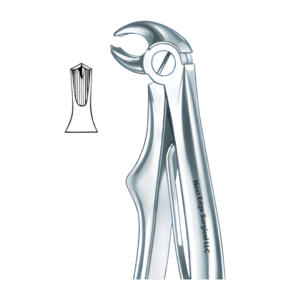
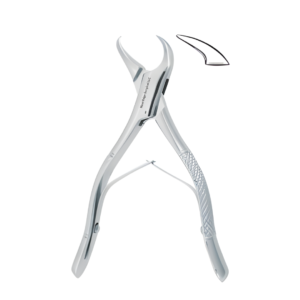
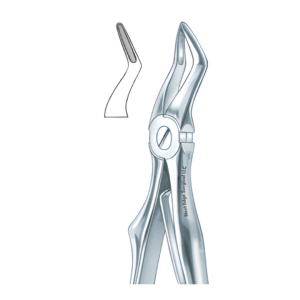
Dental Extraction Forceps – Lower Third Molars – NES-215
Wisdom teeth are often discussed as one group, but their positions differ considerably. A fully erupted lower third molar presents a different extraction situation from a tooth that remains partly covered by gum or bone.
Our Lower Third Molars Forceps – NES-215 is designated for suitable mandibular wisdom tooth extractions. It provides a dedicated tooth-group option when clinical assessment supports forceps engagement and controlled delivery.
Assessing Eruption and Posterior Access
The mandibular third molar lies behind the second molar, where visibility and instrument access can be restricted. Its roots may be curved, fused, or otherwise variable. The tooth’s position relative to the mandibular canal is an important consideration during planning.
NES-215 forms part of our dental extraction forceps range. Its designation identifies the lower wisdom tooth region without implying that every impacted third molar can be removed using forceps alone. Eruption, crown condition, mobility, and radiographic findings guide the chosen technique.
Features and Benefits
| Feature | Benefit |
| Lower third molar designation | Identifies the intended mandibular wisdom tooth group. |
| Posterior mandibular application | Relates to extraction behind the second molar. |
| Wisdom tooth focus | Supports tooth-specific instrument preparation. |
| Crown engagement function | Assists grasping when adequate tooth structure is accessible. |
| Root anatomy relevance | Fits planning around variable third molar roots. |
| Extraction sequence role | Complements assessment, mobilization, and tooth delivery. |
Instrument Care and Handling
Before treatment, examine the gripping surfaces for residue, visible damage, or irregularities. Confirm normal opening and closing movement. Position the forceps where other instruments cannot strike its working ends during preparation.
After extraction, remove biological material and tooth debris promptly. Inspect the contact surfaces and accessible joint areas, particularly after a procedure involving crown fracture. Complete the established cleaning and sterilization process before the forceps returns to the clinical tray.
Posterior access deserves particular attention when mouth opening is limited. Keep neighboring teeth and cheek tissues protected while positioning the instrument. If the third molar remains immobile or is obstructed by bone, reassess the removal plan rather than increasing force without control.
Clinical planning should consider root configuration, the second molar, and the inferior alveolar canal. Carry NES-215 securely to the processing area after use. Once reprocessed, store it in a protected extraction tray and inspect it periodically for changes in working condition.
Product Specifications
| Specification | Details |
| Product Name | Lower Third Molars |
| SKU | NES-215 |
| Brand | Next Edge Surgical LLC |
| Product Category | Dental Extracting Forceps |
| Instrument Type | Lower Third Molar Extraction Forceps |
| Anatomical Region | Mandibular Third Molars |
| Intended Application | Lower Wisdom Tooth Extraction |
Frequently Asked Questions
Which teeth are intended for NES-215?
Suitable mandibular third molars, also called lower wisdom teeth.
Does eruption status influence instrument choice?
Yes, accessibility and impaction affect the extraction approach.
Why examine the second molar nearby?
Its position matters when planning posterior access.
What if forceps engagement is unsuitable?
The clinician selects an appropriate alternative extraction technique.
How should the instrument be stored?
Protected after cleaning, sterilization, and inspection.
Reviews
There are no reviews yet.