


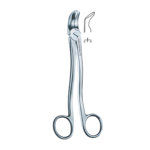
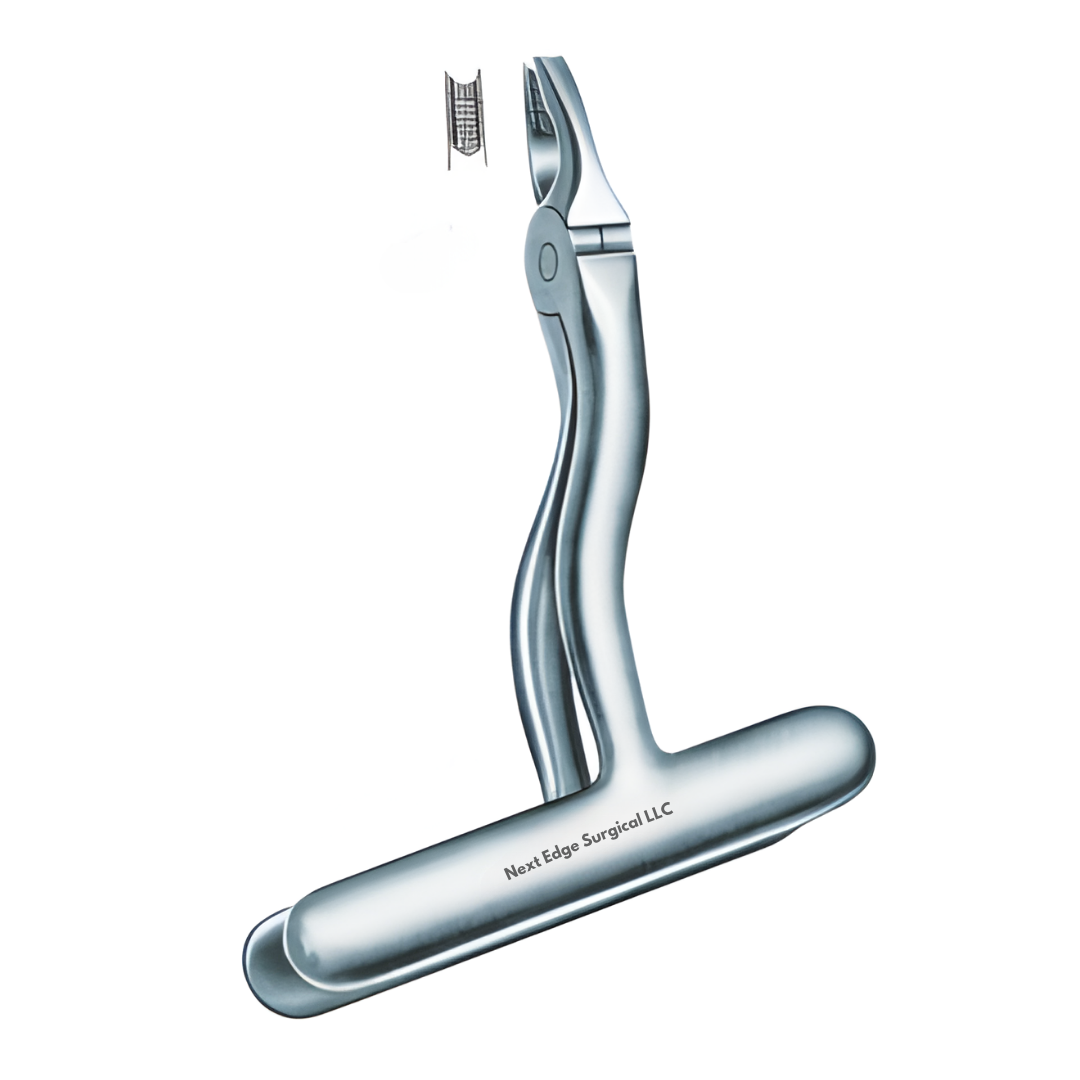
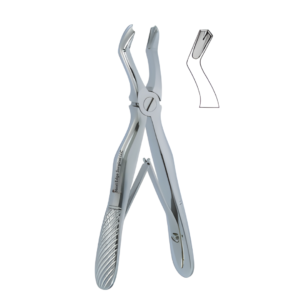
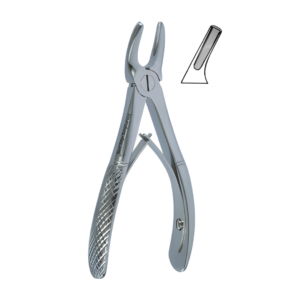
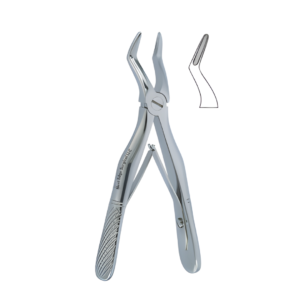
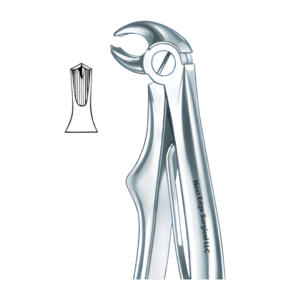
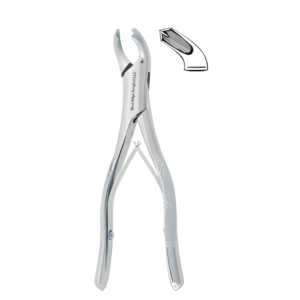
Dental Extraction Forceps – Upper Canines & Premolars – NES-203
The transition from upper canine to premolar marks a change in tooth form and root anatomy. Instrument selection needs to respect those differences rather than relying on crown position alone.
Our Upper Canines & Premolars Forceps – NES-203 is designated for appropriate maxillary canine and premolar extractions. It offers a tooth-group-specific option for dental teams preparing treatment in the upper arch between the incisors and molars.
Considering Canine Length and Premolar Root Variation
Upper canines typically have long single roots and substantial periodontal support. Maxillary first premolars frequently have two roots, while second premolars more commonly have one. These differences influence movement, the risk of root fracture, and the choice of extraction technique.
NES-203 forms part of our dental extraction forceps range. Its combined designation covers upper canines and premolars without treating their requirements as identical. Before engagement, the practitioner evaluates crown condition, root configuration, mobility, and the neighboring teeth.
Features and Benefits
| Feature | Benefit |
| Upper canine designation | Supports selection for suitable maxillary canine procedures. |
| Upper premolar designation | Extends the intended application to maxillary premolars. |
| Maxillary focus | Distinguishes the target arch from mandibular instruments. |
| Crown engagement role | Supports grasping when sufficient tooth structure remains. |
| Root anatomy relevance | Fits assessment of long canine and variable premolar roots. |
| Extraction workflow application | Complements examination, mobilization, and tooth delivery. |
Instrument Care and Handling
Examine the tooth-contact surfaces before placing NES-203 in the operative field. Look for visible wear, residue, or damage, and check normal opening and closing movement. Keep the working ends protected while arranging instruments.
Following extraction, remove biological material promptly. Clean areas that contacted the crown and any accessible joint spaces where deposits can accumulate. Complete the established instrument reprocessing and sterilization procedure before the next clinical use.
When approaching an upper canine, consider its root length and the support provided by surrounding bone. Premolar removal requires attention to possible root division and delicate root forms. Apply movements appropriate to the individual tooth and reassess when resistance suggests additional mobilization is needed.
Protect adjacent restorations and soft tissues during placement. After treatment, transport the forceps securely rather than allowing it to move freely among other tools. Store NES-203 in an upper-arch extraction tray after processing. Periodic inspection helps maintain orderly instrument preparation and identify changes in working condition.
Product Specifications
| Specification | Details |
| Product Name | Upper Canines & Premolars |
| SKU | NES-203 |
| Brand | Next Edge Surgical LLC |
| Product Category | Dental Extracting Forceps |
| Instrument Type | Upper Canine and Premolar Forceps |
| Anatomical Region | Maxillary Canines and Premolars |
| Intended Application | Upper Canine and Premolar Extraction |
Frequently Asked Questions
Which teeth are covered by NES-203?
Suitable upper canines and premolars.
Why can upper canines resist removal?
Their long roots and surrounding support influence mobility.
Do all upper premolars have two roots?
No, root number varies by tooth and patient.
What affects secure crown engagement?
Remaining tooth structure, accessibility, and clinical mobility.
How is the instrument prepared for reuse?
Through cleaning, sterilization, inspection, and protected storage.
Reviews
There are no reviews yet.