


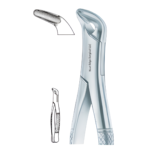
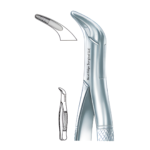
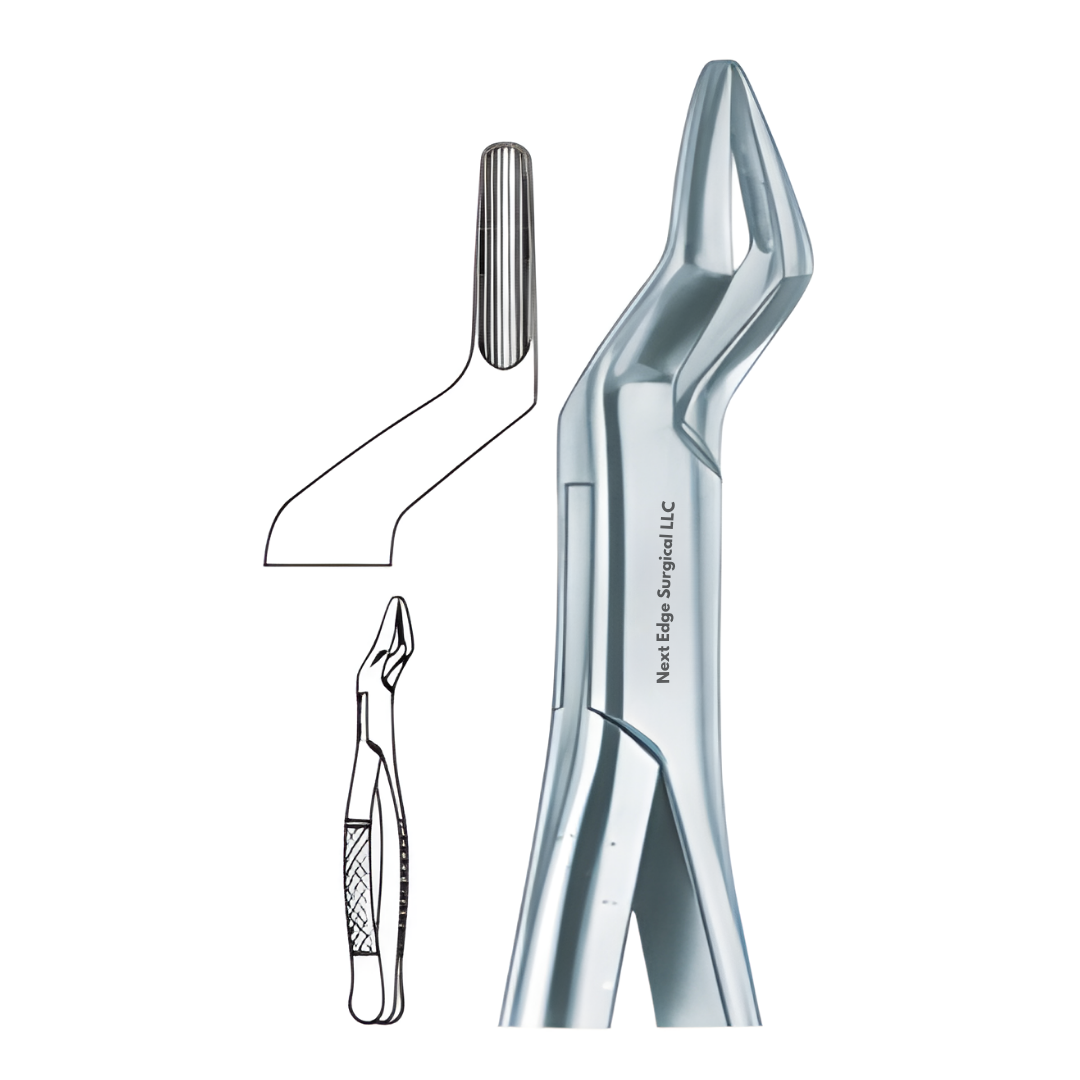
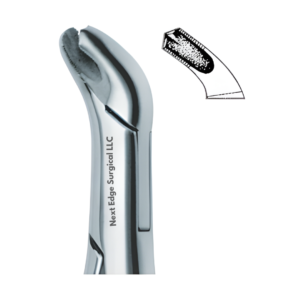
Dental Extraction Forceps – Upper Roots – NES-320
Removing a retained root from the upper jaw calls for a different approach than extracting a tooth with an intact crown. With less structure available for engagement, careful positioning and controlled movement become especially important.
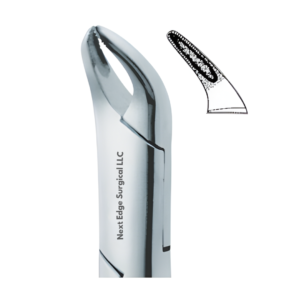
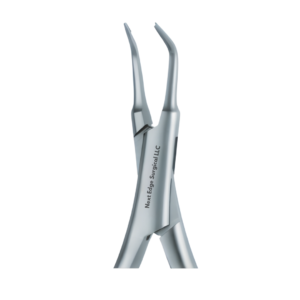
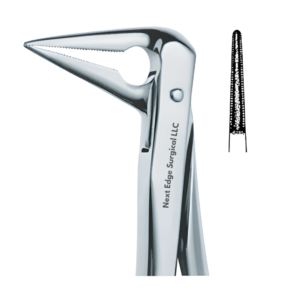
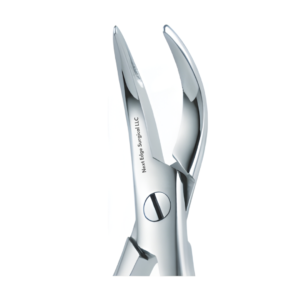
Our Upper Roots Forceps – NES-320 is designed for maxillary root extraction. Its close-fitting beak follows the root surface to support secure engagement of accessible remnants and fragments during appropriate dental procedures.
Controlled Engagement of Maxillary Root Remnants
Upper roots may remain after crown fracture, extensive decay, or incomplete tooth removal. Their location, curvature, and relationship to surrounding bone influence the extraction plan. Radiographic evaluation helps clinicians assess accessibility and nearby anatomical structures, including the maxillary sinus.
NES-320 belongs to our dental extraction forceps collection. Its root-focused beak supports close contact with available tooth structure, while the handle allows controlled instrument movement. Stainless steel construction makes this instrument a practical addition to extraction trays used for upper-root procedures.
Features and Benefits
| Feature | Benefit |
| Upper-root extraction pattern | Designed specifically for accessible maxillary root remnants. |
| Close-fitting beak | Supports contact with the remaining root surface. |
| Root-focused engagement | Helps clinicians grasp shortened tooth structures. |
| Controlled handling | Supports deliberate positioning during root removal. |
| Stainless steel construction | Provides a practical material for surgical instrument use. |
| Maxillary application | Supports procedures involving retained upper roots. |
Instrument Care and Handling
Inspect the beak before each procedure, paying particular attention to the surfaces intended to contact root structure. Look for visible damage, retained deposits, or irregularities that could interfere with engagement. Check the opening and closing movement during instrument preparation.
Following use, remove blood, tissue residue, and small tooth fragments promptly. Root extraction procedures can leave debris around the gripping surfaces and joint. Clean these areas thoroughly and complete the established instrument reprocessing and sterilization workflow.
During treatment, avoid increasing pressure on a fragile fragment when adequate engagement cannot be maintained. Evaluate the position and mobility of the root before attempting delivery. Deeply retained or inaccessible fragments may require additional mobilization or a different surgical approach.
Protect the working ends during transport and storage. Keep NES-320 in an organized extraction tray where it will not strike heavier instruments. Regular inspection helps maintain consistent preparation for root-removal appointments.
Product Specifications
| Specification | Details |
| Product Name | Upper Roots |
| SKU | NES-320 |
| Brand | Next Edge Surgical LLC |
| Product Category | Dental Extracting Forceps |
| Instrument Type | Upper Root Extraction Forceps |
| Anatomical Region | Maxillary Roots |
| Intended Application | Upper Root Extraction |
| Beak Design | Close-Fitting Root Engagement |
| Material | Stainless Steel |
Frequently Asked Questions
What is NES-320 designed to remove?
Accessible retained roots in the upper jaw.
Why is a close-fitting beak useful?
It supports engagement when limited root structure remains.
Can the forceps assist with fractured roots?
Yes, when the fragment is accessible for controlled engagement.
Why assess the maxillary sinus?
Some upper roots lie close to the sinus floor.
Which areas require careful cleaning?
The beak surfaces and accessible joint areas.
Reviews
There are no reviews yet.