


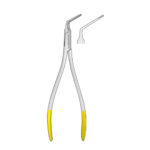
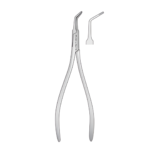
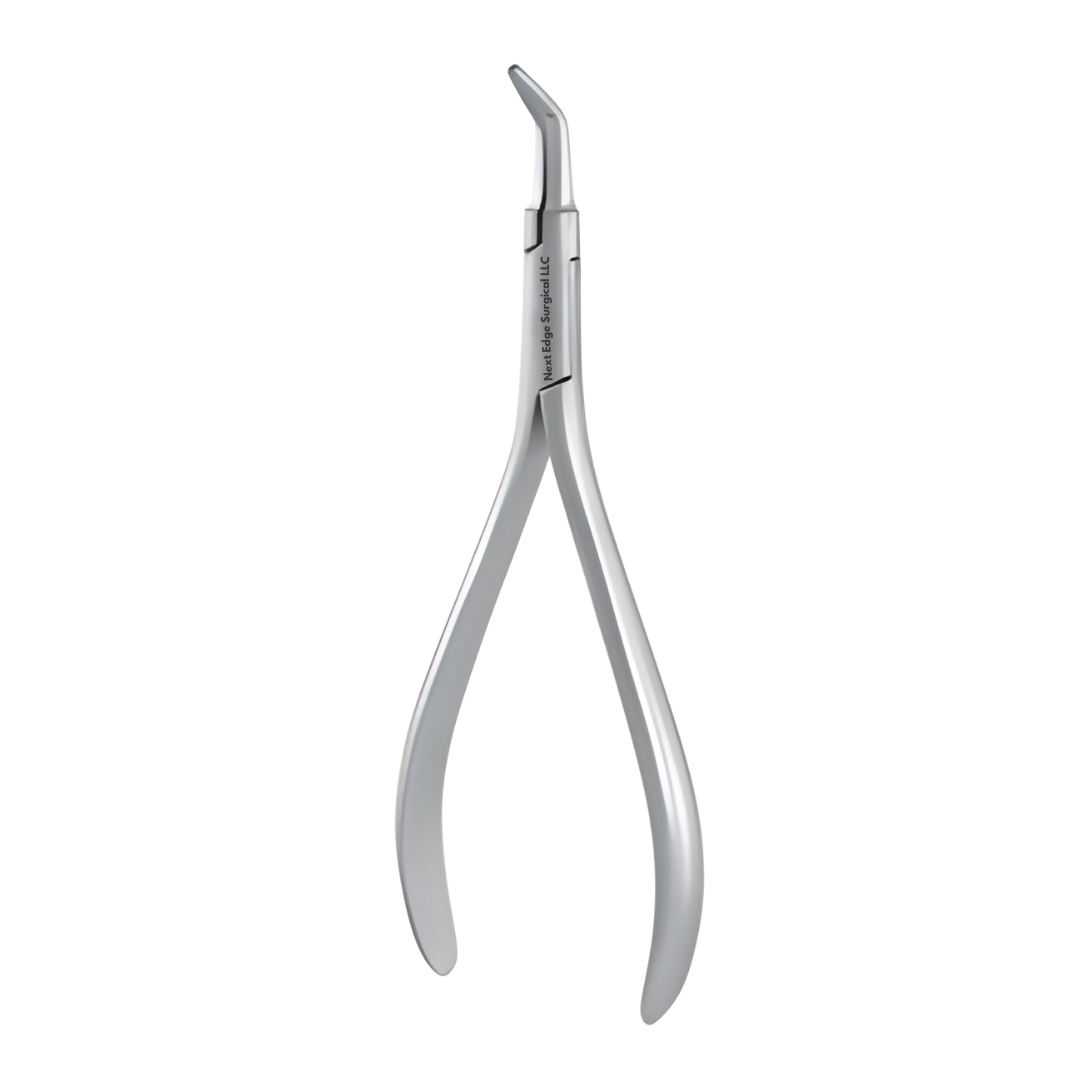
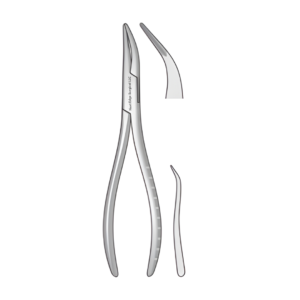
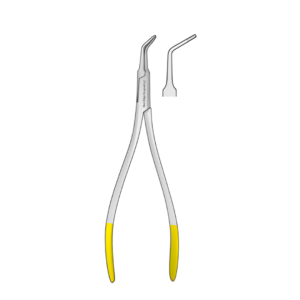
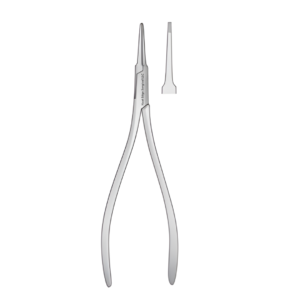
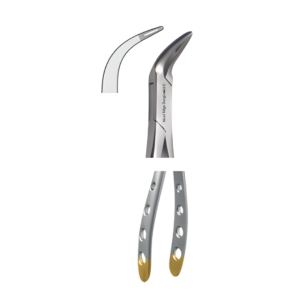
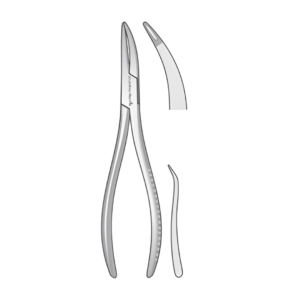
Dental Root Fragment Forceps – Ralk Root Fragments – NES-288
The final stage of a difficult extraction may involve removing a small root remnant rather than an entire tooth. Even a relatively small fragment can require careful attention when surrounding bone restricts access or the remaining structure is difficult to grasp.
Our Ralk Root Fragments Forceps – NES-288 is intended for dental root-fragment retrieval. The Ralk pattern belongs to a recognized family of specialized splinter forceps used in oral surgery and extraction procedures involving broken roots.
The Ralk Pattern in Fragment Retrieval
Root remnants can occupy different positions within the extraction socket. Some are visible near the socket opening, while others require additional access before an instrument can engage them appropriately.
Ralk forceps are associated with the removal of small dental root fragments. Their clinical role differs from instruments intended primarily to grasp intact tooth crowns. NES-288 provides a dedicated option within our dental extraction forceps range for suitable fragment-retrieval procedures.
Before attempting removal, the clinician should consider the fragment’s location, mobility, and relationship to neighboring structures. Controlled engagement is most appropriate when the remnant can be reached without placing unnecessary pressure on surrounding tissues.
Features and Benefits
| Feature | Benefit |
| Ralk instrument pattern | Identifies an established root-fragment forceps family. |
| Root splinter application | Addresses small remnants following dental root fracture. |
| Localized retrieval purpose | Supports grasping accessible fragments within an extraction site. |
| Oral surgery relevance | Complements instruments used during complicated extractions. |
| Fragment-specific classification | Differentiates the instrument from whole-tooth extraction patterns. |
| Direct engagement role | Provides a retrieval option after appropriate fragment assessment. |
Instrument Care and Handling
Root-fragment instruments require particular care around their working ends. Before treatment, inspect the gripping surfaces under adequate lighting and look for visible wear, residue, or damage.
Check the instrument’s movement and the condition of its contact surfaces. Any irregularity affecting controlled engagement should be addressed before the forceps are placed in service.
After a procedure, begin cleaning promptly. Small fragments and biological material can collect around working areas, making careful removal of debris an important part of instrument maintenance.
Follow established dental cleaning and sterilization procedures. Keep the instrument protected during transportation, particularly when it shares a processing tray with larger extraction tools.
Clinical handling should emphasize visibility and controlled positioning. Repeated attempts to grasp a deeply retained fragment can disturb surrounding tissues without improving access.
When necessary, the practitioner should first establish a more suitable retrieval pathway using an appropriate surgical technique.
Store NES-288 with its working ends protected. Regular inspection helps preserve the instrument’s usefulness in fragment-removal procedures.
Product Specifications
| Specification | Details |
| Product Name | Ralk Root Fragments |
| SKU | NES-288 |
| Brand | Next Edge Surgical LLC |
| Product Category | Dental Root Fragment Forceps |
| Instrument Pattern | Ralk |
| Intended Application | Root Fragment Retrieval |
| Clinical Application | Dental Extraction and Oral Surgery |
Frequently Asked Questions
What is the Ralk pattern used for?
It is associated with retrieval of dental root fragments.
Is NES-288 intended for intact crowns?
Its designated application is the removal of root remnants.
When is direct fragment grasping appropriate?
When the fragment is accessible and suitable for controlled engagement.
Why might additional surgical access be necessary?
A deeply positioned fragment may be difficult to reach safely.
What should be checked during instrument inspection?
The working surfaces, operating movement, and visible condition.
Reviews
There are no reviews yet.