


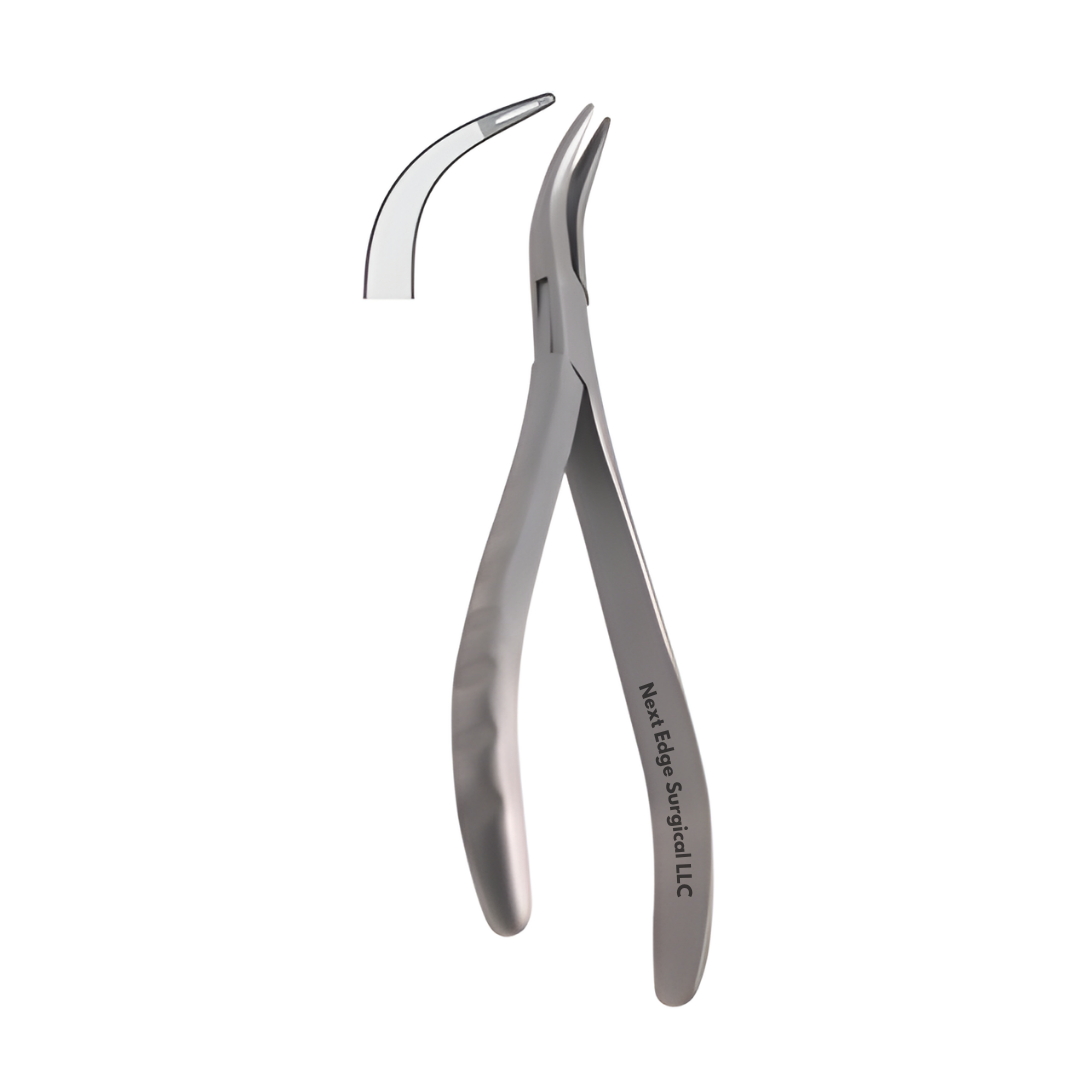
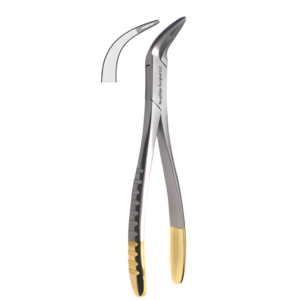
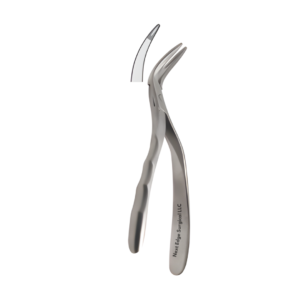
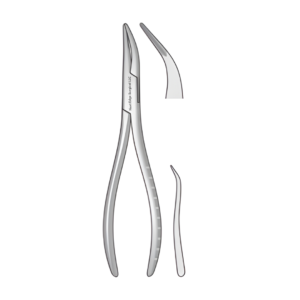
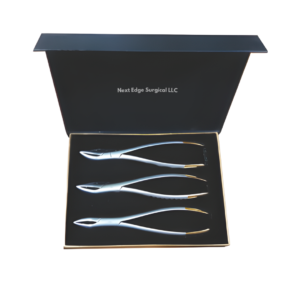
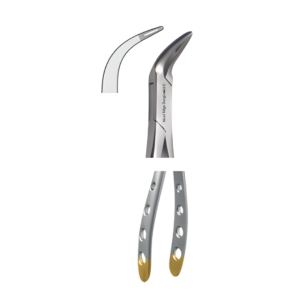
Dental Root Fragment Forceps – Witzel Lower roots, Universal – NES-285
The moment a lower tooth loses its crown during extraction, the clinician must reassess how the remaining root can be removed. A suitable root forceps becomes relevant when the residual tooth structure can be approached directly and engaged securely.
Our Witzel Lower Roots Universal Forceps – NES-285 is intended for mandibular root extraction. It combines the established Witzel instrument designation with a universal lower-root application for professional dental procedures.
The Witzel Pattern in Lower-Root Extraction
Witzel forceps belong to a recognized family of dental root-removal instruments. Their clinical purpose centers on engaging remaining tooth roots rather than relying on the broader crown contact associated with conventional tooth forceps.
NES-285 is part of our specialized dental extraction forceps collection. The lower-root designation identifies its anatomical application, while universal describes its intended use across suitable mandibular root cases.
Instrument selection should reflect the root’s position, curvature, and available contact surface. A root that has been adequately loosened may be suitable for direct forceps engagement, whereas a deeply positioned or firmly attached fragment may require another approach.
Features and Benefits
| Feature | Benefit |
| Witzel instrument designation | Identifies a recognized root-extraction forceps family. |
| Lower-root application | Supports instrument selection for mandibular root procedures. |
| Universal classification | Covers suitable lower-root extraction situations. |
| Remaining-root focus | Addresses procedures involving fractured or reduced tooth structure. |
| Direct engagement purpose | Provides a grasping option for accessible root material. |
| Extraction workflow relevance | Complements elevators, luxators, and other dental surgical instruments. |
Instrument Care and Handling
The gripping areas of a root forceps must remain in suitable condition for clinical use. Examine NES-285 before each procedure, looking for visible deformation, trapped debris, or damage that could interfere with tooth engagement.
Check the operating movement while preparing the extraction tray. Any irregular resistance or noticeable misalignment should be addressed before the instrument is used.
Following extraction, remove contamination through the established cleaning process. Pay attention to the surfaces that contact tooth structure and to accessible areas around the instrument joint.
Complete the appropriate sterilization procedure after cleaning. During transport, keep the forceps positioned to avoid accidental contact with heavier instruments.
Clinical handling should prioritize controlled movement rather than force alone. The practitioner must evaluate root mobility, the surrounding alveolar bone, and nearby anatomical structures before engaging the remaining root.
For lower molars, separate root anatomy can influence the extraction sequence. Additional mobilization or root separation may be appropriate before applying forceps.
Protect the working ends during storage and maintain regular instrument inspections.
Product Specifications
| Specification | Details |
| Product Name | Witzel Lower Roots, Universal |
| SKU | NES-285 |
| Brand | Next Edge Surgical LLC |
| Product Category | Dental Root Fragment Forceps |
| Instrument Family | Witzel |
| Anatomical Application | Lower Dental Arch |
| Pattern Classification | Universal |
| Intended Use | Mandibular Root Extraction |
Frequently Asked Questions
What does the Witzel designation identify?
It identifies a recognized dental root-extraction instrument family.
Is NES-285 intended for upper roots?
Its designated application is lower-root extraction.
What does universal mean in this product?
It describes use across suitable mandibular root procedures.
When might root separation be necessary?
When root anatomy or mobility makes removal as one structure unsuitable.
What should be inspected before use?
The gripping surfaces, operating movement, and overall instrument condition.
Reviews
There are no reviews yet.