


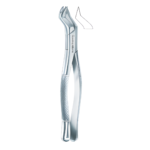
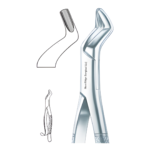
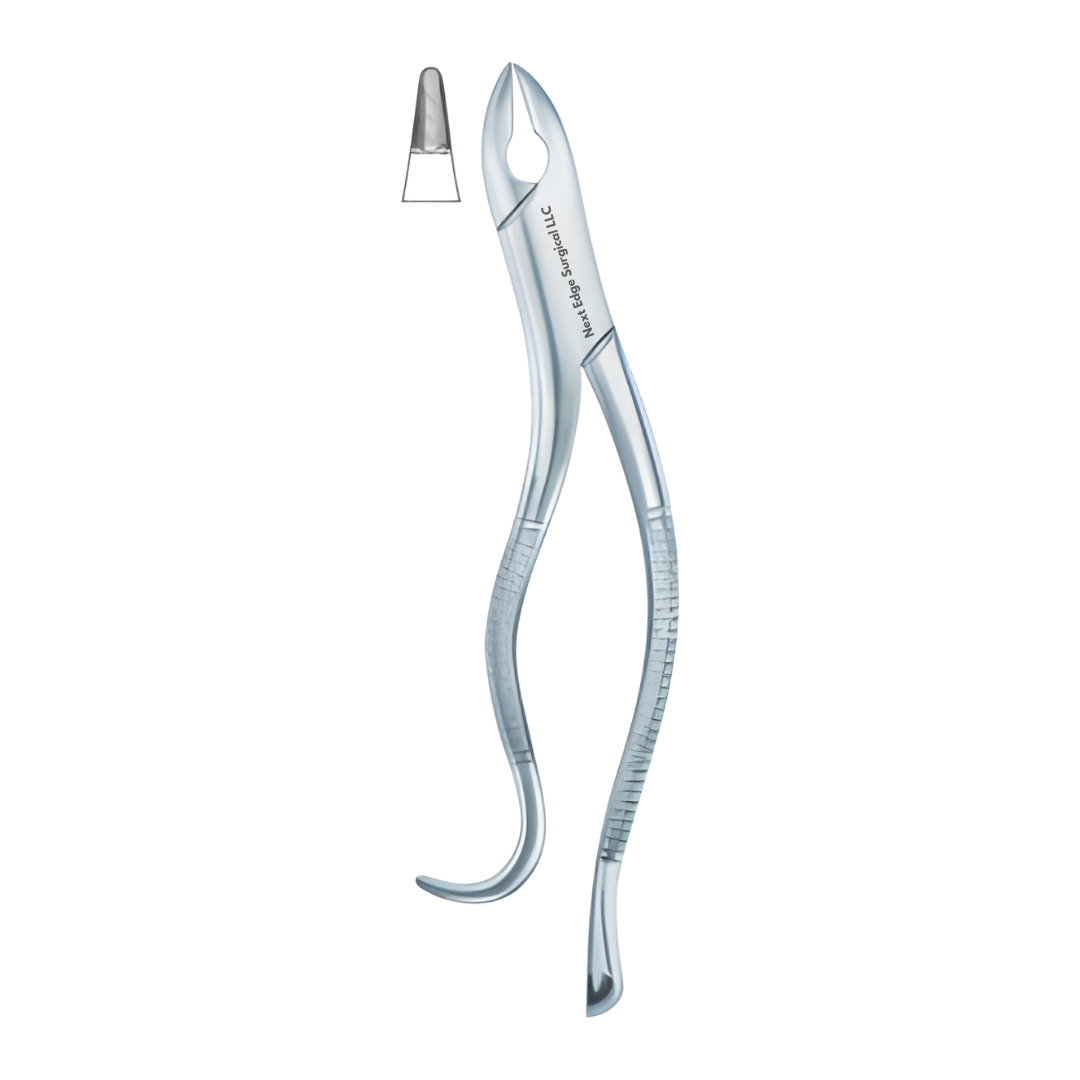
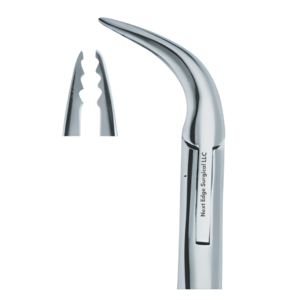
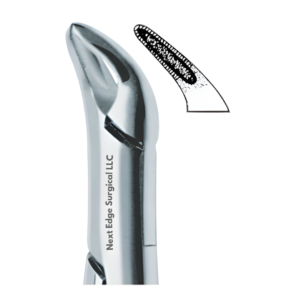
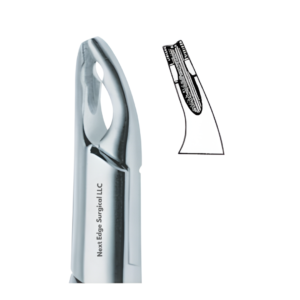
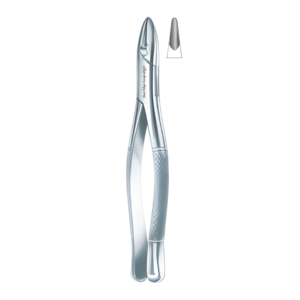
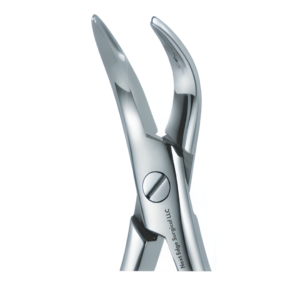
Dental Extraction Forceps – Kells Upper Incisors Canines Premolars – NES-333
The front and middle portions of the upper arch contain teeth with different crown forms and root anatomy. Choosing an extraction instrument involves understanding those differences before the clinician begins tooth mobilization.
Our Kells Upper Incisors Canines Premolars Forceps – NES-333 is designated for maxillary incisors, canines, and premolars. The Kells pattern provides a named option for procedures involving these upper-arch tooth groups.
Considering Three Maxillary Tooth Groups
Upper incisors generally have single roots, while canines often have longer roots and substantial periodontal attachment. Premolars introduce additional variation: the first premolar frequently has two roots, whereas the second more commonly has one. These differences affect the planned direction and degree of movement.
NES-333 forms part of our dental extraction forceps range. Its Kells designation identifies the named pattern, and its listed applications cover incisors, canines, and premolars. The practitioner evaluates tooth condition and access before deciding how forceps engagement fits the procedure.
Features and Benefits
| Feature | Benefit |
| Kells pattern | Identifies a named dental extraction instrument classification. |
| Upper incisor application | Relates to suitable maxillary anterior tooth procedures. |
| Upper canine application | Includes the long-rooted canine region. |
| Upper premolar application | Covers appropriate teeth between canines and molars. |
| Maxillary designation | Keeps instrument selection focused on the upper arch. |
| Multi-group extraction role | Supports preparation across three listed tooth categories. |
Instrument Care and Handling
Before treatment, inspect the gripping surfaces for residue, visible damage, or changes in condition. Check normal movement and position NES-333 securely on the operative tray. Protect its working ends from accidental contact with heavier instruments.
After use, clear blood, adherent tissue, and tooth debris promptly. Examine accessible joint spaces and areas that contacted the crown. Complete the established cleaning and sterilization workflow before the instrument returns to service.
For upper incisors, consider neighboring teeth and the supporting facial bone. Canine removal may require additional attention to root length and resistance. Premolar procedures call for assessment of possible root division and fracture risk. These anatomical differences should guide movement rather than a single approach applied to every tooth.
Maintain clear access and protect adjacent restorations during placement. If the tooth resists controlled mobilization, reassess its condition and the planned technique. Carry the used forceps securely for processing, then store it in a protected upper extraction tray. Routine inspection helps the team identify wear and prepare instruments consistently for future appointments.
Product Specifications
| Specification | Details |
| Product Name | Kells Upper Incisors Canines Premolars |
| SKU | NES-333 |
| Brand | Next Edge Surgical LLC |
| Product Category | Dental Extracting Forceps |
| Instrument Pattern | Kells |
| Anatomical Region | Maxillary Incisors, Canines and Premolars |
| Intended Application | Upper Incisor, Canine and Premolar Extraction |
Frequently Asked Questions
Which teeth are listed for NES-333?
Upper incisors, canines, and premolars.
What does Kells refer to?
The named extraction forceps pattern.
Why are upper canine roots important?
Their length can influence extraction resistance.
Do upper premolars have identical roots?
No, their root number and form vary.
What maintenance follows use?
Cleaning, sterilization, inspection, and protected storage.
Reviews
There are no reviews yet.