

Dental Extraction Forceps – Upper and Lower Roots – NES-294
Root removal does not always follow the same sequence as a routine tooth extraction. Once the crown has fractured, the clinician must assess the remaining structure and determine how it can be mobilized and grasped without unnecessary disturbance to the socket.
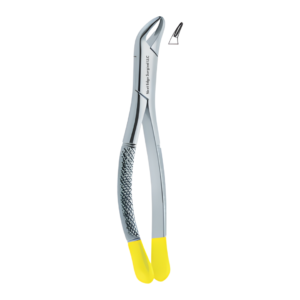
Our NES-294 Upper and Lower Roots Forceps offers a cross-arch instrument option for suitable maxillary and mandibular root procedures. Its American Pattern Fig. 2 classification identifies a specialized design within our extraction instrument collection.
Cross-Arch Root Extraction With the Fig. 2 Pattern
Upper and lower roots present different anatomical challenges. Maxillary roots may be positioned near the sinus or thin socket walls, while mandibular roots can be surrounded by comparatively resistant bone.
NES-294 is designated for root extraction in both dental arches. This cross-arch application makes it relevant when clinicians need an instrument for accessible root structures in different regions of the mouth.
Within our dental extraction forceps range, the Fig. 2 pattern is associated with upper and lower root engagement. Its purpose is distinct from forceps intended primarily for removing teeth with intact crowns.
The clinician should select the extraction technique according to root mobility, accessibility, and the surrounding anatomical structures.
Features and Benefits
| Feature | Benefit |
| Upper and lower root designation | Covers suitable root procedures in both dental arches. |
| Fig. 2 pattern | Identifies an established cross-arch root forceps configuration. |
| American Pattern classification | Places the instrument within a recognized extraction family. |
| Root-focused application | Supports engagement of remaining tooth structures. |
| Cross-arch clinical relevance | Provides flexibility when preparing extraction instruments. |
| Complementary surgical purpose | Works within procedures involving elevators and root mobilization. |
Instrument Care and Handling
Because NES-294 serves root-removal procedures, its working surfaces should be examined carefully before each appointment. Look for visible wear, contamination, distortion, or changes affecting contact with tooth structure.
Check the opening and closing action during tray preparation. The instrument should move normally and remain free from deposits around accessible joint surfaces.
Following treatment, remove biological material promptly using the established cleaning workflow. Pay particular attention to the gripping areas exposed to root surfaces and socket debris.
Complete cleaning before the appropriate sterilization procedure. During transportation, protect the working ends from impacts and avoid overcrowding the processing tray.
Clinical handling should reflect the anatomy of the selected arch. Do not assume that the same direction of movement is suitable for every root.
When a fragment remains firmly retained, further mobilization or an alternative surgical approach may be appropriate. Keep NES-294 organized and protected between procedures.
Product Specifications
| Specification | Details |
| Product Name | Upper and Lower Roots |
| SKU | NES-294 |
| Brand | Next Edge Surgical LLC |
| Product Category | Dental Extraction Forceps |
| Instrument Pattern | American Pattern, Fig. 2 |
| Anatomical Application | Maxillary and Mandibular Arches |
| Intended Use | Upper and Lower Root Extraction |
Frequently Asked Questions
Can NES-294 be used in both dental arches?
Yes, its designated application includes upper and lower roots.
What does Fig. 2 identify?
The extraction forceps pattern associated with this model.
Is this instrument intended for intact molar crowns?
Its primary designation concerns remaining dental roots.
Why must extraction movements vary between arches?
Root anatomy and surrounding bone differ between upper and lower jaws.
How should the instrument be maintained?
Inspect, clean, reprocess, and protect its working ends between procedures.
Reviews
There are no reviews yet.