


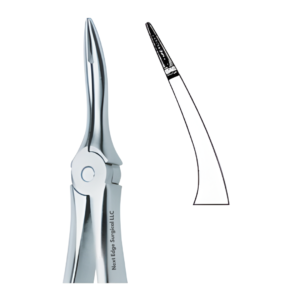

Dental Extraction Forceps – Lower Anterior and Roots – NES-319
Lower front teeth occupy a narrow region where adjacent crowns are close together and the roots may be relatively slender. When extraction is indicated, preserving control around neighboring teeth is as important as engaging the target structure.
Our Lower Anterior and Roots Forceps – NES-319 is designated for mandibular anterior tooth and root removal. It supports suitable lower incisor, canine, and remaining-root procedures.
Working Within the Mandibular Anterior Region
Lower incisors usually have single roots that may be flattened from side to side. Mandibular canines typically have longer roots, although individual anatomy varies. Reduced crown structure can further affect the approach, particularly when a root remains below the original crown level.
NES-319 forms part of our dental extraction forceps collection. Its lower anterior and roots designation identifies the intended mandibular region and root-removal application. Before engaging the tooth, the clinician evaluates crowding, periodontal attachment, crown integrity, and the available path of withdrawal.
Features and Benefits
| Feature | Benefit |
| Lower anterior designation | Focuses selection on mandibular front teeth. |
| Root removal application | Supports appropriate procedures involving remaining lower roots. |
| Incisor relevance | Fits planning around narrow mandibular incisor anatomy. |
| Canine region relevance | Addresses appropriate anterior procedures involving lower canines. |
| Crown engagement function | Provides direct grasping when sufficient structure remains. |
| Anterior workflow role | Complements assessment and preliminary tooth mobilization. |
Instrument Care and Handling
Check the tooth-contact surfaces for retained material or visible wear before every appointment. Open and close the forceps during preparation and examine accessible joint areas. Keep the instrument protected while arranging the anterior extraction tray.
After use, clear blood, tissue debris, and tooth particles without delay. Thoroughly clean gripping surfaces and accessible joints before completing the established reprocessing and sterilization procedure. Protect the working ends from contact with heavier instruments during transport.
In the lower anterior region, take care around closely positioned neighboring teeth. Evaluate root length, curvature, and the condition of the crown before applying extraction movements. When a remaining root cannot be engaged safely, additional mobilization or another technique may be necessary.
Following processing, store NES-319 in a secure tray where the working ends remain protected. Periodic inspection helps identify wear and supports reliable instrument preparation for anterior and retained-root procedures. Clear organization also helps the team distinguish anterior instruments from those intended for posterior molars.
Product Specifications
| Specification | Details |
| Product Name | Lower Anterior and Roots |
| SKU | NES-319 |
| Brand | Next Edge Surgical LLC |
| Product Category | Dental Extracting Forceps |
| Instrument Type | Lower Anterior and Root Forceps |
| Anatomical Region | Mandibular Anterior Teeth and Roots |
| Intended Application | Lower Anterior and Root Extraction |
Frequently Asked Questions
Which region does NES-319 address?
The mandibular anterior teeth and suitable remaining roots.
Why can crowding complicate extraction?
Adjacent crowns may restrict access and instrument positioning.
Do lower incisors usually have one root?
Yes, most mandibular incisors are single-rooted.
When might a root need another technique?
When safe direct engagement is not possible.
What care follows clinical use?
Prompt cleaning, reprocessing, inspection, and protected storage.
Reviews
There are no reviews yet.