

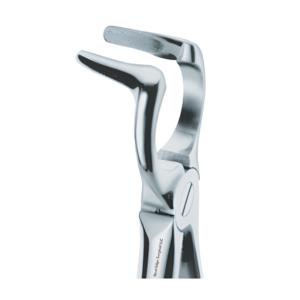
Dental Extraction Forceps – Upper and Lower Premolars – NES-295
Premolars sit between the anterior teeth and molars, occupying an important transitional position in the dental arch. Their extraction requires careful consideration of root anatomy, available access, and the condition of the surrounding alveolar bone.
Our NES-295 Upper and Lower Premolars Forceps is designated for suitable premolar extraction procedures in both jaws. It provides dental professionals with an instrument option specifically identified for this tooth group.
Premolar Anatomy Across the Upper and Lower Arches
Premolars differ from incisors and molars in their crown form and root arrangements. Maxillary first premolars frequently have two roots, while many mandibular premolars have a single root. Individual anatomical variation can influence the extraction approach.
The upper and lower premolar designation identifies NES-295 for appropriate procedures involving these teeth across both arches. It belongs to our dental extraction forceps collection, where instrument selection is organized around dental anatomy and clinical application.
Before extraction, the practitioner should assess the tooth’s root morphology, crown condition, and periodontal support. Suitable mobilization and controlled engagement are important when removing a premolar while protecting adjacent structures.
Features and Benefits
| Feature | Benefit |
| Upper premolar designation | Supports suitable extraction procedures in the maxillary arch. |
| Lower premolar designation | Extends the intended application to mandibular premolars. |
| Tooth-group classification | Identifies the instrument for premolar extraction planning. |
| Cross-arch application | Provides an option for procedures involving either dental arch. |
| Direct tooth-engagement purpose | Supports controlled grasping during appropriate extractions. |
| Dedicated extraction role | Complements elevators and other instruments used for mobilization. |
Instrument Care and Handling
Before preparing NES-295 for treatment, inspect the working ends for debris, visible wear, or changes in alignment. Check the gripping surfaces and opening movement to assess the instrument’s condition.
After use, remove contamination promptly. Tooth extraction can expose contact surfaces and accessible joint areas to blood, tissue residue, and other biological material.
Follow the established instrument-cleaning process and complete the appropriate sterilization procedure before subsequent clinical use. Avoid contact with heavier instruments that could damage the working ends during transportation.
When extracting premolars, account for differences between maxillary and mandibular root anatomy. Upper first premolars may present separate roots that influence the removal technique.
For mandibular premolars, consider root curvature and the relationship to nearby anatomical structures. Excessive movement can affect surrounding tissues or adjacent teeth.
If the tooth remains resistant, further mobilization may be appropriate before applying additional force. Store the instrument in an organized extraction tray with its working ends protected.
Product Specifications
| Specification | Details |
| Product Name | Upper and Lower Premolars |
| SKU | NES-295 |
| Brand | Next Edge Surgical LLC |
| Product Category | Dental Extraction Forceps |
| Instrument Type | Premolar Extraction Forceps |
| Anatomical Region | Maxillary and Mandibular Premolars |
| Intended Application | Upper and Lower Premolar Extraction |
Frequently Asked Questions
Which teeth is NES-295 intended for?
Suitable premolars in the upper and lower dental arches.
Do upper and lower premolars have identical roots?
No, root number, shape, and curvature can differ.
Why are upper first premolars clinically distinctive?
They frequently have two roots that influence extraction planning.
Can elevators be used alongside premolar forceps?
Yes, elevators may assist with tooth mobilization before forceps engagement.
What maintenance is important after extraction?
Thorough cleaning, appropriate reprocessing, inspection, and protected storage.
Reviews
There are no reviews yet.