


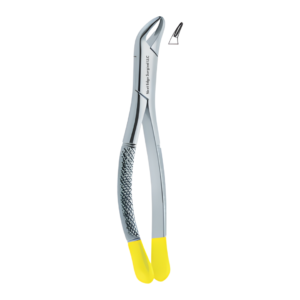
Dental Extraction Forceps – Hull Deciduous Teeth – NES-336
Primary teeth guide chewing, speech development, and the eruption of permanent successors. Their removal requires attention to the child’s stage of dental development, not simply a smaller version of an adult extraction plan.
Our Hull Deciduous Teeth Forceps – NES-336 is designated for extraction of suitable primary teeth. Its Hull pattern provides a named instrument option for clinicians preparing procedures involving the developing dentition.
Extraction Planning in the Primary Dentition
Deciduous teeth include incisors, canines, and molars. Primary molar roots can be widely separated around the developing permanent tooth beneath them, while physiological root resorption may change the remaining root structure. These conditions influence mobility and the approach to removal.
NES-336 belongs to our dental extraction forceps collection. The Hull designation identifies the named pattern and the deciduous-teeth description establishes its clinical category. Selection should follow assessment of the particular primary tooth, its eruption stage, and surrounding tissues.
Features and Benefits
| Feature | Benefit |
| Hull pattern | Identifies a named extraction forceps classification. |
| Deciduous tooth designation | Focuses selection on primary dentition procedures. |
| Pediatric dental context | Relates to treatment during dental development. |
| Primary molar relevance | Supports planning around resorbing and divergent roots. |
| Tooth engagement role | Complements controlled removal of suitable primary teeth. |
| Extraction tray application | Provides a designated option for primary tooth procedures. |
Instrument Care and Handling
Inspect NES-336 before use for deposits, visible damage, and irregularities on tooth-contact surfaces. Check normal opening and closing movement. Arrange the instrument where its working ends will remain protected, and prepare the clinical field with the child’s comfort and cooperation in mind.
After extraction, promptly remove biological residue and small tooth particles. Examine accessible joint areas and contact surfaces for trapped debris. Complete the established cleaning and sterilization workflow before the instrument is used for another patient.
When removing a primary molar, consider the developing permanent successor and the extent of root resorption. Avoid excessive force when remaining roots are delicate or unusually positioned. A radiographic assessment may be appropriate when root anatomy or the underlying permanent tooth affects planning.
Protect the child’s lips, cheeks, and neighboring teeth during placement. Maintain clear communication and controlled movements throughout treatment. Transfer the instrument securely for processing, then store it in a protected tray. Routine inspection supports careful preparation for future pediatric extraction appointments.
Product Specifications
| Specification | Details |
| Product Name | Hull Deciduous Teeth |
| SKU | NES-336 |
| Brand | Next Edge Surgical LLC |
| Product Category | Dental Extracting Forceps |
| Instrument Pattern | Hull |
| Dentition | Deciduous (Primary) Teeth |
| Intended Application | Primary Tooth Extraction |
Frequently Asked Questions
What are deciduous teeth?
They are the primary teeth that precede permanent dentition.
Does NES-336 target permanent premolars?
Its designation is for deciduous teeth, which have no premolars.
Why does root resorption matter?
It changes the remaining support and structure of primary roots.
What must be protected beneath primary molars?
The developing permanent successor teeth.
What maintenance follows treatment?
Cleaning, sterilization, inspection, and protected storage.
Reviews
There are no reviews yet.