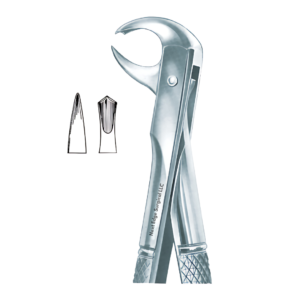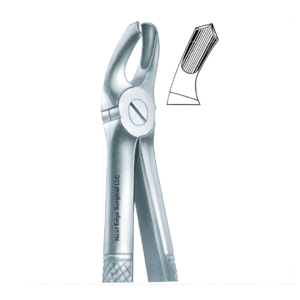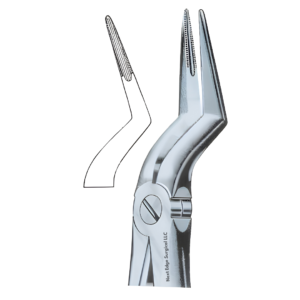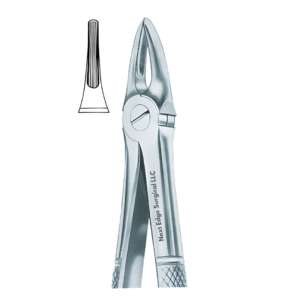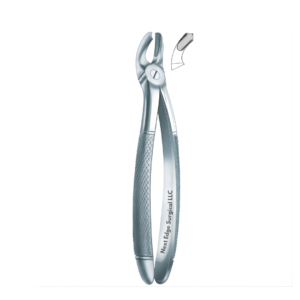


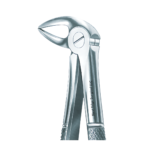
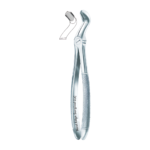
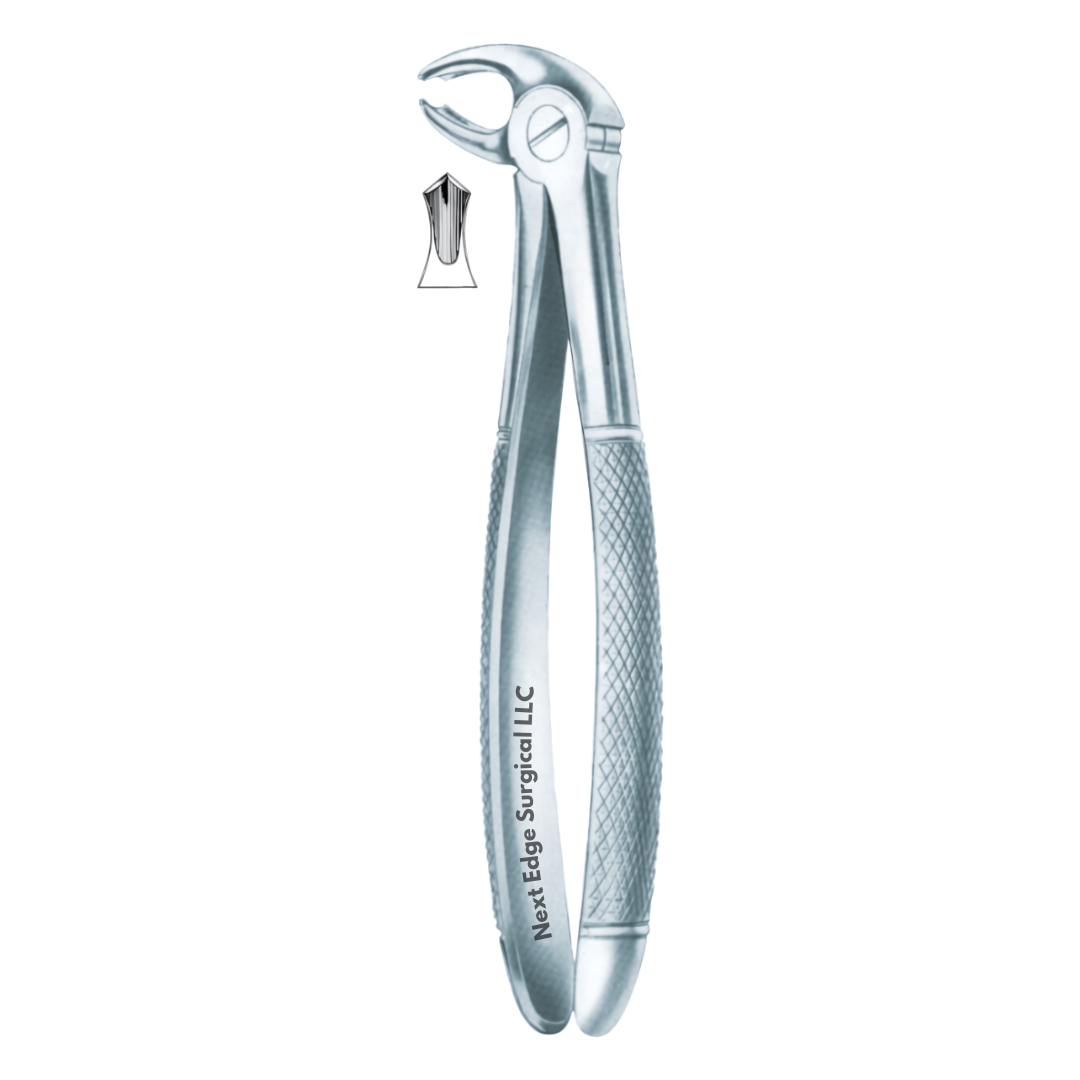
Not every lower molar responds the same way to a standard beak profile, and that’s exactly why the MEAD pattern includes more than one lower molar variant. Article-NES-132, designated Fig MD4, offers a secondary option within this design family — one suited to molars with slightly different root angulation or convergence than the primary MD3 pattern addresses.
The distinction between MD3 and MD4 might seem subtle on paper, but in practice it can mean the difference between an extraction that goes smoothly on the first attempt and one that requires repeated repositioning. Having both variants available gives clinicians a backup option when the standard pattern doesn’t achieve an immediately secure grip, without needing to abandon the MEAD design altogether for a different manufacturer’s system.
Manufacturing quality mirrors the rest of the Next Edge Surgical catalog: forged surgical stainless steel, resistant to corrosion, and built to withstand the sterilization demands of a high-volume dental or oral surgery practice. The handle balance stays consistent with other MEAD-pattern pieces, so switching between MD3 and MD4 mid-procedure doesn’t disrupt technique.
Quick Overview:
- MEAD Pattern: Fig MD4 secondary lower molar variant.
- System Integration: Complements the primary Fig MD3 design.
- Build Standard: Surgical stainless steel, autoclave-safe.
- Ergonomics: Consistent handle geometry across the MEAD line.
For practices that have standardized on MEAD-pattern extracting forceps, NES-132 is a sensible addition that covers root configurations the primary variant doesn’t handle as cleanly. At $25 per unit, with a 10% discount on orders of 100 or more, it’s an affordable way to round out a complete MEAD instrument set.