


How Dental Surgical Instruments Affect Treatment Accuracy

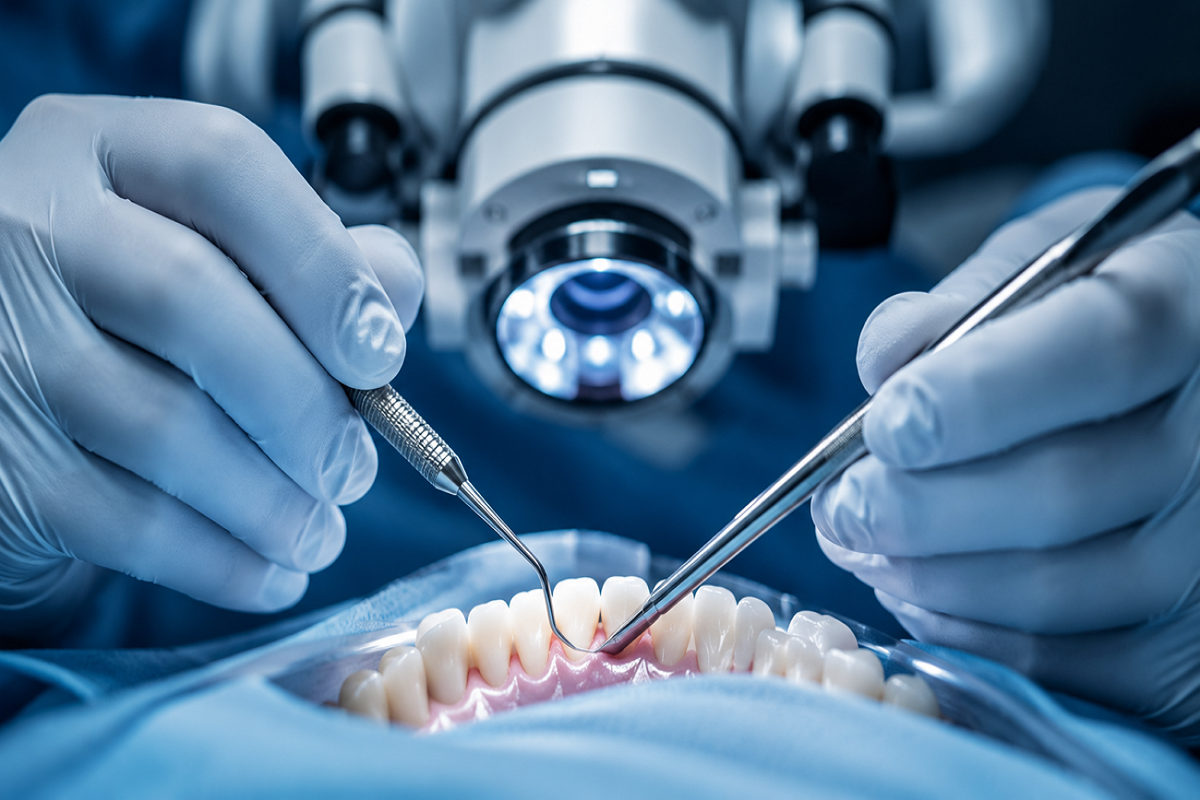
The dentist’s skill matters, but even the best dentists rely on tools that provide accuracy, control, and dependable performance. Tools that slip, dull quickly, or don’t fit well in the mouth can cause more tissue damage, prolong healing, and increase the risk of complications.
Precision is made possible by the right dental surgical instruments. They provide a level of control for the clinician with each and every movement from the first incision to the final root surface refinement. It’s that control that makes it a smooth procedure instead of a stressful one.
We will discuss why treatment accuracy is a critical issue in dentistry, how the right instrument plays a key role in ensuring this, the cost of using a poor-quality instrument in terms of treatment, and what to look for when choosing instruments that will last.
The Importance of Accurate Treatment in Dental Care
All dental treatments involve some risk. Squeeze that gap and results are better, no matter the dimension; less trauma to the tissue, rapid healing, fewer problems, and increased patient comfort.
With the advent of minimally invasive dentistry, precision is more important than ever in clinical practice. The goal is not only to treat the problem but also to do so with minimal disruption to surrounding tissue. That requires instruments that will react reliably when called on in clinical situations, adjust easily to the anatomical differences, and behave in the same manner with the fifth patient as with the first.
Predictability of procedures also helps to alleviate clinician fatigue and decision-making stress. If a tool works well, the clinician will be able to concentrate on technique without being distracted by the tool.
How Dental Surgical Instruments Improve Clinical Precision
There are several factors to consider when discussing the instrument accuracy relationship. Check out how each one helps.
Improved Grip and Instrument Control
If a clinician cannot hold an instrument comfortably, then it is an instrument that he or she cannot control precisely. How well each movement is balanced and responsive is directly related to the ergonomic design of the handle, whether it’s grip texture, handle diameter or weight balance.
Handles that are lightweight and have a textured surface enhance grip stability and lessen hand fatigue during extended clinical sessions, enabling clinicians to maintain improved control and technique throughout procedures. That is all that is required in fine surgery.
The Sharper Cutting Edges Cause Less Tissue Trauma
A sharp instrument makes precise cuts, whereas a dull instrument demands greater force and may cause additional damage to nearby tissue.
A clean cut is better for healing incisions, with less post-operative discomfort. Smoother root surfaces following planing promote reattachment of healthy tissues. An efficient edge is more than a mere efficiency; it makes a difference in the patient’s experience during recovery. That’s why instruments that can be used over and over after sterilization are a worthwhile investment.
Precision Manufacturing Improves Consistency
There is no such thing as a coincidental forceps alignment, a balanced elevator, or a calibrated instrument tip. They are produced during precision machining and quality control during the manufacturing process.
Even minor instrument misalignment can reduce control and increase the risk of complications such as root fractures during extraction procedures. Improperly balanced elevators decrease tactile feedback. Consistency in the clinic depends upon the manufacturer of instruments to tight tolerances, which increases the certainty of performance.
Specialized Instruments Boost the Accuracy of the Procedure
General-purpose tools are fine, but procedure-specific tools can minimize the risk of error because they are specially designed for the anatomy and access limitations associated with the procedure.
For example, luxating elevators are designed to cut the periodontal ligament without a lot of force and minimize the bone stress during extraction. In small areas, microsurgical instruments provide access without disturbing the adjacent structures. Accurate pocket depth measurements are provided by periodontal probes and are used to inform the whole treatment plan. These individualized designs fill in that gap between what is intended in clinical practice and what actually occurs, particularly in complex or high-stakes procedures.
Quality of Instruments Directly Impacts Patient Safety
This isn’t theoretical. A study undertaken of the National Reporting and Learning Service (NRLS) database in the UK showed that there were 161 patient safety incidents that were directly attributed to broken or poor quality surgical instruments, out of which five required reoperation and there were multiple patient safety incidents of moderate to severe harm. Most frequently, the fracture occurred during the procedures.
A broken instrument tip in a root canal or extraction socket is more than a simple clinical problem; it is a complication that must be addressed and has a substantial impact on the patient’s experience of care in dentistry.
Risk of Using Poor-Quality Dental Surgical Instruments
The consequences of low-quality instruments are directly named because they are often overlooked until a problem arises.
- Slipping forceps can lead to root fractures and excessive force being applied when extracting them.
- Rougher blades and scalers are harder to work on and result in more soft tissue trauma and rougher root surfaces.
- Poorly manufactured tips may decrease the sense of feedback, making it more difficult to identify calculus or adjust properly under the gumline.
- Instruments that degrade under sterilization: Over time, instruments that are not sterilizable become less predictable and lose dimensional integrity with every cycle of sterilization.
- Clinician fatigue: Inadequately designed instruments can lead to clinician exhaustion, hindering consistent technique during extended procedures.
All of these are risks that cannot be eliminated through experience. They do not care how good the clinician is; they don’t care how good the instrument is.
Features of High-Quality Dental Surgical Instruments
With the information here, it is easier to construct a kit that will always aid clinical accuracy.
Surgical-grade stainless steel: stays sharp for a longer duration and protects against corrosion that would otherwise cause instruments to lose sharpness over time.
Tungsten carbide inserts: Some forceps and scalers are fitted with tungsten carbide inserts to further prolong the working life by providing exceptional hardness where it is needed.
Autoclave compatibility: The non-negotiables include autoclave compatibility, which means that any instrument that warps, pits or discolors after repeated autoclave cycles is a liability in an active clinical setting.
Ergonomic handle design: The ergonomic design of handles, such as the balance and the type of grip, has a direct impact on the fine motor skills necessary for precision dentistry.
Reputable manufacturers such as Next Edge Surgical design dental surgical instruments for precision handling, durability and repeated sterilization in demanding clinical environments.
How Modern Clinics Maintain Instrument Accuracy
Even the very best of instruments require maintenance in order to function at their optimal level. Maintaining clinical accuracy over time with a simple maintenance routine:
- Check instruments before use for deterioration, misaligned tips and edge wear.
- Replace and sharpen curettes and scalers frequently, as a dull instrument is more likely to harm and will require more pressure for fewer results.
- Follow CDC infection control procedures for ultrasonic cleaning and autoclave sterilization
- Group instruments by procedure to minimize procedure set-up errors and time.
- Dispose of instruments that are no longer performing at required standards, rather than using them beyond their working life.
This type of practice is not additional work; it’s just a way of providing quality care consistently.
Conclusion
Dental surgical instruments directly influence clinical precision, procedural efficiency and patient outcomes. The best method in the world is not enough if it’s not done with the best tools. Consistent, accurate, minimally traumatic care for every procedure, every patient, can be achieved through sharp edges, stable grips, precision manufacturing and proper maintenance.
It’s not a cost-cutting decision to invest in quality instruments. It’s a clinical one and its effect is seen right in the outcomes achieved by the patient, the efficiency of the procedure, and the long-term performance of each clinician who uses it.
FAQs
What is the effect of dental surgical instruments on treatment accuracy?
They can predict how well a clinician can customize to the tooth and tissue shapes. Purpose-built designs, stable grips and sharp edges eliminate the disconnect between what would be best for the clinic and what actually happens.
What are the consequences of using dull and poor-quality dental instruments?
Higher pressure is required by the clinicians to obtain the same effect, which leads to more tissue trauma, longer treatment time and higher rates of complications such as root fracture and failure to remove the calculus completely.
What is the time frame for changing out dental surgical instruments?
The exact time to change an instrument is not prescribed; it is recommended that the instrument be replaced when it has lost its edge after sharpening (visible or not), has visible corrosion or pitting, or runs inconsistently. The choice is easy if the machine is inspected on a regular basis prior to use.
Are ergonomic handles just a comfort feature?
No, they are a precision feature. Techniques are more likely to be of good quality and keep the patient safe when there is reduced grip fatigue.
What are the ways that clinics can get reliable dental surgical instruments?
Consider manufacturers who have proven experience with surgical-grade materials, precision manufacturing tolerances and equipment that is designed to withstand autoclave use. Manufacturers such as Next Edge Surgical specialize in surgical-quality equipment instead of standard equipment.