


Top Orthodontic Instruments Used in Modern Dentistry

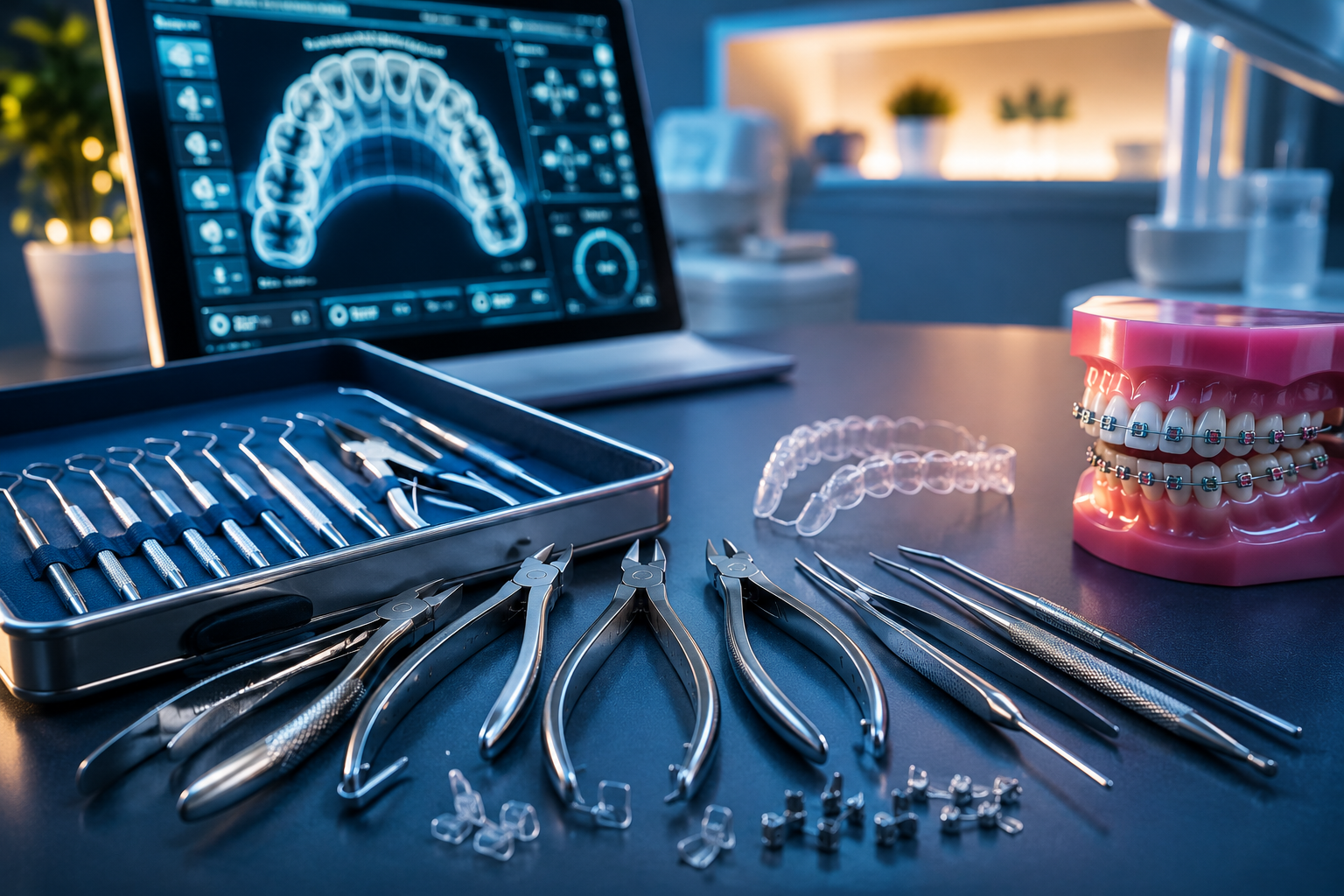
The era of lengthy and uncomfortable appointments is behind us, and previously, the process of getting braces lacked scientific precision. However, the story is very different today. Modern orthodontic treatment is based on precision; each bracket installed, each wire bent and each elastic fitted is done using precision instruments designed for a single function: precision.
Not only does the right instrument make a procedure faster, but it also makes it easier. They make patients more comfortable and safe. The global orthodontics market is expanding and is projected to exceed $7.21 billion in 2024, indicating a rising need for advanced clinical tools.
This article focuses on the most essential instruments in an orthodontist’s practice, explaining their functions, their significance and the difference between good orthodontic dental instruments and great ones in today’s modern dentistry.
Why Ortho Instruments are Important
It’s easy to underestimate the impact of one instrument on the outcome of a procedure. However, in orthodontics, little mistakes add up over the years. Even a millimeter out of place could change the treatment plan. The improper use of the wire-cutting tool can harm soft tissue, causing unnecessary discomfort.
Equipped with the correct orthodontic tools, doctors experience the benefits of fewer mistakes, less chair time and better outcomes between visits. A report mentioned in the Journal of Clinical Medicine shows that close to 50% of the world’s population suffers from malocclusions that would benefit from orthodontic treatment (Towards Healthcare). The tools in your hands are the first step in providing services to that patient population.
Following are the top orthodontic instruments that are used in modern dentistry
Take a tour of the instruments that are present on almost every orthodontic tray and why each of them is necessary.
1. Distal End Cutters
Once an archwire is in place, there will typically be some of the archwire left over beyond the last bracket. This additional wire is pointed and if it is not cut, it sticks into the cheek or gum. Distal end cutters do this very well. The difference between them is that they have a safety hold feature; the beak clutches the cut piece to prevent it from flying into the patient’s mouth. A minor design element, but a critical one for patient safety.
2. Ligature Cutters
Each bracket has ligature wires, which facilitate the positioning of archwires. Those ties should simply drop off when it’s time to make a change. Ligature cutters will have a fine, angled tip that will pass under the wire and not become snagged in brackets or soft tissue. A clean cut will minimize choppiness and will have a considerable effect on the speed of removal.
3. Bird Beak Pliers
The most familiar tools in any orthodontic set. They have one pyramidal beak and one round beak, making them ideal orthodontic wire-bending instruments for precise bends and loops such as omega loops, closing loops, custom wire angles, and more. This would be the only wire-bending tool a clinician would want if he or she had only one.
4. Mathieu Pliers
The idea of having elastic ligatures placed in a patient’s mouth seems simple. In practice, it is cumbersome and difficult to use. The Mathieu pliers have a spring-action, self-locking grip that allows the clinician to stretch an elastic onto the tip, lock it in place, and release it accurately. This design significantly reduces bonding time, particularly when an arch is full and ligatures are needed at each bracket.
5. Band Removing Pliers
The bands that hold the molars in place need to be removed at some time. Band removal pliers apply the cushioning pressure against the tooth structure when removing the band, instead of the stress on the enamel. If not removed properly, the removal of bands may result in cracks in the enamel or long-term suffering. The right pliers make it a smooth, low-stress procedure that patients don’t even notice.
6. Bracket Positioning Instruments
Brackets are probably the most important part of orthodontics. Failure to place a bracket at an appropriate height and angle will result in tooth movement not following the desired movement. Gauges and straight probes enable clinicians to attain consistent and repeatable placement of each gauge and each probe on every tooth and every appointment.
7. Weingart Pliers
Weingart pliers are designed to handle wire, particularly for insertion/removal of archwires in the posterior area, where access is limited. They’re not for bending. Their long nose and sloped end insert the wire into place without any chance of it changing shape, thus risking the entire force system.
Characteristics of a High-Quality Orthodontic Instrument
Not every instrument will work in a busy clinical setting. The difference between standard tools and quality orthodontic tools:
- Surgical-grade stainless steel: Resists corrosion, maintains sharpness and can undergo hundreds of sterilizations.
- Tungsten carbide inserts: Especially important in cutters, which maintain sharp cutting edges for a much longer time than standard steel.
- Ergonomic grip design: Highly ergonomic grip to avoid hand fatigue over long days and for precision.
- Close manufacturing tolerances: Tips that align precisely give consistent results.
- Autoclave compatibility: Compliance with autoclave cycles; instruments must be able to survive repeated exposure to high-heat cycles.
Manufacturers such as Next Edge Surgical create orthodontic instruments to adhere to these requirements: instruments that are designed for use in high-volume clinical environments without sacrificing precision or longevity.
Significant Ways Modern Clinics Enhance Efficiency
Efficient workflow is just as important as clinical skill in a modern orthodontic clinic. Today, orthodontists are becoming more clever in their appointment structures and functions.
Use of pre-set trays for procedures, such as bonding, wire changes and banding, shortens setup times and prevents fumbling during procedures. Technique is consistent throughout the practice with standardized instrument kits. Preparing it all ahead of time minimizes interruptions and patients can see that.
Adults now represent 75.30% of all orthodontic patients worldwide, and the patients are typically looking for efficiency and minimal discomfort and do not expect to wait for workflow to be optimized.
Sterilization and Maintenance Best Practices
Proper sterilization of orthodontic instruments between uses is imperative, as it is for any other patient care item that is used for the patient more than once. There is clear guidance from both the CDC and ADA for dental infection control.
An appropriate maintenance procedure consists of ultrasonic cleaning prior to sterilization, autoclave (heat) sterilization, lubrication of hinges on pliers, tip and cutting edge pre-use checks, and keeping instruments in sealed storage pouches until required. Not only does the bypass of steps reduce the life of instruments, but it also introduces a true risk of patient and staff exposure to infection.
Conclusion
Orthodontics is founded on millimeter accuracy, and this accuracy cannot be achieved without proper instruments. Each instrument on the tray has a particular function. When the job is done well, chair time decreases, comfort increases and outcomes are more predictable. When clinics want to improve the standards in all three, the quality of the instruments isn’t a side issue; it’s a core element of the quality of care they provide.
FAQs
What are the most important tools for an essential orthodontic toolbox?
At least distal end cutters, ligature cutters, bird beak pliers, Mathieu pliers, Weingart pliers, and a bracket positioning gauge. This encompasses most of the key points of a typical visit.
At what frequency should orthodontic pliers be changed?
High-quality surgical tools can be kept for years if they are maintained properly. The first indication is when the tips no longer line up and cutting edges become dull even after regular maintenance.
What’s the difference between ligature cutters and distal end cutters?
Thin wire ties and elastics are for ligature cutters. Distal end cutters are used for thicker archwires and have a safety slot to trap the cut end of the archwire. The use of an incorrect cutter can cause the instrument and the appliance to be damaged.
If technique is the key to results, why is instrument quality important?
Techniques are important, but bad instruments make good technique more difficult. There is an error that can’t be eliminated by the skilled clinician when a plier slips or a cutter does not cut cleanly.
Are any of the same cases for braces used for clear braces as well?
There are many tools common to probes, bracket placers, and ligature directors. Some of the basic pliers transfer over to clear aligner cases, but others are specific to the clear aligners.