


Essential Dental Extraction Instruments Every Modern Clinic Uses

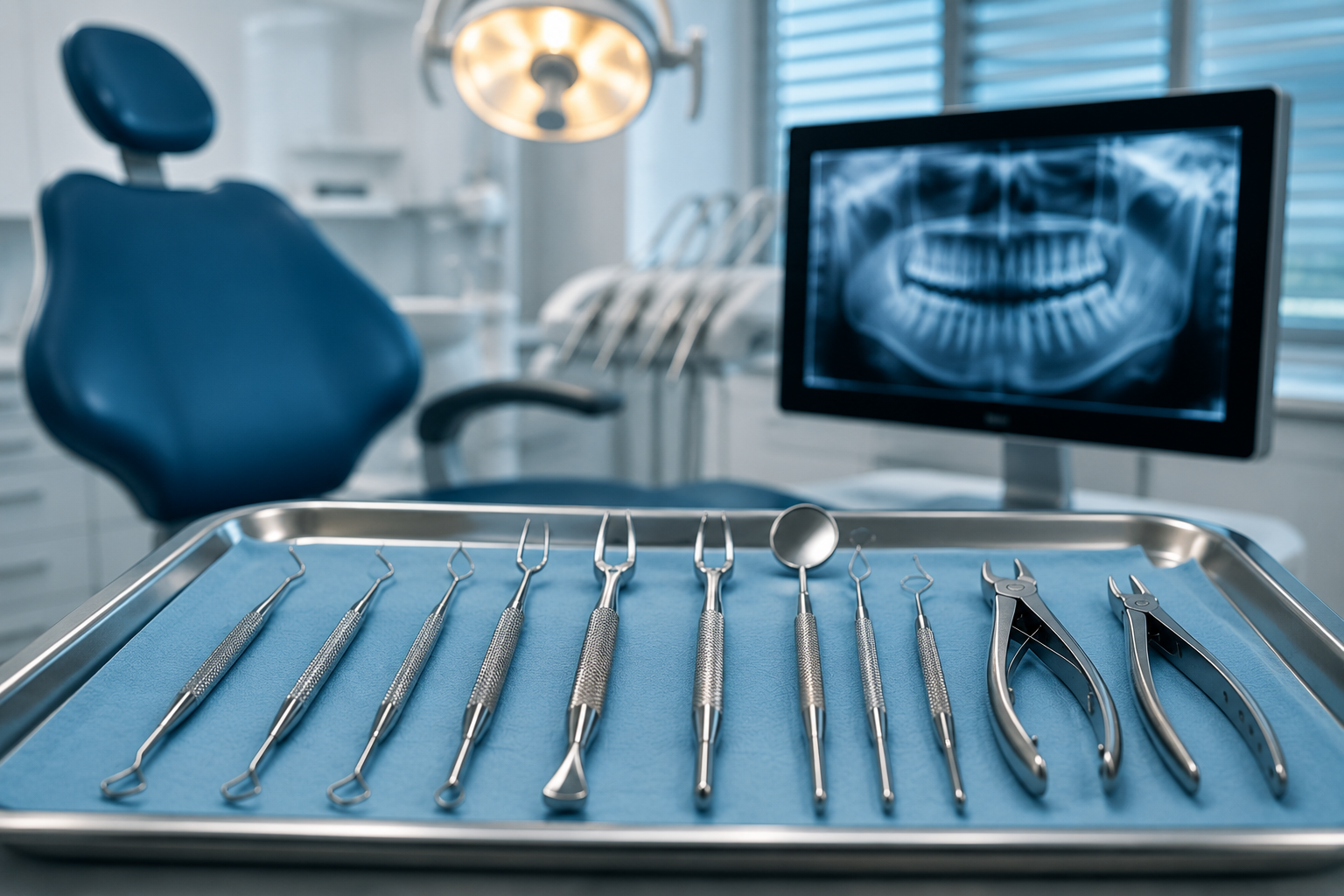
Essential Dental Extraction Instruments Every Modern Clinic Uses
A patient sits down, jaw aching, already anxious. The dentist has one shot to make this clean and quick. And what’s sitting on that instrument tray can make or break the whole procedure.
Tooth extraction is among the most performed dental procedures globally. Wisdom tooth extraction remains one of the most commonly performed oral surgery procedures worldwide. When you add decay, periodontitis, and trauma cases, the volume is enormous. The tools a clinic uses directly affect how smoothly each procedure goes.
In this article, we’ll guide you through the essential dental extraction instruments every modern clinic needs, what they actually do, and what to look for when sourcing them.
Why Instrument Quality Matters
Poor-quality instruments don’t just make the job harder; they increase the risk of root fractures, tissue trauma and post-op complications. Research published on NCBI found that tooth decay accounts for 36% to 55% of all extraction cases globally, meaning extraction trays get heavy use every single day.
Beyond clinical outcomes, well-made tools reduce hand fatigue, shorten procedure time and hold up through years of sterilization cycles. That’s not a small thing in a practice running back-to-back patients.
Essential Dental Extraction Instruments Used in Clinics
1) Dental Elevators
Before any tooth comes out, it needs to be loosened. Dental elevators do this by severing the periodontal ligament, the tissue anchoring the tooth to the bone, so the tooth can be moved with far less force. Using an elevator first dramatically reduces the chance of fracturing the root during forceps application.
Common types include:
- Straight (Seldin) elevators: Used for most single-rooted teeth. Apply controlled rotation along the root surface to loosen the tooth.
- Cryer elevators: Paired, angled instruments built for lower molar regions where straight access is limited. Particularly useful for retrieving root fragments.
- Luxating elevators: Feature a thin blade that cuts through the periodontal ligament rather than just compressing it. A core tool in atraumatic extraction techniques.
A well-balanced elevator with a textured grip gives the clinician better control and reduces the risk of slipping under pressure.
2) Extraction Forceps
Extraction forceps grip the tooth and apply the combination of pressure and rotation needed to remove it cleanly from the socket. Beak design varies depending on the tooth type and arch position.
- Upper anterior forceps: Narrow, straight beaks for incisors and canines.
- Upper molar forceps: Bifurcated beaks that seat around the furcation of multi-rooted upper molars.
- Lower universal forceps: Horizontal hinge design suited to the working angle of mandibular extractions.
- Bayonet forceps: Offset design for upper premolars and posterior teeth where handle angle matters.
Beak alignment is critical. Forceps that don’t close evenly will slip under load and increase the risk of root fracture. Clinics sourcing will find extraction forceps precision-milled for consistent beak closure and durable hinge performance.
3) Periosteal Elevators
Surgical extractions require soft tissue reflection before the tooth or root can be accessed. Periosteal elevators lift the gum tissue away from the underlying bone cleanly, without tearing, giving the surgeon a proper field of view.
The Molt elevator is the most commonly used design: one sharp curved end for incising and one broader flat end for blunt tissue dissection. A dull periosteal elevator drags and tears rather than separating cleanly, so keeping the blade edge sharp matters.
4) Root Tip Picks
Root fractures are an occupational reality in extraction work. When the crown separates and leaves a retained root tip in the socket, root tip picks, also called apical elevators, are what retrieve it.
These fine, angled instruments work in narrow socket spaces without disturbing surrounding bone. Common designs include the Crane pick and the 301 apical elevator. Tip sharpness is everything here; a dull pick applies more force than is safe in a confined space.
5) Bone Rongeurs and Curettes
After the tooth is out, the job isn’t done. Bone rongeurs are used to remove the irregular and sharp bone edges after surgical extractions. This is particularly important if implants or dentures are to be fitted, as rough surfaces of the sockets will delay healing and cause discomfort.
Curettes remove granulation tissue, remnants of infection and debris from the socket itself. Without socket debridement, there is a greater chance of developing a dry socket and delayed healing. Both instruments need to be made from properly heat-treated stainless steel to hold their cutting edge through repeated autoclave cycles.
What to Look For in High-Quality Instruments
Not every instrument will be created the same way. The following qualities are what are actually important in real life when you’re assessing the contents of your tray:
- Surgical-grade stainless steel: Corrosion-resistant and will withstand repeated sterilization. Weak alloys of instruments will soon dull their edges, rust and pit.
- Precision manufacturing: tight tolerances are critical for all of the following: beak alignment, blade sharpness and hinge tension. Instruments that are not in spec deteriorate rapidly and are unpredictable.
- Ergonomic handle design: Knurled (or textured) handles help limit hand fatigue and increase control during longer procedures.
- Autoclave compatibility: Instruments should be able to withstand steam sterilization at 134°C without warping, discoloring or compromising the integrity of the hinges.
- Regulatory clearance: CE and FDA clearance are not sought-after add-on features but rather basic requirements. Compliance is important for both patient safety and clinic liability.
Reputable manufacturers such as Next Edge Surgical, whose products are compliant with these standards for their dental instruments, make an extraction setup simple.
How Modern Clinics Improve Extraction Efficiency
Modern dental clinics focus not only on successful extractions but also on improving patient comfort, reducing chair time and minimizing tissue trauma. This is where modern dental extraction instruments make a major difference.
Ergonomically designed handles improve grip stability and reduce clinician hand fatigue during repetitive procedures. Luxating elevators and precision-milled forceps also support minimally traumatic extraction techniques, helping preserve surrounding bone and soft tissue.
Better instrument balance and sharper working ends allow dentists to perform extractions with greater control and less unnecessary force. This often results in shorter procedures, a smoother workflow between appointments and faster post-operative recovery for patients.
Many clinics also organize extraction trays based on procedure type to improve efficiency and maintain consistent instrument availability during surgery.
Sterilization and Maintenance
Even quality instruments need to be sterilized to retain that quality. The CDC and the American Dental Association (ADA) established clear standards: All instruments that come into contact with oral tissue should be heat-sterilized between patients, with only a single exception.
Steam autoclave sterilization has been called the gold standard in the ADA’s infection control guidelines. Practical steps include:
- Before the autoclave cycle, clean with an ultrasonic cleaner to remove any debris that may be on the surface, as this will prevent steam from penetrating the surface.
- Check after every cycle for corrosion, bent tips or dull cutting edges.
- Test the autoclave weekly with a spore (biological) indicator to ensure the autoclave functions.
- Keep used and sterile instruments in a sealed pouch.
Conclusion
The wrong dental extraction equipment only hinders the clinical skills of the dentist, while the right equipment can help. Every instrument serves a purpose with regard to patient comfort and procedure success, ranging from loosening the socket with a luxating elevator to the final socket debridement using a curette.
Properly sourced tools made with suitable material and manufacturing processes result in fewer complications, less downtime and tools that last for years.
FAQs
What are the differences between dental elevator and extraction forceps?
An elevator releases the tooth by severing the PDL first. It is then grabbed by the forceps and pulled out. They are both employed in almost all extractions.
When should extraction instruments be sterilized?
Dental extraction instruments must be sterilized following each patient and every procedure. CDC and ADA guidelines state that an instrument that comes in contact with oral tissue is not reused until it is fully heat-sterilised.
Will root tip picks ever be able to retrieve a broken root?
In most cases, yes. Fragments that are very curved or deeply embedded might need a surgical flap and removal of bone in order to gain safe access.
When should forceps be replaced?
If the beak does not close evenly or if the beak hinge is loose or stiff or if there is visible corrosion or any cracking of the beak handle. All of these create unsafe and unstable situations.
Why is surgical stainless steel important?
Resists corrosion, has good structural strength and is autoclave-tolerant. Cheaper alloys rust, warp and lose their cutting edge rapidly, which in turn means more costly replacements and a health and safety risk for the patient.