


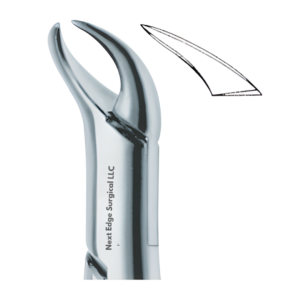


Dental Extraction Forceps – Parmly Upper Premolars and Roots – NES-318
A tooth with much of its crown missing creates a different challenge from an intact premolar. Successful removal depends on locating enough remaining structure for controlled engagement while avoiding unnecessary pressure on surrounding tissues.
Our Parmly Upper Premolars and Roots Forceps – NES-318 is designated for upper premolar and root extraction procedures. Its Parmly classification identifies a maxillary pattern relevant to remaining roots.
Considering Remaining Root Structure
A fractured crown, extensive decay, or previous treatment can leave a root that requires careful assessment before removal. The clinician evaluates its position, curvature, mobility, and relationship to neighboring teeth. Radiographs may help distinguish a readily accessible remnant from one requiring surgical access.
NES-318 belongs to our dental extraction forceps range. The Parmly upper premolars and roots designation identifies the intended tooth and root applications. Selection depends on whether the remaining structure can be engaged safely and whether an elevator or another approach should first improve mobility.
Features and Benefits
| Feature | Benefit |
| Parmly classification | Identifies a recognized upper extraction pattern. |
| Upper premolar application | Supports procedures involving maxillary premolar teeth. |
| Root extraction designation | Addresses appropriate removal of retained upper roots. |
| Maxillary location | Focuses selection on upper-arch procedures. |
| Remaining-structure assessment | Fits treatment planning when crown material is reduced. |
| Complementary procedural role | Works within extraction sequences using suitable elevators. |
Instrument Care and Handling
Before treatment, examine the working ends closely for deposits or damage that could affect contact with a root. Check movement through the opening and closing range. Arrange the instrument so its gripping areas are protected until needed.
Root procedures may leave small fragments and biological residue on the working surfaces. Remove contamination promptly after use, clean accessible joint areas, and complete the established sterilization and reprocessing workflow. Inspect again before returning the forceps to storage.
During treatment, avoid gripping a fragile remnant with more pressure than the available structure can tolerate. Determine whether the root is accessible and adequately mobilized before attempting delivery. When a fragment lies deep within bone or close to another anatomical structure, a different clinical technique may be appropriate.
Keep NES-318 secure during transport to prevent impacts against heavier instruments. Store it in a designated tray after processing. Routine inspection supports careful preparation for appointments involving compromised crowns, upper premolars, and retained roots.
Product Specifications
| Specification | Details |
| Product Name | Parmly Upper Premolars and Roots |
| SKU | NES-318 |
| Brand | Next Edge Surgical LLC |
| Product Category | Dental Extracting Forceps |
| Instrument Pattern | Parmly |
| Anatomical Region | Maxillary Premolars and Roots |
| Intended Application | Upper Premolar and Root Extraction |
Frequently Asked Questions
What situations may involve NES-318?
Upper premolar extraction and suitable retained-root removal.
Why is a radiograph useful for root removal?
It helps assess position, curvature, and surrounding anatomy.
Can every root be removed with forceps alone?
No, some require additional mobilization or surgical access.
What should be checked before root engagement?
Remaining structure, accessibility, and tooth mobility.
How should the working ends be protected?
Through careful transport and organized storage.
Reviews
There are no reviews yet.