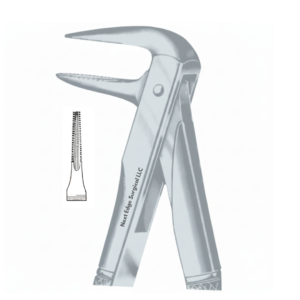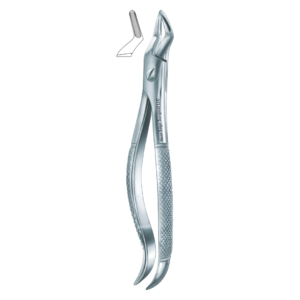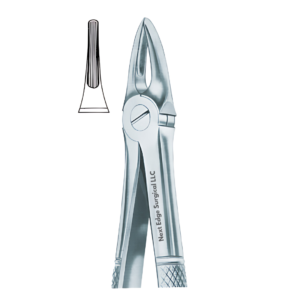


Some forceps carry a name because a clinician’s specific design solved a specific problem well enough that it stuck. The MEAD pattern is one of those—and Article-NES-129, marked Fig MD1, brings that design to upper anterior root extraction with beak geometry tuned for the narrow, often curved roots found in the maxillary incisor and canine region.
Anterior root fragments present a unique challenge: the roots are typically longer and thinner than posterior teeth, and the surrounding bone in the aesthetic zone leaves little margin for error. The MEAD-pattern beaks on this instrument are shaped to minimize unnecessary pressure on adjacent structures while still achieving a firm, stable hold on the remaining root tissue — a balance that matters both clinically and cosmetically in a visible part of the mouth.
Constructed from surgical-grade stainless steel, NES-129 delivers the corrosion resistance and long-term durability expected of instruments used across hundreds of sterilization cycles. Its handle retains the balanced, low-fatigue grip found throughout the broader NES lineup, so clinicians moving between different pattern types don’t need to relearn their technique with each switch.
Practical Summary:
- MEAD Pattern Beak Design: Designated as Fig MD1.
- Targeted Application: Purpose-built for upper anterior root fragments.
- Material Composition: Surgical stainless steel, autoclave-compatible.
- Grip Control: Consistent grip tension across production batches.
This model rounds out Next Edge Surgical’s selection of pattern-specific extracting forceps, giving practices that prefer the MEAD design a reliable option for anterior root cases. At $25 per unit, it’s a worthwhile addition for any clinic handling delicate anterior extractions, with a 10% discount available on orders of 100 units or more.